
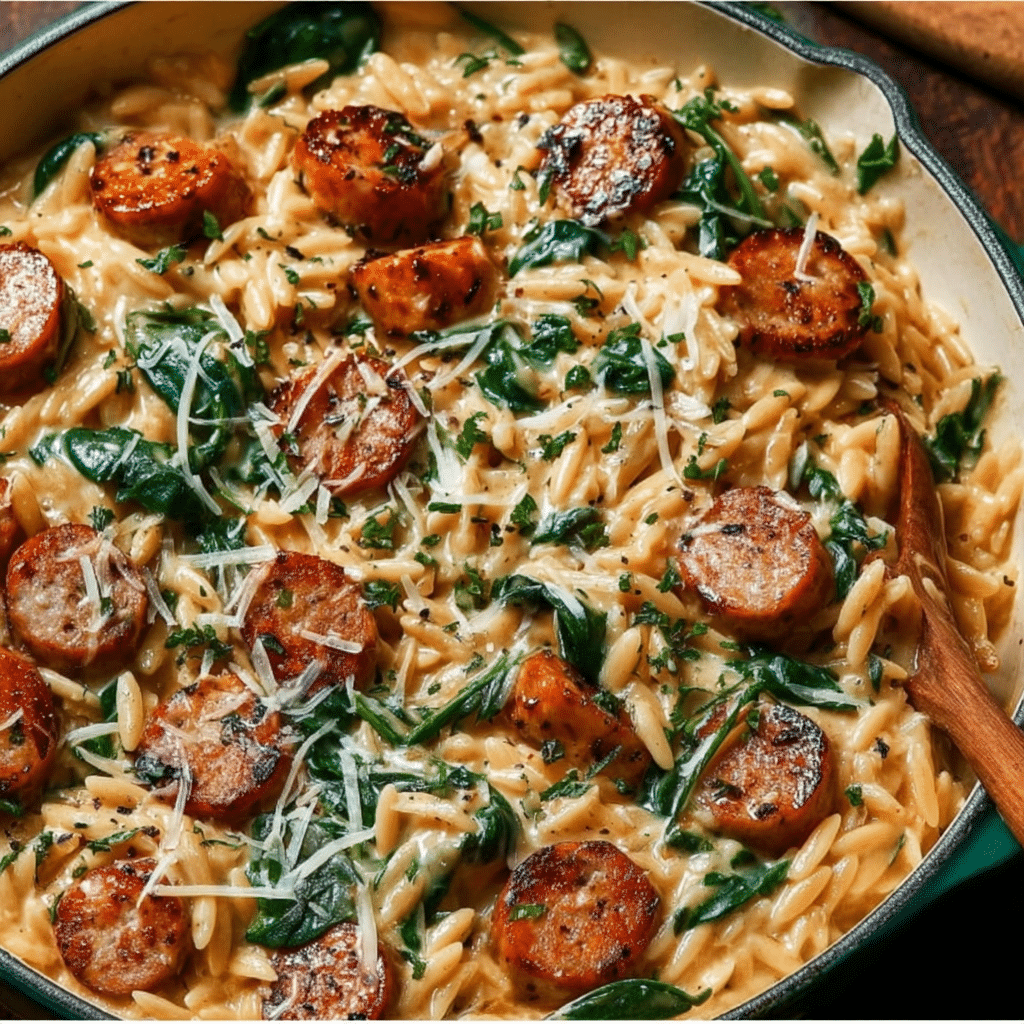
Introduction: The One-Pan Wonder That Delivers Restaurant-Quality Flavor
There is a special category of recipes that every home cook dreams of finding: dishes that are luxurious enough to serve to guests, fast enough to make on a busy Tuesday, and contained entirely within a single pan. The Creamy Chicken Sausage Orzo is the embodiment of that dream. It is rich, smoky, creamy, and packed with savory depth, yet it comes together in about 30 minutes with minimal cleanup and maximum satisfaction.
Let us talk about orzo for a moment, because it is the unsung hero of this dish. Orzo is a type of pasta that looks like large grains of rice. This shape is its superpower: it cooks directly in the broth, absorbing liquid and flavor as it softens, and releasing starch that naturally thickens the sauce into something velvety and luxurious. Unlike long pasta that requires a separate pot of boiling water, orzo becomes an integral part of the sauce, creating a cohesive, risotto-like dish without the constant stirring.
The chicken sausage provides a smoky, savory protein punch. Sun-dried tomatoes add bursts of sweet, tangy intensity. Spinach (or kale) wilts into the creamy sauce, adding color and nutrition. A blend of dried thyme, paprika, and red pepper flakes provides warmth and complexity. And the finish—a shower of sharp cheddar, nutty Parmesan, bright lemon zest, and fresh parsley—elevates the dish from simple weeknight dinner to something truly memorable.
What makes this recipe particularly brilliant is its efficiency. Everything happens in one large skillet or Dutch oven. The sausage browns first, rendering its fat and creating fond (those browned bits) on the bottom of the pan. The aromatics and orzo cook in that same pan, absorbing all that savory flavor. The broth deglazes the pan, lifting the fond into the sauce. And the cream and cheeses are stirred in at the end, creating a silky finish that clings to every piece of orzo.
This is the kind of meal that solves every weeknight problem. It is fast, flavorful, filling, and forgiving. It welcomes substitutions (swap the protein, change the greens, use different cheeses). It is elegant enough for a date night but cozy enough for a family dinner. And best of all, it leaves you with exactly one pan to wash.
In this article, we will explore every nuance of the Creamy Chicken Sausage Orzo. We will discuss the best ingredients, from choosing the right sausage to understanding the role of the starch released by the orzo. We will walk through a detailed, step-by-step method that ensures success, whether you are a confident cook or a kitchen novice. Finally, we will answer the most frequently asked questions, offering substitutions, storage tips, and creative variations to make this recipe a permanent fixture in your dinner rotation.
Heat your skillet. It is time to make something creamy, smoky, and unforgettable.
Ingredients: The Building Blocks of Creamy, Smoky Perfection
Before we fire up the stove, let us take a moment to understand each ingredient. This recipe is thoughtfully constructed, with each component playing a specific role in the final dish. Below is the complete list, followed by detailed notes on selection, quality, and potential substitutions.
The Core Ingredients:
- 12 oz chicken sausage, sliced
- 1 tbsp olive oil
- 2 cloves garlic, minced
- ½ cup onion, chopped
- ½ cup sun-dried tomatoes, chopped
- 1 cup orzo pasta
- 2 cups low-sodium chicken broth
- ½ cup heavy cream
- 1 cup spinach or kale
- 1 tsp dried thyme
- ½ tsp paprika
- ½ tsp red pepper flakes
- ½ tsp black pepper
- ½ tsp salt
- ½ cup cheddar cheese
- Grated Parmesan cheese (to taste)
- 1 lemon zest
- Fresh parsley, chopped
Cook Mode Note: As you prepare this recipe, you may want to prevent your screen from going dark. Most devices offer a “stay awake” or “cook mode” setting in their display options, allowing you to reference the instructions without constantly tapping the screen.
Ingredient Deep Dive
1. Chicken Sausage (12 oz, sliced)
Chicken sausage is the protein anchor of this dish, providing smoky, savory depth and a satisfying chew. Unlike raw sausage, most chicken sausages are fully cooked, so you are simply browning and heating them, not cooking raw meat. The 12-ounce package is a standard size. Flavor options that work beautifully include: smoked chicken sausage (classic), sun-dried tomato and basil, spinach and feta, roasted garlic, or Italian-style (with fennel and oregano). Slice the sausage into ¼-inch to ½-inch rounds. If your sausage comes in a long link, slice on a slight diagonal for larger, more attractive pieces. For a non-chicken option, turkey sausage, pork sausage (like kielbasa or andouille), or plant-based sausage all work well.
2. Olive Oil (1 tablespoon)
Olive oil is used to brown the sausage and sauté the aromatics. It has a relatively high smoke point and adds its own fruity, peppery flavor. Extra-virgin olive oil is ideal. If you do not have olive oil, avocado oil or vegetable oil are fine neutral substitutes.
3. Garlic (2 cloves, minced)
Fresh garlic is the aromatic foundation of the dish. Two cloves, minced finely, will infuse the oil with their pungent, sweet, nutty flavor. Mince the garlic finely so it distributes evenly and cooks quickly without burning. For the best flavor, use fresh garlic cloves rather than pre-minced jarred garlic, which often contains preservatives and has a flat, bitter taste.
4. Onion (½ cup, chopped)
Onion adds sweetness, depth, and aromatic backbone. A yellow or white onion is preferred; red onion can be used but will be slightly sharper. Chop the onion into ¼-inch to ½-inch pieces so they soften and caramelize evenly. Half a cup is approximately half of a small onion.
5. Sun-Dried Tomatoes (½ cup, chopped)
Sun-dried tomatoes are a powerhouse ingredient. They are tomatoes that have been dried in the sun (or dehydrators), concentrating their sweetness and intensifying their umami. They add bursts of sweet, tangy, chewy intensity that punctuate the creamy sauce. Look for oil-packed sun-dried tomatoes (drain and pat dry before chopping) or dry-packed (rehydrate in warm water for 10 minutes before chopping). Do not substitute fresh tomatoes, which would release too much water and thin the sauce. If you cannot find sun-dried tomatoes, roasted red peppers (drained and chopped) can substitute, though the flavor will be different.
6. Orzo Pasta (1 cup)
Orzo is a small, rice-shaped pasta that is the star of this dish. Its genius lies in its ability to cook directly in the broth, absorbing liquid and flavor while releasing starch that naturally thickens the sauce. One cup of dry orzo yields approximately 2–2.5 cups of cooked pasta. Do not substitute larger pasta shapes (which would require more liquid and longer cooking) or rice (which has different starch properties). If you need a gluten-free option, use gluten-free orzo (made from rice or corn) and watch the cooking time carefully, as gluten-free pasta can become mushy.
7. Low-Sodium Chicken Broth (2 cups)
Chicken broth is the liquid that cooks the orzo and forms the base of the sauce. Using low-sodium broth is critical because the sausage, sun-dried tomatoes, and cheeses all contribute salt. If you only have regular chicken broth, reduce or omit the added salt. For a vegetarian version, use vegetable broth. For richer flavor, use chicken bone broth.
8. Heavy Cream (½ cup)
Heavy cream is what transforms this dish from a simple pasta to a luxurious, velvety, restaurant-quality meal. Its high fat content (36% or more) creates a stable emulsion that will not separate or curdle. Do not substitute half-and-half, light cream, or milk; they contain less fat and will result in a thinner, less stable sauce. If you are looking to lighten the dish, you can reduce the cream to ¼ cup and add an extra ¼ cup of broth, but the texture will be less indulgent.
9. Spinach or Kale (1 cup)
Greens add color, nutrition, and a fresh, earthy counterpoint to the rich, creamy sauce. Baby spinach is the quickest and mildest option; it wilts in seconds. Curly kale or lacinato kale (also called dinosaur kale) are heartier and more robust; if using kale, remove the tough stems, chop the leaves, and add them 2–3 minutes earlier than the recipe indicates to allow them to soften. Do not use iceberg lettuce or other delicate greens that would disintegrate.
10. Dried Thyme (1 teaspoon)
Thyme is a classic herb that pairs beautifully with chicken, sausage, and creamy sauces. Its earthy, slightly floral, lemony notes complement the sun-dried tomatoes and smoked sausage. Dried thyme is specified because it can withstand the simmering time; if you have fresh thyme, use 1 tablespoon of fresh leaves (stripped from the stems) and add it toward the end of cooking.
11. Paprika (½ teaspoon)
Paprika adds color (a warm reddish hue) and a subtle, sweet, peppery flavor. Smoked paprika can be substituted for a deeper, more complex, almost bacon-like note. Do not use hot paprika unless you want additional heat (though the red pepper flakes already provide that).
12. Red Pepper Flakes (½ teaspoon)
Red pepper flakes add a gentle, building heat that warms the dish without making it spicy. The heat comes from the seeds and membranes of dried chili peppers. Half a teaspoon is noticeable but not aggressive. If you are sensitive to heat, reduce to ¼ teaspoon or omit entirely. If you love spice, increase to 1 teaspoon or add an extra pinch of cayenne.
13. Black Pepper (½ teaspoon)
Freshly ground black pepper adds a subtle warmth and bite. Grind it coarsely for more texture and flavor.
14. Salt (½ teaspoon)
Sea salt or kosher salt is preferred over table salt. Because the chicken broth is low-sodium and the other ingredients contribute salt, start with ½ teaspoon and adjust at the end.
15. Cheddar Cheese (½ cup, shredded)
Cheddar cheese adds sharp, tangy, nutty flavor that cuts through the richness of the cream and sausage. Sharp or extra-sharp cheddar is preferred for its bold flavor. Shred your own cheese from a block whenever possible; pre-shredded cheese contains anti-caking agents that prevent smooth melting. If you do not have cheddar, Gouda, Monterey Jack, or a smoked cheese would be delicious substitutes.
16. Grated Parmesan Cheese (to taste)
Parmesan adds salty, nutty, umami richness. It is added “to taste,” meaning you can be generous. Use freshly grated Parmesan from a wedge (Parmigiano-Reggiano is the gold standard). Pre-shredded or pre-grated Parmesan contains anti-caking agents that prevent smooth melting and can leave a gritty texture.
17. Lemon Zest (from 1 lemon)
Lemon zest is a finishing touch that brightens the entire dish. The zest (the yellow outer part of the peel, not the white pith) contains aromatic oils that provide intense lemon flavor without acidity. Zest the lemon directly over the finished dish using a microplane or fine grater. The zest should be added at the very end to preserve its fresh, bright aroma.
18. Fresh Parsley (chopped)
Fresh parsley adds a pop of green color and a clean, slightly peppery, herbaceous note. Flat-leaf (Italian) parsley is preferred over curly parsley for its stronger flavor. Chop the parsley finely and sprinkle it over the finished dish just before serving.
Preparation Method: Step-by-Step to Creamy, One-Pan Perfection
Now, we move from ingredient appreciation to action. Follow these instructions carefully, and you will be rewarded with perfect Creamy Chicken Sausage Orzo. The total active time is approximately 30–35 minutes.
Step 1: Prepare Your Ingredients (5–8 minutes)
Action: Before you turn on the heat, complete all your prep work. This recipe moves quickly once you start cooking.
- Sausage: Slice the 12 oz chicken sausage into ¼-inch to ½-inch rounds.
- Onion and Garlic: Chop ½ cup of onion. Mince 2 cloves of garlic.
- Sun-Dried Tomatoes: If using oil-packed, drain and pat dry with paper towels. Chop into ¼-inch pieces. If using dry-packed, rehydrate in warm water for 10 minutes, drain, pat dry, and chop.
- Greens: Measure 1 cup of spinach or kale. If using kale, remove the tough stems and chop the leaves.
- Cheeses: Shred ½ cup of cheddar cheese. Grate Parmesan cheese (have it ready).
- Lemon: Zest the lemon using a microplane or fine grater. Set the zest aside.
- Parsley: Chop fresh parsley.
Why this matters: Mise en place—French for “putting in place”—is essential for one-pan cooking. Once the sausage is browning, you will not have time to chop onions or grate cheese. Having everything prepped and within reach ensures a smooth, stress-free cooking process.
Pro Tip: Arrange your prepped ingredients in the order they will be added to the skillet: sausage first, then onion and garlic, then sun-dried tomatoes, then orzo and broth, then cream and greens and spices, then cheeses and finishing touches.
Step 2: Brown the Chicken Sausage (5–6 minutes)
Action: Place a large, deep skillet or Dutch oven (at least 12 inches wide) over medium heat. Add 1 tablespoon of olive oil. Once the oil is shimmering, add the sliced sausage in a single layer. Do not overcrowd; if necessary, brown in two batches.
Cook the sausage for 2–3 minutes per side, flipping once, until both sides are golden brown and slightly crispy. The sausage is already fully cooked, so you are browning for flavor and texture, not cooking raw meat. Once browned, use a slotted spoon to remove the sausage from the skillet and transfer it to a plate. Set aside. Do not wipe out the skillet—the browned bits (fond) are flavor gold.
Why this matters: Browning the sausage creates the Maillard reaction—the chemical process that produces deep, savory, caramelized flavor. The fond left behind will be deglazed by the broth and incorporated into the sauce. Removing the sausage before cooking the orzo prevents it from becoming overcooked or tough.
Pro Tip: If your skillet is not large enough to hold all the sausage in a single layer, cook in two batches. Overcrowding causes steaming instead of browning, resulting in pale, flabby sausage.
Step 3: Sauté the Aromatics and Sun-Dried Tomatoes (3–4 minutes)
Action: In the same skillet (with the fond still present), add the chopped onion (½ cup) and minced garlic (2 cloves) . Sauté over medium heat for 1–2 minutes, stirring occasionally, until the onion becomes translucent and the garlic is fragrant. Do not let the garlic brown or burn.
Add the chopped sun-dried tomatoes (½ cup) . Cook for an additional 1–2 minutes, stirring frequently, until the tomatoes are heated through and slightly softened.
Why this matters: Sautéing the onion and garlic in the same pan after browning the sausage allows them to absorb the savory fond. The sun-dried tomatoes benefit from a quick sauté, which releases their oils and intensifies their sweet-tangy flavor. This step builds layers of flavor that will permeate the entire dish.
Pro Tip: If the pan seems dry, add a splash of the chicken broth (about 2 tablespoons) to help loosen the fond and prevent the garlic from burning.
Step 4: Toast the Orzo (1 minute)
Action: Add 1 cup of orzo pasta to the skillet. Stir constantly for about 1 minute, until the orzo is lightly toasted and fragrant. The orzo will change color slightly, becoming a shade or two darker, and will smell nutty.
Why this matters: Toasting the orzo before adding liquid is a classic technique (used in risotto and pilafs). It adds a nutty, toasty flavor that you do not get from simply boiling the pasta. It also helps the orzo maintain its shape and texture as it cooks, preventing it from becoming mushy.
Pro Tip: Keep a close eye on the orzo during this step. It can go from toasted to burnt in seconds. Stir constantly and remove from heat immediately if it starts to darken too quickly.
Step 5: Add Broth and Simmer the Orzo (10–12 minutes)
Action: Pour 2 cups of low-sodium chicken broth into the skillet. Use a wooden spoon or spatula to scrape up any browned bits (fond) from the bottom of the pan. These bits will dissolve into the broth, infusing it with flavor.
Increase the heat to bring the liquid to a gentle simmer. Once simmering, reduce the heat to medium-low, cover the skillet with a lid, and cook for 10–12 minutes, stirring occasionally, until the orzo is al dente (tender but still firm to the bite) and most of the liquid has been absorbed. The orzo should be cooked through but not mushy, and the sauce should be creamy (the starch from the orzo will naturally thicken the liquid).
Why this matters: Cooking the orzo directly in the broth (rather than in a separate pot of water) allows it to absorb all the savory flavors of the sausage, onion, garlic, and sun-dried tomatoes. The starch released from the orzo as it cooks thickens the liquid, creating a naturally creamy sauce without adding extra thickeners. Covering the skillet traps heat and moisture, ensuring even cooking.
Pro Tip: Stir the orzo every 3–4 minutes to prevent it from sticking to the bottom of the pan. If the liquid evaporates too quickly and the orzo is not yet tender, add ¼ cup of water or additional broth and continue cooking.
Step 6: Add Cream, Sausage, Greens, and Spices (3–4 minutes)
Action: Reduce the heat to low. Add the following ingredients to the skillet:
- ½ cup heavy cream
- Reserved browned sausage
- 1 cup spinach or kale
- 1 teaspoon dried thyme
- ½ teaspoon paprika
- ½ teaspoon red pepper flakes
- ½ teaspoon black pepper
- ½ teaspoon salt
Stir gently to combine. Continue cooking over low heat for 2–3 minutes, stirring occasionally, until the spinach has wilted (or the kale has softened) and everything is heated through. The sauce should be creamy and cohesive. If it seems too thick, add a splash of water or additional broth. If it seems too thin, let it simmer uncovered for 1–2 minutes to reduce.
Why this matters: Adding the cream at the end (after the orzo is mostly cooked) prevents the dairy from curdling or scorching. The residual heat is enough to warm the cream and melt it into the sauce. Adding the sausage at the end prevents it from becoming overcooked or tough. The greens wilt quickly in the hot sauce, and the spices bloom in the warmth, releasing their flavors.
Pro Tip: If using kale instead of spinach, add it 2–3 minutes before the cream and sausage, allowing it extra time to soften. Kale is heartier than spinach and requires more cooking.
Step 7: Add the Cheeses and Finish (2 minutes)
Action: Add ½ cup of shredded cheddar cheese and grated Parmesan cheese (to taste) to the skillet. Stir gently until both cheeses are completely melted and the sauce is smooth and creamy. Do not boil the sauce after adding the cheese, as high heat can cause the cheese to separate and become oily.
Remove the skillet from the heat. Sprinkle lemon zest (from 1 lemon) and chopped fresh parsley over the top. Stir once more to distribute, or leave as a garnish on top for presentation.
Why this matters: Adding the cheese off the heat (or over very low heat) ensures it melts gently and emulsifies into the sauce rather than clumping or breaking. The lemon zest adds a bright, fresh note that cuts through the richness of the cream and cheese. The parsley adds color and a fresh, herbaceous finish.
Pro Tip: For an extra-creamy finish, add the cheeses one handful at a time, stirring until each addition is fully melted before adding the next. This prevents clumping and ensures a smooth sauce.
Step 8: Serve and Enjoy (1 minute)
Action: Serve the Creamy Chicken Sausage Orzo immediately, directly from the skillet (the heavy-bottomed pan will keep it warm at the table) or transferred to a serving bowl. This dish is a complete meal on its own, but it also pairs beautifully with a simple green salad dressed with lemon vinaigrette, roasted asparagus, or crusty bread to soak up any remaining sauce.
Why this matters: Pasta dishes are best served immediately, while the sauce is at its creamiest and the orzo is perfectly tender. As the dish sits, the orzo will continue to absorb liquid, and the sauce may thicken further.
Pro Tip: For a beautiful presentation, garnish each serving with an extra sprinkle of Parmesan cheese, a twist of black pepper, and a few fresh parsley leaves. A drizzle of high-quality olive oil at the table adds a final touch of richness.
Conclusion: Creamy, Smoky, and Utterly Satisfying
The Creamy Chicken Sausage Orzo is the kind of recipe that makes you feel like a culinary genius, even though it is remarkably simple to execute. The combination of smoky sausage, sweet-tangy sun-dried tomatoes, creamy sauce, and bright lemon zest creates a flavor profile that is complex, balanced, and deeply satisfying. And the fact that it all comes together in a single pan, in about 30 minutes, makes it a weeknight hero.
What makes this dish so successful is its thoughtful layering of flavors. The browning of the sausage builds a savory foundation. The aromatics and sun-dried tomatoes add depth and sweetness. Toasting the orzo adds a nutty note. Cooking the pasta directly in the broth infuses it with flavor and naturally thickens the sauce. The cream adds richness, the cheeses add sharpness and umami, and the lemon zest and parsley add brightness and freshness. Each step builds on the last, creating a dish that is far greater than the sum of its parts.
This is a recipe that will earn a permanent place in your rotation. It is impressive enough for company, cozy enough for a family dinner, and flexible enough to accommodate whatever you have in your refrigerator. It is the definition of a keeper.
So slice that sausage, chop those sun-dried tomatoes, and zest that lemon. Your one-pan masterpiece awaits.
Frequently Asked Questions (FAQ)
1. Can I use a different type of sausage?
Absolutely. This recipe works beautifully with many sausages. Turkey sausage is a leaner option. Pork sausage (such as kielbasa, andouille, or Italian sausage) adds even more smoky, savory depth. Plant-based sausage works well for a vegetarian version. If using raw sausage (not pre-cooked), cook it through completely before proceeding with the recipe. If using spicy sausage (like andouille or hot Italian), you may want to reduce or omit the red pepper flakes.
2. Can I use a different pasta instead of orzo?
Orzo is ideal for this recipe because it cooks quickly and releases starch that thickens the sauce. However, other small pasta shapes can work. Ditalini, stelline (little stars), acini di pepe, or pastina are good substitutes. Avoid large pasta shapes like penne or rigatoni, which would require more liquid and longer cooking. If using a different small pasta, the cooking time may vary; check for doneness at the 8-minute mark.
3. Can I make this recipe dairy-free?
Yes, with several substitutions. Use dairy-free chicken sausage (check labels; many are dairy-free). Use full-fat canned coconut milk instead of heavy cream (the sauce will have a subtle coconut flavor). Use dairy-free cheddar and Parmesan alternatives (such as Violife, Daiya, or Follow Your Heart). Use olive oil instead of butter (none is called for, so no substitution needed). The sauce will be slightly different in flavor and texture but still delicious.
4. Can I use fresh tomatoes instead of sun-dried?
Fresh tomatoes are not recommended for this recipe. They contain too much water, which would thin the sauce and prevent it from becoming creamy. If you must use fresh tomatoes, use cherry or grape tomatoes (halved) and add them with the spinach at the end, cooking just until warmed through. The flavor will be much less intense than sun-dried tomatoes.
5. How do I store and reheat leftovers?
Store leftovers in an airtight container in the refrigerator for up to 3 days. To reheat, the stovetop is best: place leftovers in a skillet over medium-low heat, add a splash of chicken broth or water to loosen the sauce, and stir gently until heated through. The microwave is faster: place a portion in a microwave-safe bowl, cover loosely, and heat in 45-second intervals on medium power, stirring between intervals. The orzo will absorb more liquid as it sits, so leftovers will be thicker and less saucy than the fresh dish—this is normal and still delicious. Do not freeze this dish; the creamy sauce will separate upon thawing, and the texture of the orzo will degrade.
6. The sauce in my dish is too thin. How do I fix it?
A thin sauce usually means the orzo has not released enough starch, or there is too much liquid. To fix: continue simmering the dish uncovered for 2–3 minutes, allowing excess liquid to evaporate. If that does not work, mix 1 teaspoon of cornstarch with 1 tablespoon of cold water to make a slurry, then stir it into the simmering sauce and cook for 1 minute until thickened. For future batches, ensure you are using the correct amount of broth (2 cups) and that you are cooking the orzo long enough for it to release its starch.
7. The sauce in my dish is too thick or dry. How do I fix it?
If the sauce is too thick (or the dish seems dry), stir in ¼ cup of chicken broth, milk, or water and heat through. Add more liquid gradually until the sauce reaches your desired consistency. The orzo will continue to absorb liquid as it sits, so it is better to err on the side of a slightly looser sauce when you first finish cooking.
Creamy Chicken Sausage Orzo (One-Pan Recipe): Easy, Rich & Flavorful Dinner Idea
This creamy chicken sausage orzo is a rich and flavorful one-pan dinner loaded with savory sausage, tender orzo, spinach, sun-dried tomatoes, and melted cheese.
- Prep Time: 10 minutes
- Cook Time: 25 minutes
- Total Time: 35 minutes
- Yield: 4 servings
- Category: Main Dish, One-Pan Dinner
- Method: Stovetop
- Cuisine: American Fusion
Ingredients
- 12 oz chicken sausage, sliced
- 1 tbsp olive oil
- 2 cloves garlic, minced
- 1/2 cup onion, chopped
- 1/2 cup sun-dried tomatoes, chopped
- 1 cup orzo pasta
- 2 cups chicken broth
- 1/2 cup heavy cream
- 1 cup spinach or kale
- 1 tsp dried thyme
- 1/2 tsp paprika
- 1/2 tsp red pepper flakes
- 1/2 tsp black pepper
- 1/2 tsp salt
- 1/2 cup cheddar cheese
- Parmesan cheese to taste
- Lemon zest
- Fresh parsley
Instructions
- Heat olive oil in skillet and brown sausage. Remove and set aside.
- Sauté onion and garlic until fragrant.
- Add sun-dried tomatoes and cook 1–2 minutes.
- Stir in orzo and toast for 1 minute.
- Add chicken broth and simmer until orzo is tender.
- Stir in cream, sausage, spinach, thyme, paprika, pepper flakes, salt, and pepper.
- Cook until spinach wilts and mixture is creamy.
- Add cheddar and Parmesan until melted.
- Finish with lemon zest and parsley.
- Serve warm.
Notes
- Stir often so orzo doesn’t stick.
- Add extra broth if needed for a looser texture.
- Kale works well instead of spinach.