
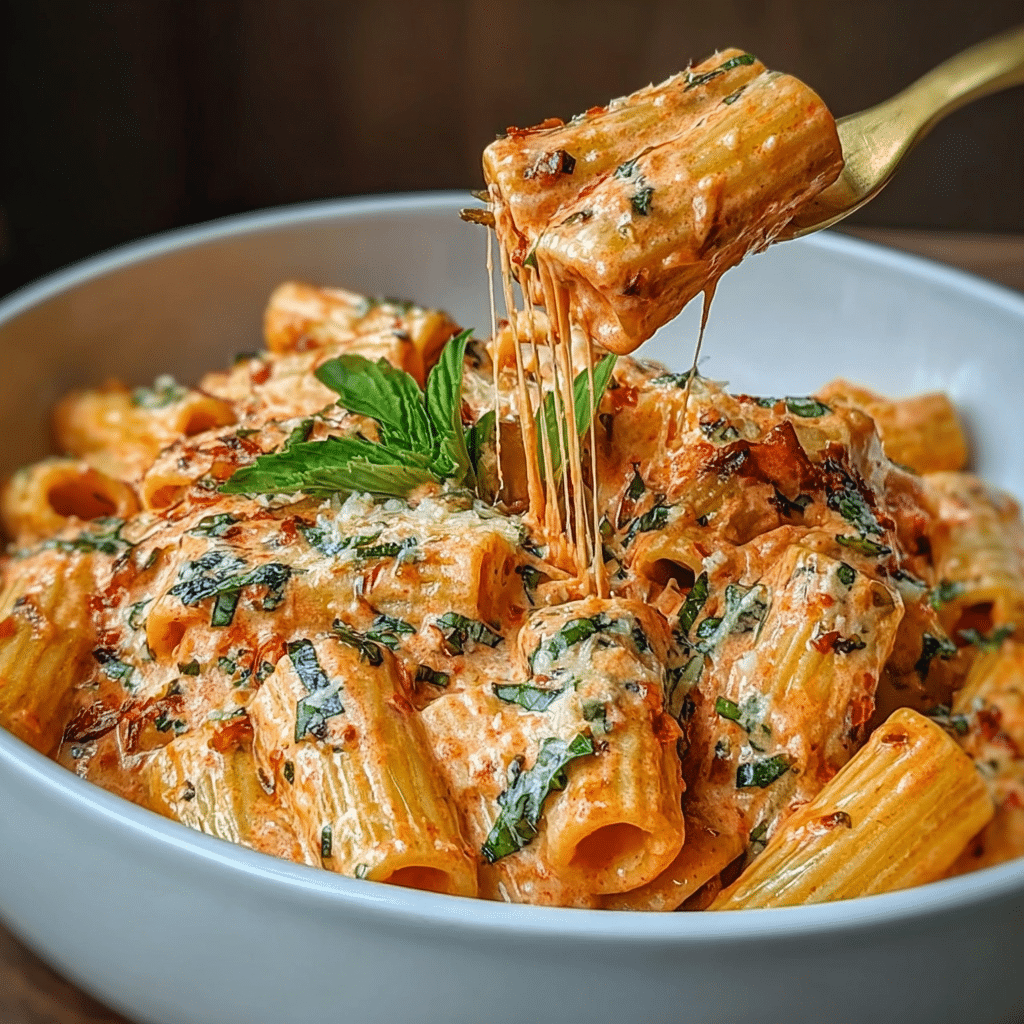
Introduction: When Pantry Staples Become Pure Magic
There are pasta dishes that require hours of simmering, dozens of ingredients, and the precision of a seasoned Italian nonna. And then there is this Creamy Tomato Garlic Pasta—a dish that proves simplicity is the ultimate sophistication. With just seven core ingredients and less than 30 minutes, you can create a meal that tastes like it belongs in a rustic Italian trattoria, yet it is easy enough to make on the busiest Tuesday night.
Let us talk about what makes this dish so extraordinary. The sauce is a beautiful paradox: it is both light and luxurious, tangy and creamy, simple and deeply flavorful. Ripe tomatoes are simmered just long enough to concentrate their sweetness and break down into a rustic sauce. Fresh garlic is sautéed in golden olive oil until fragrant and nutty. Then, heavy cream is stirred in, transforming the mixture into a velvety, blush-colored sauce that clings to every strand of pasta. Fresh basil adds a bright, peppery finish that cuts through the richness, and a shower of Parmesan (optional but highly recommended) adds salty, nutty umami.
This recipe is a masterclass in restraint. There is no tomato paste, no onion, no carrot, no celery, no wine, no long-simmered meat ragu. Just tomatoes, garlic, cream, olive oil, basil, salt, and pepper. And yet, the result is greater than the sum of its parts. The key is using ripe, flavorful tomatoes and treating them with respect—allowing them to simmer gently so their natural sweetness shines. The garlic is not an afterthought; it is a star, infusing the oil and the cream with its aromatic pungency.
What makes this recipe particularly brilliant for home cooks is its speed and flexibility. The entire dish comes together in the time it takes to boil pasta. It uses ingredients that are likely already in your kitchen. It welcomes substitutions (canned tomatoes for fresh, half-and-half for cream, different pasta shapes). It scales easily for crowds and can be dressed up for company or kept simple for a family dinner. It is naturally vegetarian and can be made vegan or gluten-free with minor modifications (see the FAQ section).
In this article, we will explore every nuance of Creamy Tomato Garlic Pasta. We will discuss the best ingredients, from choosing the right tomatoes to understanding the role of heavy cream. We will walk through a detailed, step-by-step method that ensures success, whether you are a confident cook or a pasta novice. Finally, we will answer the most frequently asked questions, offering substitutions, storage tips, and creative variations to make this recipe a permanent fixture in your dinner rotation.
Bring a large pot of salted water to a boil. It is time to make something creamy, garlicky, and unforgettable.
Ingredients: The Building Blocks of Creamy, Garlicky Perfection
Before we fire up the stove, let us take a moment to understand each ingredient. This recipe is intentionally lean—just seven core components plus optional garnishes—but every one plays a critical role. Below is the complete list, followed by detailed notes on selection, quality, and potential substitutions.
The Core Ingredients:
- 8 oz spaghetti or fettuccine
- 1 cup ripe tomatoes (diced)
- 1 cup heavy cream
- 4 cloves fresh garlic (minced)
- 2 tablespoons extra virgin olive oil
- ¼ cup fresh basil (chopped)
- Salt and pepper to taste
Optional Garnish:
- Grated Parmesan cheese
Cook Mode Note: As you prepare this recipe, you may want to prevent your screen from going dark. Most devices offer a “stay awake” or “cook mode” setting in their display options, allowing you to reference the instructions without constantly tapping the screen.
Ingredient Deep Dive
1. Spaghetti or Fettuccine (8 oz)
The pasta is the canvas for this creamy tomato sauce, and the shape matters. Spaghetti is a classic choice—its long, thin strands allow the sauce to coat evenly without overwhelming the pasta. Fettuccine is wider and flatter, with more surface area to capture the creamy sauce. Both work beautifully. Other excellent options include: linguine (similar to spaghetti but slightly flattened), tagliatelle (similar to fettuccine), or even penne or rigatoni (short shapes that trap sauce in their tubes). Avoid very thin pasta like angel hair, which can become mushy, or very delicate shapes that may not hold up to the creamy sauce. Eight ounces is a standard half-box of pasta and serves 2–3 as a main course or 4 as a side.
2. Ripe Tomatoes (1 cup, diced)
Tomatoes are the soul of this sauce. Using ripe, flavorful tomatoes is essential because the sauce has no tomato paste or other concentrated tomato products to fall back on. Look for tomatoes that are deeply colored, slightly soft to the touch, and fragrant. Roma tomatoes (plum tomatoes) are an excellent choice—they have fewer seeds and less liquid than other varieties, resulting in a thicker sauce. Cherry or grape tomatoes (halved or quartered) are even sweeter and cook down quickly. Heirloom tomatoes add complex, fruity notes. If fresh tomatoes are not in season, you can substitute 1 can (14.5 oz) of diced tomatoes, drained (see FAQ). Do not use canned crushed tomatoes or tomato sauce, which have a different consistency and will not produce the same fresh flavor.
3. Heavy Cream (1 cup)
Heavy cream is what transforms this tomato sauce from simple to luxurious. Its high fat content (36% or more) creates a stable emulsion, resulting in a velvety, smooth sauce that clings to the pasta. Heavy cream also balances the acidity of the tomatoes, creating a rich, mellow flavor. Do not substitute half-and-half, light cream, or milk; they contain less fat and will result in a thinner, less stable sauce that may curdle. If you are looking to lighten the dish, you can reduce the cream to ½ cup and add ½ cup of pasta water (see FAQ), but the texture will be less indulgent.
4. Fresh Garlic (4 cloves, minced)
Garlic is the aromatic backbone of this dish. Four cloves may sound like a lot, but garlic mellows dramatically when sautéed, losing its sharp, raw bite and developing a sweet, nutty, almost caramelized flavor. Mincing the garlic finely ensures that it distributes evenly throughout the sauce and every bite contains a hint of garlicky goodness. For the best flavor, use fresh garlic cloves rather than pre-minced jarred garlic, which often contains preservatives and has a flat, bitter taste. If you are a garlic lover, feel free to add a fifth or sixth clove. If you are sensitive to garlic, reduce to 2–3 cloves.
5. Extra Virgin Olive Oil (2 tablespoons)
Extra virgin olive oil is used to sauté the garlic and forms the flavor base of the sauce. Its fruity, peppery notes complement the tomatoes and garlic beautifully. Use a good-quality olive oil—since this recipe has so few ingredients, the quality of the oil matters. Do not substitute vegetable oil or butter; the flavor will be noticeably different. If you do not have extra virgin olive oil, regular olive oil will work, though the flavor will be less pronounced.
6. Fresh Basil (¼ cup, chopped)
Fresh basil is the finishing touch that brightens the entire dish. Its sweet, slightly peppery, anise-like flavor is a classic pairing with tomatoes and garlic. Adding the basil at the very end (off the heat) preserves its fresh flavor and vibrant green color. Do not substitute dried basil, which has a different flavor profile and will not provide the same freshness. If you do not have basil, fresh parsley or fresh oregano can substitute, though the flavor will be different.
7. Salt and Pepper (to taste)
These foundational seasonings are essential for bringing out the flavors of the tomatoes, garlic, and cream. Use kosher salt or fine sea salt rather than table salt. Freshly ground black pepper adds a subtle warmth and bite. Season in layers: a little salt with the tomatoes, more at the end after tasting.
8. Grated Parmesan Cheese (optional, for garnish)
Parmesan is optional but highly recommended. It adds salty, nutty, umami richness that complements the creamy tomato sauce beautifully. Use freshly grated Parmesan from a wedge (Parmigiano-Reggiano is the gold standard). Pre-shredded or pre-grated Parmesan contains anti-caking agents that prevent it from melting smoothly. A Microplane or fine box grater yields light, fluffy shreds that melt instantly.
Preparation Method: Step-by-Step to Creamy, Garlicky Perfection
Now, we move from ingredient appreciation to action. Follow these instructions carefully, and you will be rewarded with perfect Creamy Tomato Garlic Pasta. The total active time is approximately 20–25 minutes.
Step 1: Bring Pasta Water to a Boil (5 minutes)
Action: Fill a large pot (at least 5-6 quarts) with water. Add a generous amount of salt—approximately 1 to 1.5 tablespoons of kosher salt. The water should taste like the sea. Bring the water to a rolling boil over high heat.
Why this matters: Salting the pasta water is the only opportunity to season the pasta itself from the inside out. Undersalted water yields bland pasta, no matter how flavorful the sauce. The salt also helps the pasta water become starchier, which can be used to adjust the sauce consistency if needed. A rolling boil ensures the pasta cooks evenly and does not stick together.
Pro Tip: Do not add oil to the pasta water. Oil coats the pasta and prevents sauce from adhering. Stir the pasta occasionally during cooking to prevent sticking instead.
Step 2: Cook the Pasta (8–10 minutes)
Action: Once the water is boiling vigorously, add 8 oz of spaghetti or fettuccine. Stir immediately to prevent the pasta from sticking to itself or the bottom of the pot. Cook according to package directions for al dente (firm to the bite). For most dried pasta, this takes 8–10 minutes.
Just before draining, reserve ½ cup of the pasta water (actually, reserve 1 full cup to be safe). Use a ladle, a heatproof measuring cup, or a coffee mug to scoop out the water and set it aside. Then, drain the pasta in a colander. Do not rinse the pasta; the starch on the surface helps the sauce cling.
Why this matters: Cooking pasta to al dente ensures it has a pleasant chew and holds its shape when tossed with the sauce. Reserving pasta water is a chef’s secret—the starchy water can be used to thin the sauce if needed and helps the sauce adhere to the pasta. Do not rinse the pasta, as rinsing washes away the beneficial starch and cools the pasta, making it harder for the sauce to absorb.
Pro Tip: If your pasta finishes cooking before the sauce is ready, toss it with a drizzle of olive oil to prevent sticking, and cover it loosely with foil to keep warm.
Step 3: Sauté the Garlic (2 minutes)
Action: While the pasta is cooking, place a large skillet (12-inch) over medium heat. Add 2 tablespoons of extra virgin olive oil. Once the oil is shimmering (hot but not smoking), add 4 cloves of minced garlic. Sauté for 30–60 seconds, stirring constantly, until the garlic is fragrant and just beginning to turn golden brown. Do not let it burn—burnt garlic becomes bitter.
Why this matters: Sautéing the garlic in olive oil releases its aromatic compounds, infusing the oil with flavor. This oil then becomes the base of the entire sauce. The goal is golden, fragrant garlic—not brown, bitter, or burnt. Because garlic cooks quickly, constant stirring and careful attention are essential.
Pro Tip: If the garlic is browning too quickly, reduce the heat to medium-low. You want a gentle sizzle, not a violent fry.
Step 4: Simmer the Tomatoes (5 minutes)
Action: Add 1 cup of diced ripe tomatoes to the skillet with the garlic. Season with salt and pepper to taste (start with ½ teaspoon salt and ¼ teaspoon pepper). Stir to combine.
Cook the tomatoes over medium heat for about 5 minutes, stirring occasionally. The tomatoes will soften, release their juices, and break down slightly. The mixture should be simmering gently—small bubbles breaking the surface. After 5 minutes, the tomatoes should be soft and the liquid slightly reduced.
Why this matters: Simmering the tomatoes concentrates their natural sweetness and deepens their flavor. The heat also helps break down the tomato skins and soften the flesh, creating a rustic sauce base. This step is essential for developing flavor; do not rush it.
Pro Tip: If your tomatoes are very watery, cook for an additional 2–3 minutes to allow excess liquid to evaporate. If they seem dry, add a splash of reserved pasta water or regular water.
Step 5: Add the Heavy Cream (2 minutes)
Action: Reduce the heat to low. Pour 1 cup of heavy cream into the skillet with the tomato mixture. Stir gently until the cream is well blended with the tomatoes. The sauce will turn a beautiful blush pink or light orange color.
Continue to cook over low heat for 1–2 minutes, stirring occasionally, until the sauce is heated through and slightly thickened. Do not let the sauce boil—boiling can cause the cream to curdle or separate.
Why this matters: Adding the cream off the heat (or over very low heat) prevents curdling. The gentle heat allows the cream to warm gradually and emulsify with the tomato mixture, creating a smooth, velvety sauce. The color change is dramatic and beautiful—from bright red to soft blush.
Pro Tip: If the sauce seems too thick after adding the cream, stir in a splash of reserved pasta water (1–2 tablespoons at a time) until it reaches your desired consistency. If it seems too thin, simmer gently for an additional 2–3 minutes to reduce.
Step 6: Toss the Pasta in the Sauce (1 minute)
Action: Add the drained pasta to the skillet with the creamy tomato garlic sauce. Use tongs or two large spoons to toss the pasta gently until it is evenly coated with the sauce. If the sauce seems too thick, add a splash of reserved pasta water (1–2 tablespoons) and toss again. The pasta water’s starch will help the sauce cling to the noodles.
Why this matters: Tossing the pasta in the skillet (rather than pouring the sauce over the pasta on a plate) ensures that every strand is coated evenly. The residual heat from the sauce warms the pasta through. Adding pasta water adjusts the consistency and helps create a silky, cohesive sauce.
Pro Tip: Use tongs to lift and turn the pasta repeatedly, as if you were tossing a salad. This motion aerates the sauce and helps it coat the pasta evenly.
Step 7: Garnish and Serve (1 minute)
Action: Remove the skillet from the heat. Sprinkle ¼ cup of chopped fresh basil over the pasta. Toss once more to distribute the basil, or simply scatter it on top as a garnish. If desired, top with grated Parmesan cheese. Serve immediately, while the pasta is hot and the sauce is creamy.
Why this matters: Adding the basil at the very end (off the heat) preserves its fresh flavor, bright color, and delicate texture. If cooked, basil wilts, darkens, and loses its characteristic aroma. The Parmesan adds a final layer of salty, nutty umami. Serving immediately ensures the pasta is at its peak—hot, creamy, and perfectly coated.
Pro Tip: For a beautiful presentation, twirl the pasta into a neat nest on each plate using tongs or a fork. Spoon any remaining sauce from the skillet over the top. Garnish with a few whole basil leaves and an extra sprinkle of Parmesan. A drizzle of high-quality extra virgin olive oil at the table adds a final touch of richness.
Conclusion: Simple Ingredients, Extraordinary Results
The Creamy Tomato Garlic Pasta is proof that you do not need a long ingredient list or complicated techniques to create a memorable meal. With just a handful of pantry staples—pasta, tomatoes, garlic, cream, olive oil, and basil—you can produce a dish that is luxurious, comforting, and deeply satisfying. The sauce is velvety and rich, yet the fresh tomatoes and basil keep it bright and balanced. The garlic infuses every bite with aromatic warmth.
This recipe is a celebration of simplicity and quality. When you use ripe, flavorful tomatoes and good olive oil, the dish sings. When you treat the garlic with care (golden, not burnt) and add the cream gently (no boiling), the sauce is silky and stable. These are small details, but they make all the difference.
This is also a recipe that invites creativity. Once you master the basic technique, you can experiment with different pasta shapes, add protein (grilled chicken, shrimp, or Italian sausage), toss in vegetables (spinach, mushrooms, or zucchini), or spice it up (red pepper flakes or a pinch of cayenne). The possibilities are endless, and the results are always delicious.
So boil that water, mince that garlic, and dice those tomatoes. Your new favorite pasta dish is just 25 minutes away.
Frequently Asked Questions (FAQ)
1. Can I use canned tomatoes instead of fresh?
Yes. When fresh tomatoes are not in season (or when you are short on time), canned diced tomatoes are an excellent substitute. Use 1 can (14.5 oz) of diced tomatoes, drained. Drain them well to remove excess liquid, which can make the sauce watery. If you prefer a smoother sauce, you can pulse the drained tomatoes in a food processor a few times before adding them to the skillet. Do not use crushed tomatoes or tomato sauce—they have a different consistency and will not produce the same fresh flavor.
2. Can I use half-and-half instead of heavy cream?
Half-and-half can be used, but the sauce will be thinner and less rich. Half-and-half contains about 10–18% fat, compared to heavy cream’s 36%+. To use half-and-half, reduce the heat to low when adding it and do not let it simmer, as half-and-half is more likely to curdle. For best results, use heavy cream as written. If you want a lighter dish, use ½ cup heavy cream and ½ cup reserved pasta water—this reduces the fat while still providing some creaminess.
3. Can I make this recipe dairy-free?
Yes. Substitute the heavy cream with full-fat canned coconut milk or cashew cream (soaked cashews blended with water). The flavor will be different (coconut milk adds a subtle coconut flavor; cashew cream is more neutral). Use a dairy-free Parmesan alternative or nutritional yeast for the cheesy flavor. Ensure your pasta is egg-free if needed (most dried pasta is).
4. Can I add protein to this dish?
Absolutely. This sauce pairs beautifully with many proteins. Grilled or sautéed chicken (slice and serve on top), shrimp (sauté in the skillet before making the sauce, then add back at the end), Italian sausage (casings removed, crumbled and browned), or canned tuna (drained and flaked, stirred in at the end). For a vegetarian protein, add canned chickpeas (drained and rinsed) or crumbled tofu (pan-fried until golden).
5. Can I add vegetables to this dish?
Yes. Vegetables are a great addition. Add them after sautéing the garlic and before adding the tomatoes. Good options include: sliced mushrooms (sauté for 3–4 minutes), baby spinach (stir in at the very end until wilted), zucchini (diced, sauté for 2–3 minutes), bell peppers (diced, sauté for 2–3 minutes), or roasted red peppers (chopped, add with the tomatoes). If adding vegetables, you may want to increase the cream slightly (add an extra ¼ cup) or add a splash of pasta water to maintain the sauce consistency.
6. How do I store and reheat leftovers?
Store leftovers in an airtight container in the refrigerator for up to 2 days. To reheat, the stovetop is best: place leftovers in a skillet over medium-low heat, add a splash of milk, cream, or pasta water to loosen the sauce, and stir gently until heated through. The microwave works: place a portion in a microwave-safe bowl, cover loosely, and heat in 30-second intervals on medium power, stirring between intervals. The sauce may thicken and the pasta may absorb more liquid as it sits, so adding liquid when reheating is important. This dish does not freeze well; the cream sauce can separate upon thawing.
7. Why did my sauce curdle or separate?
Curdled or separated sauce is usually caused by one of three issues. First, the heat may have been too high when adding the cream. Cream should be added over low heat and never boiled. Second, you may have added the cream too quickly or without stirring. Add it gradually while stirring constantly. Third, the tomatoes may have been very acidic, which can cause dairy to curdle. To prevent this, ensure your tomatoes are ripe (less acidic) or add a pinch of baking soda to the tomatoes before adding the cream (this neutralizes acidity). If your sauce curdles, remove it from the heat immediately and whisk vigorously—this can sometimes bring it back together.
8. Can I make this recipe spicy?
Yes. To add heat, add ½–1 teaspoon of red pepper flakes when you sauté the garlic. You can also add ¼ teaspoon of cayenne pepper or 1 teaspoon of sriracha along with the cream. For a more complex heat, add 1 teaspoon of Calabrian chili paste or garnish with fresh sliced red chilies. Start with a small amount and adjust to your heat preference.
9. Can I use a different pasta shape?
Yes. While spaghetti and fettuccine are classic, this sauce works beautifully with many shapes. Short shapes like penne, rigatoni, farfalle (bowties), or fusilli (spirals) are excellent—their nooks and crannies capture the creamy sauce. Long, thin shapes like linguine or tagliatelle also work. Avoid very delicate shapes like angel hair (can become mushy) or very large shapes like lasagna noodles (not practical for tossing). If using a different shape, the cooking time may vary; follow package directions for al dente.
10. Can I make this recipe vegan?
Yes, with several substitutions. Use vegan pasta (most dried pasta is vegan, but check labels for eggs). Substitute the heavy cream with full-fat canned coconut milk or cashew cream. Use nutritional yeast (2–3 tablespoons) instead of Parmesan cheese for a cheesy, umami flavor. Omit the Parmesan or use a vegan Parmesan alternative. The sauce will be slightly different but still delicious.
11. Why do I need to reserve pasta water?
Reserved pasta water is a chef’s secret weapon. It is starchy and slightly salty, and it serves two purposes: it can be used to thin the sauce if it becomes too thick, and the starch helps the sauce adhere to the pasta. The starch acts as an emulsifier, helping the cream and tomato mixture become a cohesive, clingy sauce rather than a thin, watery liquid. Always reserve at least ½ cup of pasta water before draining—you can always discard the extra, but you cannot go back in time to save it.
12. Can I add onion to this recipe?
Yes. Onion adds sweetness and depth. Dice ½ small yellow or white onion and sauté it before the garlic. Cook the onion over medium heat for 3–4 minutes until soft and translucent, then add the garlic and cook for an additional 30–60 seconds. Then proceed with the tomatoes. This is not traditional in a quick tomato garlic sauce, but it is a delicious variation.
13. Can I make this recipe without cream?
Yes, though it will be a different dish. Omit the cream entirely and use ½ cup of reserved pasta water to create a lighter, thinner sauce. The result will be more of a traditional tomato garlic sauce (similar to a quick pomodoro) rather than a creamy sauce. Alternatively, use crème fraîche or full-fat Greek yogurt (add at the very end, off the heat, to prevent curdling). These will provide some creaminess but will not be as rich as heavy cream.
14. Can I use roasted garlic instead of fresh?
Yes. Roasted garlic has a sweeter, milder, nuttier flavor than fresh. Roast a whole head of garlic (cut off the top, drizzle with olive oil, wrap in foil, and bake at 400°F for 40 minutes). Squeeze the roasted cloves out of their skins and mash into a paste. Add the roasted garlic paste to the skillet after sautéing the fresh garlic (or instead of fresh garlic). Use 6–8 roasted cloves to replace the 4 fresh cloves. The flavor will be more mellow and caramelized.
15. What should I serve with this dish?
Creamy Tomato Garlic Pasta is a complete meal on its own, but it pairs beautifully with simple sides. A green salad with a lemony vinaigrette adds freshness and crunch. Garlic bread or crusty bread is perfect for sopping up any remaining sauce. Roasted vegetables (asparagus, broccoli, or green beans) add color and nutrition. Grilled chicken or shrimp (served on top) adds protein. A glass of white wine (Pinot Grigio or Sauvignon Blanc) or a light red (Chianti or Pinot Noir) complements the creamy tomato sauce beautifully.
Creamy Tomato Garlic Pasta: A Simple, Luxurious Weeknight Dinner
A rich and creamy tomato garlic pasta made with fresh tomatoes, garlic, and silky cream tossed with perfectly cooked pasta.
- Prep Time: 10 minutes
- Cook Time: 15 minutes
- Total Time: 25 minutes
- Yield: 2–3 servings
- Category: Main Dish, Pasta
- Method: Stovetop
- Cuisine: Italian-Inspired
- Diet: Vegetarian
Ingredients
- 8 oz spaghetti or fettuccine
- 1 cup ripe tomatoes, diced
- 1 cup heavy cream
- 4 cloves garlic, minced
- 2 tbsp extra virgin olive oil
- 1/4 cup fresh basil, chopped
- Salt and pepper to taste
- Optional: grated Parmesan cheese
Instructions
- Cook pasta in salted boiling water until al dente. Drain and set aside.
- Heat olive oil in a skillet over medium heat and sauté garlic until golden.
- Add diced tomatoes, salt, and pepper. Simmer for 5 minutes.
- Lower heat and stir in heavy cream until smooth and creamy.
- Add cooked pasta and toss until fully coated in sauce.
- Serve topped with fresh basil and optional Parmesan cheese.
Notes
- Use fresh ripe tomatoes for best flavor.
- Add chili flakes for a spicy version.
- Reserve pasta water if you want a looser sauce.