
Introduction: The One-Pan Revelation Your Weeknights Have Been Waiting For
There is a specific kind of exhaustion that settles in around 5:30 PM on a Tuesday. You have worked all day, perhaps navigated school pickups, answered a dozen emails, and stared into the open refrigerator hoping for inspiration to strike. The last thing you want is a sink full of pots, a counter littered with measuring cups, and a recipe that requires more than one pan.
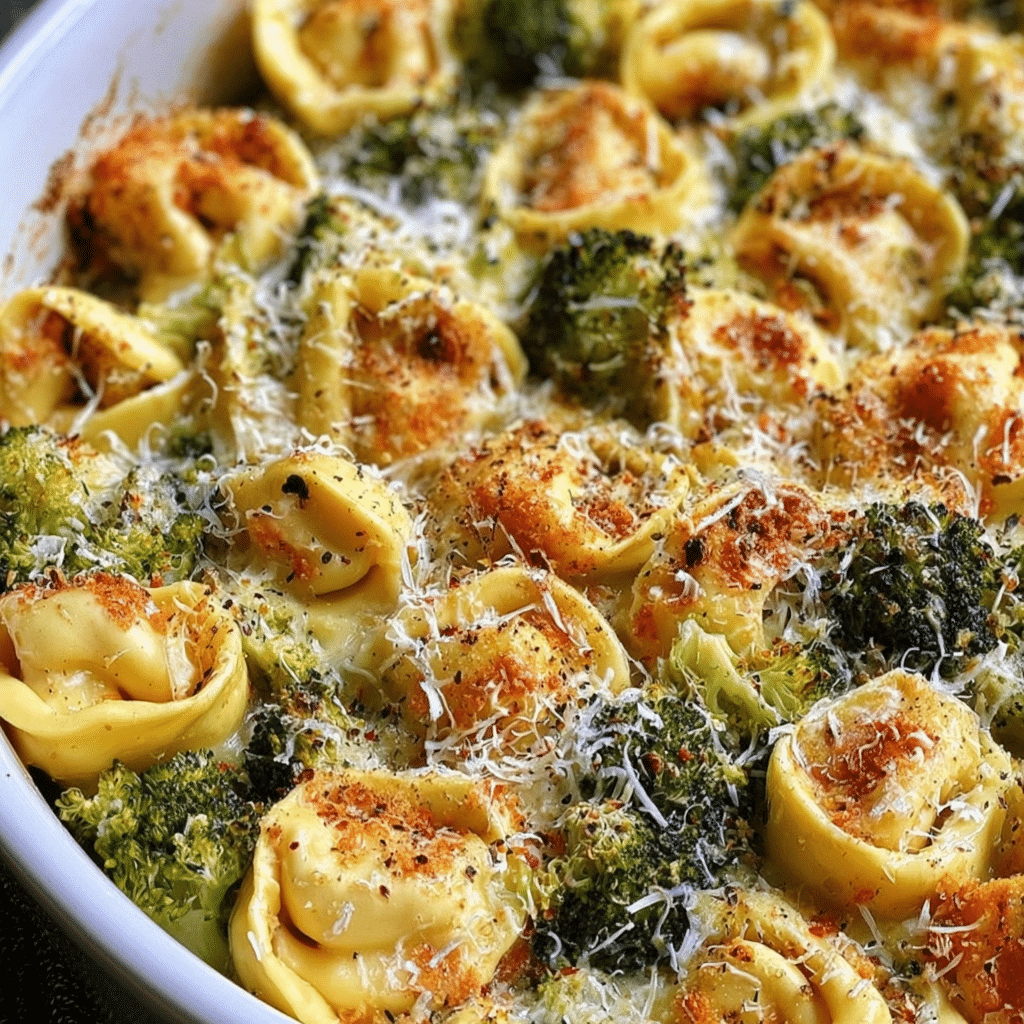
Enter the Sheet Pan Broccoli Tortellini Bake. This recipe is not just dinner; it is a strategy for reclaiming your evenings. It belongs to a beloved category of cooking that prioritizes efficiency without sacrificing flavor, texture, or visual appeal. In under 30 minutes of active time, you can transform a handful of simple ingredients—fresh broccoli, garlicky chicken sausage, frozen cheese tortellini, and a generous shower of Parmesan—into a meal that tastes like you fussed for hours.
The sheet pan is, in many ways, the unsung hero of the modern kitchen. It is the culinary equivalent of a blank canvas, and this recipe treats it as such. By staggering the cooking times—first roasting the broccoli and garlic to bring out their natural sweetness, then adding the remaining ingredients for a final blast of high heat—we achieve multiple textures in a single vessel. The broccoli becomes tender with crisp, caramelized edges. The tortellini puffs and browns, developing a delightful crunch on the outside while remaining tender within. The sausage releases its savory juices, flavoring everything it touches. And the Parmesan cheese forms a golden, lacy crust that is arguably the best part of the entire dish.
This recipe is also a masterclass in flexibility. It welcomes substitutions (see the FAQ section) and adapts to whatever you have in your refrigerator. It is vegetarian-friendly, gluten-free adaptable, and endlessly variable based on your preferred protein or pasta. But perhaps most importantly, it is delicious—the kind of dinner that even picky eaters will request again and again.
In this article, we will explore every detail of the Sheet Pan Broccoli Tortellini Bake. We will discuss the best ingredients, from selecting the right sausage to understanding the role of high heat in achieving crispiness. We will walk through a step-by-step method that ensures success, whether you are a sheet pan novice or a seasoned pro. Finally, we will answer the most frequently asked questions, offering substitutions, storage tips, and creative variations to make this recipe a permanent fixture in your weekly rotation.
Preheat your oven to 400°F. It is time to discover the magic of one-pan cooking.
Ingredients: The Building Blocks of a Perfect One-Pan Meal
Before we preheat the oven or line a single sheet pan, let us take a moment to understand each ingredient. This recipe is intentionally lean—just eight core components plus a few optional seasonings—but each one plays a critical role. Below is the complete list, followed by detailed notes on selection, quality, and potential substitutions.
The Core Ingredients:
- 1.5 lbs fresh broccoli florets (cut into 1.5-inch pieces)
- 3 cloves garlic, minced
- 11 oz chicken sausage, sliced into rounds
- 16 oz frozen cheese tortellini (do not thaw)
- 1 cup grated Parmesan cheese, divided
- 6 tablespoons olive oil, divided
- Salt and pepper to taste
- Red chili flakes (optional, for heat)
Cook Mode Note: As you prepare this recipe, you may want to prevent your screen from going dark. Most devices offer a “stay awake” or “cook mode” setting in their display options, allowing you to reference the instructions without constantly tapping the screen.
Ingredient Deep Dive
1. Fresh Broccoli Florets (1.5 lbs, cut into 1.5-inch pieces)
Broccoli is the vegetable anchor of this dish, providing color, nutrition, and a satisfying contrast to the rich tortellini and sausage. The specified 1.5-inch pieces are not arbitrary: this size allows the florets to become tender in the center while developing crispy, caramelized edges on the outside. If you cut the pieces too small, they will overcook and turn to mush. Too large, and they will remain raw and fibrous. Fresh broccoli is strongly preferred over frozen for this recipe because frozen broccoli releases significant water as it thaws, which would steam rather than roast the vegetables and prevent browning. Look for broccoli with tight, dark green florets and firm, not rubbery, stems. One and a half pounds is approximately two large heads of broccoli.
2. Garlic (3 cloves, minced)
Garlic is the aromatic backbone of the dish. When roasted at high heat, raw garlic mellows dramatically, losing its sharp bite and developing a sweet, nutty, almost caramelized flavor. Mincing the garlic finely ensures that it distributes evenly across the sheet pan and does not overwhelm any single bite. For the best results, use fresh garlic cloves rather than pre-minced jarred garlic, which can have a bitter, preservative-laden taste. If you are a garlic lover, feel free to add a fourth clove. If you are garlic-hesitant, you can reduce to two cloves or substitute 1/2 teaspoon of garlic powder.
3. Chicken Sausage (11 oz, sliced into rounds)
Chicken sausage provides protein, savory flavor, and a pleasant textural contrast to the soft tortellini and tender broccoli. The 11-ounce package is a standard size at most grocery stores. When selecting your sausage, look for fully cooked varieties (most chicken sausages are sold pre-cooked) to simplify the process—you are simply heating and browning them, not cooking raw meat. Flavor options abound: sun-dried tomato and basil, spinach and feta, roasted garlic, or mild Italian are all excellent choices. Avoid sausages with casings that are tough or overly rubbery; if your sausage has a casing, you can remove it before slicing, though this is usually unnecessary. For a spicier dish, choose a hot Italian chicken sausage or add extra red chili flakes.
4. Frozen Cheese Tortellini (16 oz, do not thaw)
Frozen cheese tortellini is the brilliant shortcut at the heart of this recipe. Because it is frozen, it holds its shape during the high-heat roasting process and develops a delightful crispy exterior while remaining tender and creamy inside. Do not thaw the tortellini before adding it to the sheet pan; thawed tortellini will become sticky, clump together, and may turn mushy. The cheese filling (typically a blend of ricotta, Parmesan, and sometimes mozzarella) adds richness and binds the dish together. You can also use other stuffed pastas—ravioli, agnolotti, or even tortelloni—as long as they are frozen and cheese-filled. If you cannot find cheese tortellini, three-cheese or spinach-cheese tortellini work beautifully.
5. Grated Parmesan Cheese (1 cup, divided)
Parmesan is the flavor amplifier of this dish. It adds salty, nutty, umami richness that ties the other ingredients together. The recipe calls for the Parmesan to be divided: half is mixed into the main ingredients before baking, where it melts and coats the tortellini and vegetables, and half is reserved (implied) for finishing, though the instructions mention only the first half. For best results, grate your own Parmesan from a wedge. Pre-shredded or pre-grated Parmesan often contains anti-caking agents like cellulose or potato starch, which prevent it from melting smoothly and can leave a gritty texture. A Microplane or box grater yields light, fluffy shreds that melt beautifully. Pecorino Romano (sheep’s milk cheese, saltier and sharper) can substitute for some or all of the Parmesan.
6. Olive Oil (6 tablespoons, divided)
Olive oil is the engine of browning and crispiness. It conducts heat evenly, helps the ingredients caramelize rather than steam, and adds its own fruity, peppery flavor. The oil is divided: 2 tablespoons for the initial broccoli roast, and the remaining 4 tablespoons for the final mix. Extra-virgin olive oil is ideal because of its superior flavor and higher smoke point (around 410°F, which is above our highest oven temperature of 450°F). If you do not have olive oil, avocado oil or grapeseed oil are excellent neutral substitutes. Avoid butter for the high-heat portions, as it can burn and become bitter.
7. Salt and Pepper (to taste)
These foundational seasonings are non-negotiable. Salt enhances the natural flavors of every ingredient, while black pepper adds a subtle warmth and bite. Use kosher salt or fine sea salt rather than table salt, which can taste harsh and metallic. For the pepper, freshly ground black pepper is always superior to pre-ground. Season in layers: a little when you first toss the broccoli, more when you combine all the ingredients, and a final pinch before serving if needed.
8. Red Chili Flakes (optional)
Red chili flakes are the optional spark of heat that can transform this dish from comforting to exciting. They add a gentle, building warmth rather than aggressive spiciness. If you are sensitive to heat, omit them entirely. If you love spice, you can also add a pinch of cayenne pepper or drizzle the finished dish with your favorite hot sauce. For a different kind of warmth, consider black pepper or a sprinkle of smoked paprika.
Preparation Method: Step-by-Step to Sheet Pan Perfection
Now, we move from ingredient appreciation to action. Follow these instructions carefully, and you will be rewarded with a perfect Sheet Pan Broccoli Tortellini Bake. The total active time is approximately 15 minutes, with a total cook time of about 25–30 minutes.
Step 1: Preheat the Oven and Prepare the Broccoli (5 minutes)
Action: Preheat your oven to 400°F (200°C) . While the oven heats, wash and dry the broccoli florets. Cut them into uniform 1.5-inch pieces, including as much of the stem as you like (the stems are delicious and should not be discarded). In a large mixing bowl, combine the broccoli florets with 3 cloves of minced garlic, 2 tablespoons of olive oil, and a generous pinch of salt and pepper. Toss until every piece of broccoli is glistening with oil and the garlic is evenly distributed.
Why this matters: Starting the broccoli at 400°F allows it to begin roasting and caramelizing before the other ingredients are added. Broccoli needs a head start because it is dense and takes longer to become tender than frozen tortellini or pre-cooked sausage. The initial 10-minute roast at moderate heat softens the broccoli and begins to develop those coveted crispy, browned edges. Tossing thoroughly ensures that each floret is coated in oil, which promotes even browning and prevents sticking to the pan.
Pro Tip: For the crispiest results, arrange the broccoli in a single layer on the sheet pan with space between the florets. If they are crowded, they will steam rather than roast. Use two sheet pans if necessary, or roast in batches.
Step 2: Roast the Broccoli and Garlic (10 minutes)
Action: Spread the seasoned broccoli and garlic mixture in a single, even layer on a large, rimmed baking sheet (half-sheet pan, approximately 13×18 inches, is ideal). Place the sheet pan on the middle rack of your preheated 400°F oven. Roast for 10 minutes. The broccoli should be bright green, slightly softened, and just beginning to show brown spots on the edges.
Why this matters: This 10-minute head start transforms the broccoli from raw and crunchy to partially roasted and sweet. The high heat caramelizes the natural sugars in the vegetable, while the garlic mellows and becomes fragrant. If you were to add all ingredients at once, the tortellini would be done long before the broccoli was palatable, leaving you with either raw broccoli or overcooked pasta. Staggering the cooking times is the secret to one-pan success.
Pro Tip: Do not flip or stir the broccoli during this initial roast. Leaving it undisturbed allows the underside to brown and crisp. You will toss everything together later.
Step 3: Increase the Oven Temperature (1 minute)
Action: After the broccoli has roasted for 10 minutes, remove the sheet pan from the oven (close the oven door to retain heat). Increase the oven temperature to 450°F (230°C) .
Why this matters: The final stage of baking requires higher heat to achieve the crispy, golden, almost fried texture we want on the tortellini and the edges of the broccoli. The jump from 400°F to 450°F provides the intensity needed for rapid browning without overcooking the interior of the pasta. Think of it as the difference between a gentle simmer and a vigorous sear.
Pro Tip: While the oven is heating to the new temperature, use this time to prepare the remaining ingredients. Efficiency is the soul of sheet pan cooking.
Step 4: Combine All Remaining Ingredients (3 minutes)
Action: In the same large mixing bowl you used for the broccoli, combine the following:
- The partially roasted broccoli and garlic from the sheet pan (transfer it back to the bowl)
- 11 oz chicken sausage, sliced into rounds
- 16 oz frozen cheese tortellini (do not thaw)
- The remaining 4 tablespoons of olive oil
- 1/2 cup of grated Parmesan cheese
- Salt, pepper, and red chili flakes (if using) to taste
Toss everything together until the tortellini, sausage, and broccoli are evenly coated in oil and Parmesan. The frozen tortellini will still be frozen and hard—this is correct.
Why this matters: Tossing all the ingredients together ensures that the oil, cheese, and seasonings coat every surface. This promotes even browning and ensures that no bite is bland. Adding the Parmesan at this stage allows it to melt onto the tortellini and broccoli during baking, creating a cheesy, crispy crust. The frozen tortellini does not need to thaw; in fact, starting from frozen helps it hold its shape and develop that desirable crispy exterior.
Pro Tip: If the mixture seems dry, add an additional tablespoon of olive oil. The tortellini should look glossy, not dusty or matte.
Step 5: Bake at High Heat Until Golden and Crispy (12–15 minutes)
Action: Spread the combined mixture back onto the same sheet pan (or a fresh one if yours is dirty) in a single, even layer. Do not overcrowd; the ingredients should have room to breathe. Place the sheet pan in the oven, now heated to 450°F (230°C) . Bake for 12 to 15 minutes. You will know the dish is ready when:
- The tortellini is puffed, golden brown, and crispy on the outside edges.
- The broccoli is tender with deep caramelized spots.
- The sausage is browned in places.
- The Parmesan cheese has formed a lacy, golden crust on the pan and on the ingredients.
- The edges of the ingredients on the perimeter of the pan are darker and crispier than those in the center.
Why this matters: The high heat of 450°F is aggressive enough to brown and crisp the tortellini without overcooking the interior. The frozen pasta thaws and cooks from the outside in, creating a delightful textural contrast. The oil and cheese work together to promote browning and flavor development. The 12–15 minute window is short but powerful; check at the 12-minute mark to avoid burning.
Pro Tip: For even browning, you can gently stir or toss the ingredients halfway through the bake (around the 6–7 minute mark). However, if you prefer maximum crispiness, leave them undisturbed. The underside of the tortellini will be especially crunchy.
Step 6: Finish and Serve (2 minutes)
Action: Remove the sheet pan from the oven. The remaining 1/2 cup of grated Parmesan cheese (the second half of the divided cup) can be sprinkled over the hot casserole immediately after baking, where it will melt from the residual heat. Alternatively, you can serve the Parmesan on the side for guests to add themselves. Let the dish cool for 2–3 minutes on the sheet pan (it will continue to crisp slightly), then serve directly from the pan or transfer to a serving platter.
Why this matters: The brief cooling period allows the tortellini to set slightly and prevents burnt mouths. The final sprinkle of Parmesan (if you choose to add it) adds a fresh, sharp note that contrasts with the rich, roasted flavors underneath. Serving directly from the sheet pan is not only authentic to the “sheet pan” concept but also reduces cleanup to a single pan.
Pro Tip: Garnish with fresh herbs if you have them—chopped parsley, basil, or even chives add a pop of color and freshness. A squeeze of fresh lemon juice over the finished dish brightens all the flavors and cuts through the richness of the cheese and oil.
Conclusion: Dinner Solved, One Pan at a Time
The Sheet Pan Broccoli Tortellini Bake is more than a recipe; it is a philosophy. It says that weeknight dinner does not have to be a battle. It says that you can eat well—really well—without spending hours in the kitchen or creating a mountain of dishes. It says that frozen ingredients can be just as glorious as fresh when treated with the right technique.
This dish delivers on every promise. It is quick enough for a Tuesday but impressive enough for guests. It is hearty enough to satisfy a hungry family but balanced enough that you do not feel weighed down. The broccoli provides vitamins and fiber; the chicken sausage offers lean protein; the tortellini brings comfort and indulgence; and the Parmesan ties it all together with its salty, nutty magic.
Perhaps the greatest gift of this recipe, however, is its adaptability. As you will see in the frequently asked questions below, this dish welcomes change. Swap the sausage for mushrooms to make it vegetarian. Use gluten-free tortellini for a celiac-friendly version. Add a handful of cherry tomatoes or a sprinkle of breadcrumbs. The sheet pan is forgiving, and so is this recipe.
So the next time you find yourself staring into the refrigerator at 5:30 PM, exhausted and uninspired, remember this dish. Remember that with a bag of frozen tortellini, a head of broccoli, and a hot oven, you are never more than 30 minutes away from a dinner that is golden, crispy, cheesy, and deeply satisfying. That is the magic of one-pan cooking. That is the Sheet Pan Broccoli Tortellini Bake.
Frequently Asked Questions (FAQ)
1. Can I use fresh (not frozen) tortellini instead of frozen?
Yes, but with adjustments. Fresh tortellini cooks much faster than frozen and will become mushy if subjected to the same high-heat, 15-minute bake. To use fresh tortellini, reduce the final bake time to 5–7 minutes, watching carefully until the tortellini is heated through and just beginning to brown. Alternatively, you can par-boil fresh tortellini for 2 minutes before adding it to the sheet pan. However, the frozen variety is strongly recommended for this recipe because its structure holds up better to high heat, resulting in a superior crispy exterior.
2. What if I don’t have chicken sausage? What else can I use?
This recipe is extremely flexible. You can substitute any fully cooked sausage: turkey sausage, pork sausage (such as kielbasa or andouille), or even plant-based sausage for a vegetarian version. If using raw sausage, you will need to cook it before adding to the sheet pan; slice it and sauté in a skillet over medium heat until browned and cooked through, then proceed with the recipe. For a non-sausage protein, cooked shredded chicken, leftover steak strips, or even canned chickpeas (drained and rinsed) work beautifully. If omitting the sausage entirely, consider adding an extra 1/2 teaspoon of smoked paprika or fennel seeds to replicate the savory depth.
3. Can I make this recipe vegetarian?
Absolutely. Simply omit the chicken sausage or replace it with a plant-based sausage alternative. To maintain protein and heartiness, add 1 can of drained, rinsed chickpeas or 1 cup of cooked white beans. You can also add 8 ounces of sliced cremini mushrooms, which become wonderfully meaty when roasted at high heat. If you omit the sausage without adding a substitute, the dish will still be delicious but less substantial; consider increasing the tortellini to 20 ounces or adding a second vegetable like bell peppers or red onion.
4. How do I store and reheat leftovers?
Store leftovers in an airtight container in the refrigerator for up to 3 days. Reheating is best done in the oven or an air fryer to restore crispiness. To reheat in the oven, preheat to 375°F (190°C), spread leftovers on a sheet pan, and bake for 5–7 minutes until hot and crispy. The microwave is faster but will make the tortellini soft and the broccoli soggy; if you must use a microwave, heat in 30-second intervals on medium power. Leftovers can also be frozen for up to 2 months; thaw overnight in the refrigerator before reheating in the oven.
5. The tortellini in my bake turned out soft instead of crispy. What went wrong?
Soft tortellini is usually caused by one of three issues. First, the oven temperature may have been too low. Ensure your oven actually reaches 450°F (use an oven thermometer to verify). Second, the sheet pan may have been overcrowded, causing the ingredients to steam rather than roast. Spread everything in a single layer with space between the pieces. Third, the tortellini may have been thawed before baking (the recipe specifies using them frozen). Thawed tortellini releases moisture and becomes sticky. To fix soft tortellini on a future bake, increase the final bake time by 3–5 minutes or use the broiler for 1–2 minutes at the end (watch carefully to prevent burning).
6. Can I add other vegetables to this dish?
Yes, and it is a great way to use up produce. Vegetables that roast well at high heat include: bell peppers (cut into 1-inch pieces), red onion (cut into wedges), zucchini (sliced 1/2-inch thick, but be aware it releases water), cherry tomatoes (add during the final 5 minutes only), asparagus (cut into 2-inch pieces), and cauliflower (cut into small florets). Avoid vegetables with very high water content like fresh mushrooms (unless you pre-roast them separately) or leafy greens (add fresh spinach only after baking, allowing residual heat to wilt it). If adding multiple vegetables, do not exceed the capacity of your sheet pan; overcrowding leads to steaming.
7. Can I use a different cheese instead of or in addition to Parmesan?
Absolutely. While Parmesan is classic, this dish welcomes other hard, grating cheeses. Pecorino Romano is the closest substitute (use slightly less, as it is saltier). Asiago, Grana Padano, or even aged Manchego work beautifully. For a softer, meltier cheese, you can add 1/2 cup of shredded mozzarella or provolone in addition to the Parmesan; sprinkle it on top during the final 3 minutes of baking. Avoid using only soft, high-moisture cheeses like fresh mozzarella or ricotta, as they will make the dish soggy rather than crispy.
8. Is this recipe gluten-free?
It can be, with careful substitutions. Standard tortellini contains wheat flour, so you will need to find gluten-free frozen cheese tortellini (brands like Taste Republic or Manini’s offer gluten-free options). Ensure your chicken sausage is gluten-free (many are, but check labels for fillers or binders). All other ingredients—broccoli, garlic, olive oil, Parmesan, salt, pepper, chili flakes—are naturally gluten-free. Follow the same method; gluten-free pasta may brown slightly faster, so start checking at the 10-minute mark of the final bake.
9. Can I prepare this dish ahead of time?
Yes, with some caveats. The best make-ahead strategy is to roast the broccoli and mince the garlic up to 24 hours in advance, storing them in an airtight container in the refrigerator. When ready to bake, proceed with increasing the oven temperature, combining all ingredients, and baking as directed. You can also assemble the entire dish (minus the final bake) up to 4 hours ahead: combine all ingredients on the sheet pan, cover with plastic wrap, and refrigerate. Add 3–5 minutes to the final bake time to account for the cold ingredients. Do not assemble more than 4 hours ahead, as the salt in the Parmesan and sausage can draw moisture from the broccoli, making it soggy.
10. Why does the recipe call for such a high oven temperature (450°F)?
High heat is the secret to achieving the crispy, almost fried texture on the tortellini and the caramelized edges on the broccoli. At lower temperatures, the ingredients would cook through but remain soft and pale. The intense heat of 450°F drives off surface moisture rapidly, promoting the Maillard reaction—the chemical process that creates browning and deep, savory flavors. Additionally, the high heat ensures that the frozen tortellini thaws and cooks quickly, preventing it from becoming waterlogged. If your oven does not reach 450°F, set it to the maximum temperature (usually 425°F or 500°F) and adjust bake time accordingly: at 425°F, add 3–5 minutes; at 500°F, reduce bake time by 2–3 minutes and watch carefully.
11. Can I add a sauce or extra liquid to this dish?
The recipe is designed to be dry-roasted rather than saucy, which is what gives the tortellini its crispy texture. However, if you prefer a saucier dish, you can toss the finished bake with a few tablespoons of pesto, a drizzle of balsamic glaze, or a spoonful of jarred Alfredo or marinara sauce after baking. Do not add liquid before baking, as it will steam the ingredients and prevent browning. For a “creamy” version without losing crispiness, toss the hot finished bake with 1/4 cup of warmed heavy cream or crème fraîche and an extra sprinkle of Parmesan.
12. Is this recipe kid-friendly?
Yes, with minor adjustments. Most children enjoy the familiar flavors of cheesy pasta and mild sausage. To make it more appealing to younger palates, consider using a mild chicken sausage (such as plain or lightly herb-flavored rather than spicy Italian), reducing or omitting the red chili flakes, and cutting the broccoli into smaller pieces (1-inch rather than 1.5-inch) so it is less noticeable. You can also substitute the broccoli with roasted bell peppers or zucchini if your child is particularly vegetable-averse. Serving the dish with a side of warm marinara sauce for dipping is another crowd-pleasing strategy.
Sheet Pan Broccoli Tortellini Bake: A Quick, Cheesy One-Pan Dinner Recipe
This sheet pan broccoli tortellini bake is a quick, cheesy one-pan dinner loaded with roasted broccoli, savory sausage, and crispy tortellini in a parmesan finish.
- Prep Time: 10 minutes
- Cook Time: 25 minutes
- Total Time: 35 minutes
- Yield: 6 servings
- Category: Main Dish, Sheet Pan
- Method: Bake
- Cuisine: American Italian Fusion
Ingredients
- 1.5 lbs broccoli florets
- 3 cloves garlic, minced
- 11 oz chicken sausage, sliced
- 16 oz frozen cheese tortellini
- 1 cup parmesan cheese, divided
- 6 tbsp olive oil
- Salt and pepper to taste
- Red chili flakes (optional)
Instructions
- Preheat oven to 400°F (200°C).
- Toss broccoli with garlic, 2 tbsp olive oil, salt, and pepper.
- Roast broccoli for 10 minutes.
- Increase oven temperature to 450°F (230°C).
- Mix roasted broccoli, sausage, tortellini, remaining olive oil, and 1/2 cup parmesan.
- Spread mixture evenly on sheet pan.
- Bake 12–15 minutes until golden and crispy.
Notes
- Use fresh tortellini for best texture.
- Do not overcrowd the pan for crisp edges.
- Add extra parmesan after baking for stronger flavor.