
Introduction
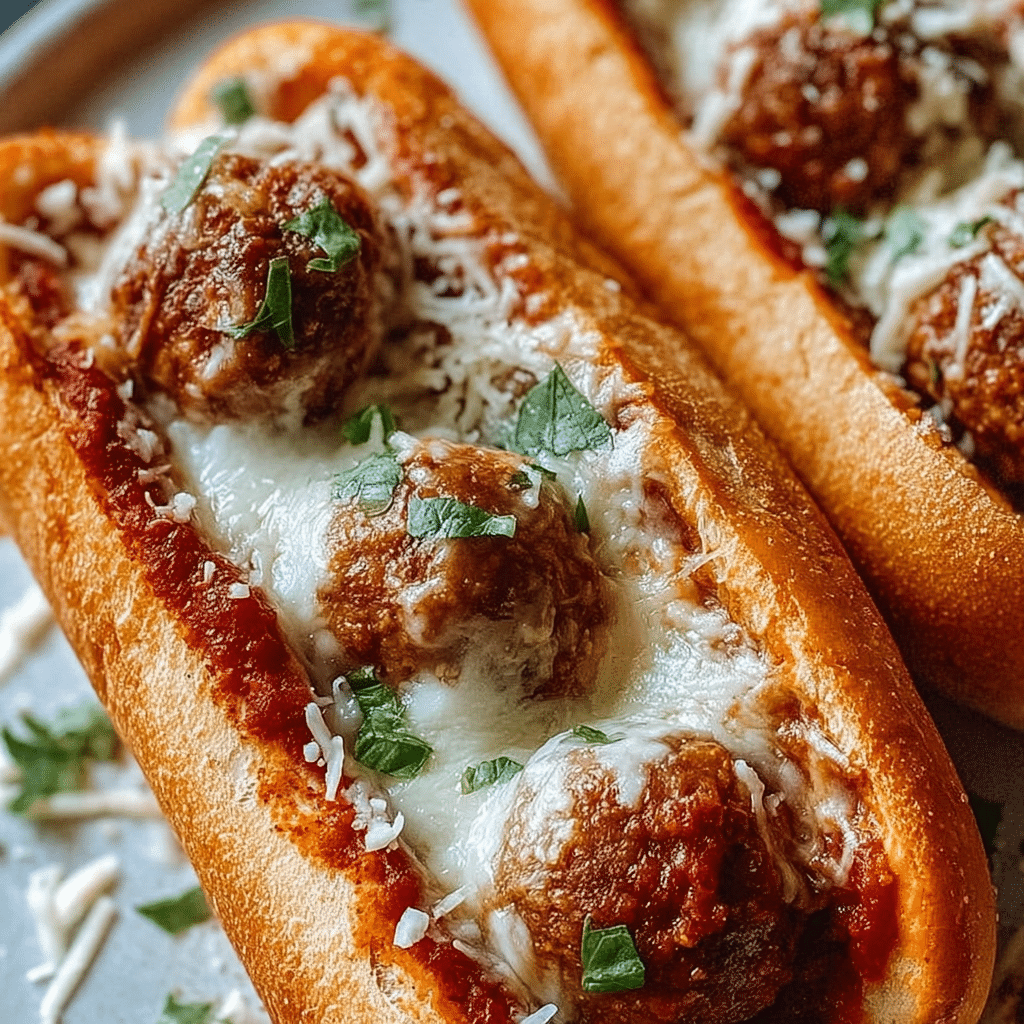
There is something almost magical about a meatball sub. It is the sandwich equivalent of a warm hug—a handheld masterpiece of juicy, seasoned meatballs; rich, herbaceous marinara sauce; and gloriously melted cheese, all cradled inside a toasted, butter-kissed hoagie roll. The Easy Cheesy Meatball Sub is the kind of meal that transcends age, occasion, and trend. Children request it for birthday dinners. Adults crave it after long workweeks. It appears at Super Bowl parties, casual family suppers, and late-night cravings alike. And for good reason: when done right, a meatball sub is nearly impossible to resist.
This recipe strips away any unnecessary complexity while preserving every ounce of flavor. The meatballs themselves are a study in balance: ground beef (or a beef-pork blend) provides richness and body; breadcrumbs and an egg create a tender, cohesive texture; grated onion adds moisture and subtle sweetness without any unwelcome chunks; garlic and Italian seasoning deliver aromatic depth; and salt and pepper tie everything together. These meatballs are baked, not fried—a choice that yields even cooking, less mess, and a slightly lighter result without sacrificing the caramelized exterior that makes meatballs so appealing.
After baking, the meatballs take a brief but transformative simmer in marinara sauce. This step, lasting only 10 to 15 minutes, allows the meatballs to absorb the bright, herby tomato flavors while the sauce thickens slightly around them. Then comes the assembly: a split, buttered, and toasted hoagie roll; a generous portion of saucy meatballs; a blanket of shredded mozzarella; an optional but highly recommended slice of provolone for extra tang; and finally a broil that turns the cheese into a bubbling, golden-brown crust. A final sprinkle of grated parmesan and fresh herbs elevates the sandwich from excellent to unforgettable.
This article will guide you through every detail of creating these subs in your own kitchen. We will explore the role of each ingredient, provide step-by-step instructions with professional tips, and conclude with a comprehensive FAQ section that answers the most common questions about meatball subs—from storage and freezing to dietary adaptations and troubleshooting. Whether you are a novice cook or a seasoned home chef, this recipe will become a reliable favorite in your rotation.
Preheat your oven to 400°F (200°C). Let us make some sandwiches.
Ingredients
Understanding your ingredients is the first step to mastering any recipe. Below, each component is explained in detail, including why it matters and what substitutions work best.
For the Meatballs
- 1 lb ground beef or beef-pork mix: The foundation of your meatballs. Ground beef with an 80/20 or 85/15 lean-to-fat ratio provides the best balance of flavor and moisture. If you use a beef-pork mix (typically ½ lb beef and ½ lb pork), the meatballs become even more tender and juicy, as pork has a higher fat content and a natural sweetness. Avoid extra-lean ground beef (90/10 or leaner), which will produce dry, crumbly meatballs. For a different flavor profile, ground turkey or chicken can be substituted, though you should add 1 tablespoon of olive oil to the mixture to compensate for lower fat content.
- ½ cup breadcrumbs: Breadcrumbs act as a binder and a tenderizer. They absorb moisture from the egg, onion, and meat, then release it during cooking, keeping the meatballs moist and preventing them from becoming dense. Plain, unseasoned breadcrumbs are ideal. Panko breadcrumbs work beautifully, creating a slightly lighter texture. If you only have Italian-seasoned breadcrumbs, reduce or omit the additional Italian seasoning in the recipe. For a gluten-free version, use gluten-free breadcrumbs or crushed pork rinds.
- 1 large egg: The egg is the primary binder. It holds all the ingredients together, ensuring the meatballs maintain their shape during baking and simmering. Do not skip it. For an egg-free version, substitute a “flax egg” (1 tablespoon ground flaxseed mixed with 3 tablespoons water, allowed to sit for 5 minutes until gelatinous) or ¼ cup of unsweetened applesauce.
- ¼ cup grated onion: This is a chef’s secret for exceptional meatballs. Grating the onion on the fine side of a box grater releases its juices, which permeate the meatball with moisture and a gentle, sweet onion flavor. Unlike minced onion, grated onion melts completely into the mixture, so there are no distinct onion pieces—ideal for picky eaters. If you do not have a grater, mince the onion very finely and add 1 tablespoon of water to mimic the juices.
- 2 cloves garlic, minced: Fresh garlic provides a pungent, aromatic warmth that dried garlic cannot replicate. Mince it as finely as possible so it distributes evenly throughout each meatball. For a milder garlic flavor, use 1 clove; for garlic lovers, use 3 or 4. In an emergency, ½ teaspoon of garlic powder can substitute, but fresh is strongly preferred.
- 1 tsp Italian seasoning: This dried herb blend is the flavor signature of Italian-American cooking. It typically contains oregano, basil, rosemary, thyme, and sometimes marjoram. Together, these herbs evoke the essence of a Italian grandmother’s kitchen. If you do not have Italian seasoning, mix your own: ½ teaspoon dried oregano, ¼ teaspoon dried basil, and ¼ teaspoon dried thyme.
- ¾ tsp salt: Salt is a flavor enhancer and a texture improver. It helps the meat retain moisture and ensures that the meatballs are seasoned throughout, not just on the surface. Use kosher salt or sea salt. If using fine table salt, reduce to ½ teaspoon because it is denser and saltier by volume.
- ½ tsp black pepper: Freshly cracked black pepper adds a mild, earthy heat and a subtle floral note. Pre-ground pepper works in a pinch but lacks the same aromatic complexity. Crack the pepper coarsely for texture or finely for a more integrated flavor.
For the Sauce and Assembly
- 2 cups marinara sauce: Marinara is a simple, bright tomato sauce made from tomatoes, garlic, onions, and herbs. It is the perfect partner for meatballs—acidic enough to cut through the richness, but not so complex that it overwhelms. Choose a high-quality jarred brand with a short ingredient list (tomatoes, olive oil, garlic, onions, herbs). Avoid sauces with added sugar or corn syrup. Rao’s, Victoria, Newman’s Own, and Carbone are excellent options. Homemade marinara is even better if you have the time.
- 4 hoagie or sub rolls: The vessel matters enormously. Look for hoagie rolls that are soft on the inside with a slightly crisp crust. They should be sturdy enough to hold the saucy meatballs without disintegrating, but not so dense that they feel like a brick. Italian rolls, French bread (cut into 6-inch sections), or even high-quality hot dog buns can work in a pinch. Freshly baked rolls from a local bakery are ideal.
- 1 ½ cups shredded mozzarella cheese: Mozzarella is the quintessential melting cheese for meatball subs. It is mild, milky, and becomes gloriously stretchy when melted. For the best results, shred your own mozzarella from a block of low-moisture mozzarella. Pre-shredded cheese contains anti-caking agents (like cellulose or potato starch) that inhibit smooth melting. Fresh mozzarella (packed in water) is too wet and will make the sub soggy.
- 4 slices provolone cheese (optional): Provolone adds a layer of complexity. It is slightly tangy, nutty, and sharper than mozzarella. When melted alongside mozzarella, provolone contributes a golden-brown color and a more sophisticated flavor. This ingredient is optional but highly recommended. If you omit it, simply increase the mozzarella to 2 cups.
- ¼ cup grated parmesan cheese: Parmesan provides a salty, umami-packed finish that lingers on the palate. Freshly grated Parmigiano-Reggiano is vastly superior to the pre-shredded green can; it has crystalline texture, nutty flavor, and melts beautifully. Grate it on the fine side of a box grater or with a Microplane.
- 1 tbsp butter (optional, for toasting rolls): Butter adds richness and helps the rolls achieve a golden, crispy exterior when toasted. It also creates a slight barrier against moisture, helping to prevent sogginess. Use salted or unsalted butter. Olive oil can be substituted, or you can skip toasting altogether, though toasting is strongly recommended.
- Fresh basil or parsley (optional garnish): Fresh herbs are the final flourish. Basil offers a sweet, slightly peppery, anise-like note that pairs perfectly with tomato and cheese. Parsley is more neutral, with a clean, slightly peppery freshness. Chiffonade the basil (stack leaves, roll tightly, and slice thinly) or roughly chop the parsley. A sprinkle of herbs just before serving adds color, aroma, and a bright counterpoint to the rich sandwich.
Preparation Method
This recipe is organized into logical phases: preparing the meatballs, baking them, simmering in sauce, toasting the rolls, assembling, and broiling. Total time is approximately 45 minutes. Serves 4.
Phase 1: Preheat and Prepare
Step 1: Preheat the oven.
Preheat your oven to 400°F (200°C). Position one oven rack in the middle position for baking the meatballs. Position a second rack in the upper third of the oven (about 6 inches below the broiler element) if you plan to broil the assembled subs.
Step 2: Line a baking sheet.
Line a large, rimmed baking sheet with parchment paper. This prevents the meatballs from sticking and makes cleanup effortless. If you do not have parchment paper, lightly grease the baking sheet with cooking spray or a thin layer of olive oil.
Step 3: Prepare your ingredients.
Grate the onion using the fine side of a box grater. Place the grated onion in a small bowl; you should have about ¼ cup of onion pulp and juice. Mince the garlic cloves finely. Measure out the breadcrumbs, Italian seasoning, salt, and pepper. Crack the egg into a small bowl and beat it lightly with a fork.
Phase 2: Make the Meatballs
Step 4: Combine the ingredients.
In a large mixing bowl, place the 1 lb of ground beef (or beef-pork mix). Add the ½ cup breadcrumbs, 1 beaten large egg, ¼ cup grated onion (including the juices), 2 cloves minced garlic, 1 teaspoon Italian seasoning, ¾ teaspoon salt, and ½ teaspoon black pepper.
Step 5: Mix until just combined.
Using your clean hands or a sturdy fork, gently mix the ingredients together. The golden rule here is do not overmix. Overmixing develops the proteins in the meat, which leads to dense, tough, rubbery meatballs. Mix only until the ingredients are evenly distributed and the mixture holds together when you press it gently. You should still be able to see small bits of meat; a smooth, paste-like consistency indicates overmixing.
Step 6: Roll the meatballs.
Using your hands, roll the mixture into meatballs that are 1 to 1.5 inches in diameter. A 1.5-inch meatball is roughly the size of a golf ball. Aim for uniformity so they cook evenly. From 1 pound of meat, you should get approximately 16 to 20 meatballs. Place each meatball on the prepared baking sheet, spacing them about 1 inch apart.
Phase 3: Bake the Meatballs
Step 7: Bake.
Place the baking sheet on the middle rack of the preheated 400°F (200°C) oven. Bake for 18 to 20 minutes.
Step 8: Check for doneness.
The meatballs are ready when they are browned on the outside and cooked through. An instant-read thermometer inserted into the center of a meatball should read 160°F (71°C) for beef or beef-pork mixtures. If you do not have a thermometer, cut one meatball open; there should be no pink remaining, and the juices should run clear. The meatballs will continue to cook slightly when added to the simmering sauce, so it is better to err on the side of slightly underdone than overdone.
Step 9: Remove from the oven.
Transfer the baked meatballs to a plate or directly into the sauce (see next phase). Do not turn off the oven if you plan to toast the rolls or broil the subs later.
Phase 4: Simmer in Marinara Sauce
Step 10: Heat the marinara sauce.
While the meatballs bake, pour the 2 cups of marinara sauce into a large saucepan or deep skillet. Place it over medium heat and bring it to a gentle simmer. Stir occasionally to prevent sticking or scorching on the bottom.
Step 11: Add the meatballs.
Once the meatballs are baked, carefully transfer them to the simmering marinara sauce. Gently stir to coat each meatball in the sauce.
Step 12: Simmer to meld flavors.
Reduce the heat to low. Let the meatballs simmer in the sauce for 10 to 15 minutes. This step is essential: the meatballs absorb the bright, herby, garlicky flavors of the marinara, while the sauce thickens slightly and becomes infused with the savory juices from the meat. Stir gently every few minutes, being careful not to break the meatballs.
Phase 5: Prepare the Rolls
Step 13: Split the rolls.
Using a serrated knife, slice each hoagie or sub roll open lengthwise. Do not cut all the way through; leave a “hinge” on one side so the two halves remain attached like a book. This hinge prevents the filling from falling out the back when you eat.
Step 14: Toast the rolls (optional but recommended).
If you have the oven space and time, toasting the rolls adds flavor and structural integrity. Spread the cut sides of each roll with the 1 tablespoon of butter (or drizzle with olive oil). Place the rolls cut-side up on a baking sheet. Toast in the oven at 400°F for 3 to 5 minutes, until the edges are lightly golden and crisp. Toasting creates a barrier against moisture, helping to prevent a soggy sub. If your oven is still at 400°F from baking the meatballs, this is the perfect time to toast.
Phase 6: Assemble the Subs
Step 15: Preheat the broiler.
If you have not already, turn your oven’s broiler to high. Position an oven rack in the upper third of the oven, about 6 inches from the broiler element.
Step 16: Place the rolls on a baking sheet.
Arrange the toasted (or untoasted) rolls on a baking sheet, cut-side up. If the rolls are unstable, nestle them against each other or use a baking dish with sides to keep them upright.
Step 17: Add the meatballs and sauce.
Using a slotted spoon (to avoid excess liquid), transfer 4 to 5 meatballs into each roll. Nestle them down into the crevice of the roll. Then, using a regular spoon, drizzle about 1 to 2 tablespoons of the marinara sauce from the pan over the meatballs. Do not oversaturate; too much sauce will make the roll soggy.
Step 18: Add the mozzarella cheese.
Sprinkle the 1 ½ cups of shredded mozzarella cheese evenly over the four subs, about ⅓ cup per sub.
Step 19: Add the provolone cheese (optional).
If using, place one slice of provolone cheese over the mozzarella on each sub. The provolone will melt into a golden, bubbly layer with a tangy bite.
Phase 7: Broil and Finish
Step 20: Broil the subs.
Place the baking sheet with the assembled subs under the preheated broiler. Broil for 2 to 3 minutes. Watch very closely—broilers are powerful and can go from melted to burnt in seconds. The cheese is ready when it is fully melted, bubbling, and has developed golden-brown spots.
Step 21: Add the parmesan and herbs.
Remove the subs from the oven. Immediately sprinkle the ¼ cup of grated parmesan cheese evenly over the hot, melted cheese. The residual heat will warm the parmesan slightly. If using fresh basil or parsley, sprinkle it over the top as well.
Phase 8: Serve
Step 22: Serve hot.
Close the rolls gently (the melted cheese will act as glue). Serve immediately while the cheese is still stretchy, the rolls are crisp, and the meatballs are hot. These subs are substantial—one per person is typically sufficient for a hearty meal. Pair with potato chips, french fries, a simple green salad, or roasted vegetables.
Conclusion
The Easy Cheesy Meatball Sub is a triumph of simple, honest cooking. It takes humble ingredients—ground meat, breadcrumbs, a can of marinara, a few cheeses, and a good roll—and transforms them into something that feels special, indulgent, and deeply comforting. This recipe respects tradition while embracing practicality: baking the meatballs instead of frying them saves time and reduces mess; simmering them in sauce builds flavor without extra steps; and the broiler gives you that irresistible, bubbly cheese topping in just minutes.
This is a recipe designed for real life. It works on busy weeknights when you need dinner on the table in under an hour. It scales up for parties and game days. It pleases picky children and discerning adults alike. And once you have mastered the basic technique, you can customize it endlessly—add red pepper flakes for heat, toss in sautéed peppers and onions for a Philly twist, or swap the marinara for a creamy tomato sauce.
Below, you will find answers to the most frequently asked questions about this recipe. These cover everything from make-ahead strategies and freezing instructions to dietary substitutions and troubleshooting common problems.
Frequently Asked Questions (FAQ)
1. Can I use ground turkey or chicken instead of beef?
Yes. Substitute 1 lb of ground turkey or ground chicken for the beef. Because these meats are leaner than beef, add 1 tablespoon of olive oil to the meatball mixture to provide necessary moisture and fat. You may also want to add an extra tablespoon of breadcrumbs. Cook to an internal temperature of 165°F (74°C). Note that poultry meatballs will be paler in color and have a milder flavor than beef meatballs.
2. Can I make these meatballs ahead of time?
Absolutely. This is one of the best make-ahead recipes. Prepare and bake the meatballs as directed. Allow them to cool completely. Store them in an airtight container in the refrigerator for up to 3 days. When ready to serve, simmer the pre-cooked meatballs in marinara sauce for 10 to 15 minutes (they may need an extra 5 minutes to heat through). You can also freeze the baked meatballs for up to 3 months (see below).
3. How do I freeze the meatballs?
After baking, let the meatballs cool completely on the baking sheet. Arrange them in a single layer on a parchment-lined baking sheet and freeze until solid, about 2 hours. Transfer the frozen meatballs to a freezer-safe bag or container, removing as much air as possible. They will keep for up to 3 months. To use, add the frozen meatballs directly to simmering marinara sauce. Cook for 20 to 25 minutes, stirring occasionally, until heated through. Do not thaw first.
4. My meatballs fell apart in the sauce. What went wrong?
Crumbly meatballs are usually caused by one of these issues:
- Insufficient binder: Did you forget the egg? The egg is essential for holding the meatball together.
- Mixture too dry: If the mixture feels dry and crumbly before rolling, add 1 to 2 tablespoons of milk or water.
- Overhandling: While overmixing usually makes meatballs tough rather than crumbly, rough handling after baking can break them. Use a slotted spoon and gentle motions when transferring and stirring.
- Insufficient baking: If meatballs are underbaked, they may not have set properly. Ensure they reach 160°F (71°C) before adding to sauce.
5. How do I prevent the bread from getting soggy?
Soggy bread is the enemy of a good meatball sub. Use these strategies:
- Toast the rolls thoroughly before adding any filling. The crisp crust acts as a moisture barrier.
- Use a slotted spoon to transfer meatballs, leaving excess sauce in the pan.
- Drizzle only 1–2 tablespoons of extra sauce over the meatballs, not more.
- Add a layer of provolone cheese directly on the bottom half of the roll before adding meatballs. As it melts, it creates a waterproof seal.
- Serve immediately after assembly. Do not let the subs sit.
6. Can I make this recipe gluten-free?
Yes. Make the following substitutions:
- Breadcrumbs: Use gluten-free breadcrumbs (many brands available) or crushed gluten-free crackers or pork rinds.
- Hoagie rolls: Use gluten-free hoagie rolls (Udi’s, Schär, and Canyon Bakehouse make good options).
- Marinara sauce: Most jarred marinara sauces are gluten-free, but always check the label for hidden wheat or gluten-containing additives.
- All other ingredients (meat, egg, onion, garlic, spices, cheeses, butter) are naturally gluten-free.
7. Can I cook the meatballs directly in the sauce without baking first?
Technically yes, but the texture will differ significantly. Meatballs cooked entirely in sauce (sometimes called “submerged meatballs”) will be very soft, tender, and pale—they will lack the caramelized, browned exterior that baking provides. If you choose this method, gently drop the raw meatballs into simmering marinara sauce, cover, and cook for 20 to 25 minutes. Do not stir for the first 15 minutes to allow them to set.
8. How do I store and reheat leftovers?
Store leftover components separately for best results:
- Meatballs and sauce: Combine in an airtight container and refrigerate for up to 4 days.
- Leftover cheese: Store in a separate sealed bag or container.
- Leftover rolls: Store at room temperature in a bread bag for 1–2 days.
To reheat: Warm the meatballs and sauce in a saucepan over medium heat. Toast fresh rolls (or the original rolls if they are still good). Assemble with fresh cheese (use any leftover cheese or shred new cheese) and broil as directed. Do not microwave assembled subs, as the bread becomes rubbery and the sauce separates.
9. Can I add vegetables to these subs?
Absolutely. Popular additions include:
- Sautéed bell peppers and onions: Cook sliced bell peppers and onions in olive oil over medium heat until softened and lightly charred (about 8–10 minutes). Add to the roll before the meatballs.
- Sautéed mushrooms: Slice mushrooms and cook until browned and their liquid has evaporated.
- Roasted red peppers: Use jarred roasted red peppers, drained and patted dry.
- Fresh spinach: Add a handful of fresh spinach to the roll; the heat from the meatballs and sauce will wilt it slightly.
10. What is the best cheese combination?
The classic combination (mozzarella + provolone + parmesan) is excellent, but here are alternatives:
- Mozzarella only: Use 2 cups of shredded mozzarella instead of 1½ cups plus provolone.
- Provolone only: Use 4 slices of provolone (about 4 ounces) and skip the mozzarella.
- Fontina: Buttery, nutty, and melts beautifully. Use 1½ cups shredded fontina.
- Monterey Jack: Mild and creamy. Use 1½ cups shredded Monterey Jack.
- Cheddar: Sharp cheddar adds a completely different flavor profile—more assertive and tangy. Use 1½ cups shredded sharp cheddar.
11. Can I make mini meatball sliders instead of full subs?
Yes. This recipe adapts perfectly to sliders. You will need:
- 12 slider buns (or dinner rolls)
- Roll the meatballs smaller, about ½ to ¾ inch in diameter.
- Bake for 12 to 15 minutes (they will cook faster).
- Simmer in sauce for 5 to 7 minutes.
- Assemble each slider with one mini meatball, a small amount of sauce, and a sprinkle of cheese.
- Broil for 1 to 2 minutes.
These are perfect for parties, game days, or appetizers.
12. What marinara sauce do you recommend?
A high-quality jarred marinara makes a noticeable difference. Look for brands with short, recognizable ingredient lists: tomatoes, olive oil, garlic, onions, herbs. Avoid sauces with added sugar, corn syrup, or “natural flavors.” Recommended brands:
- Rao’s Homemade: Widely considered the best jarred marinara, with a rich, authentic flavor.
- Victoria: Very similar to Rao’s, often slightly less expensive.
- Newman’s Own Marinara: Reliable, widely available, and reasonably priced.
- Carbone: A premium option with excellent flavor.
- Homemade: If you have 30 minutes, make your own: sauté 2 cloves of minced garlic in 2 tablespoons of olive oil, add one 28-ounce can of crushed tomatoes, 1 teaspoon of dried oregano, and salt to taste. Simmer for 20 minutes.
13. Can I make this recipe in a slow cooker?
Yes. Prepare and bake the meatballs as directed. Transfer the baked meatballs to a slow cooker. Pour the 2 cups of marinara sauce over them. Cook on LOW for 2 to 3 hours or on HIGH for 1 to 2 hours. When ready to serve, toast the rolls, assemble the subs with the meatballs and sauce, top with cheese, and broil as directed. The slow cooker method is ideal for keeping meatballs warm at parties or for serving a crowd.
14. Why do I need to grate the onion instead of dicing it?
Grated onion releases its juices, which distribute throughout the meatball mixture, adding moisture and flavor in a way that diced onion cannot. Diced onion, even when minced finely, creates small pockets of onion that can fall out or create a texture that some people dislike. Grating integrates the onion completely, resulting in a more uniform, moist, and flavorful meatball. The extra minute of effort is well worth it.
15. Can I double this recipe?
Yes. Double all ingredients proportionally. You will need two baking sheets for the meatballs (rotate them halfway through baking) or bake in batches. Use a larger pot for the sauce (at least 4-quart capacity). For the rolls, you will need 8 hoagie rolls; you may need to broil the subs in two batches unless your oven can accommodate two baking sheets side by side under the broiler. Total cooking time will increase by approximately 10 minutes.
16. Can I use fresh mozzarella instead of shredded low-moisture?
Fresh mozzarella (the kind packed in water or brine) is not recommended for this recipe. It has a very high moisture content, which will release water as it melts, making your sub soggy. Additionally, fresh mozzarella does not achieve the same stretchy, golden-brown crust as low-moisture mozzarella. If you only have fresh mozzarella, pat it very dry with paper towels, slice it thinly, and use it sparingly.
17. The cheese on my subs burned under the broiler. What happened?
Cheese burns quickly under a broiler, especially if the rack is too close to the heating element. To prevent burning:
- Position the oven rack about 6 inches from the broiler element (not closer).
- Watch the subs constantly during broiling—do not walk away.
- Broil for only 2 to 3 minutes; check at the 2-minute mark.
- If your broiler runs very hot, move the rack down one level or reduce broiler heat to medium if your oven has that option.
- Alternatively, bake the assembled subs at 400°F for 8–10 minutes instead of broiling; the cheese will melt without browning as deeply.
18. Can I use a different type of bread?
Yes, but choose carefully. Good substitutes include:
- Italian bread: Cut into 6-inch sections.
- French baguette: Cut into 6-inch sections and hollow out some of the soft interior to make room for fillings.
- Ciabatta rolls: Sturdy and excellent for holding sauce.
- Brioche hot dog buns: Surprisingly good, though softer.
Avoid thin bread (sandwich bread), very dense bread (pumpernickel), or very airy bread (some artisan loaves) that will fall apart.
Easy Cheesy Meatball Subs: A Classic Comfort Sandwich Perfected
These easy cheesy meatball subs are a classic comfort sandwich, packed with juicy homemade meatballs, rich marinara sauce, and gooey melted cheese.
- Prep Time: 15 minutes
- Cook Time: 25 minutes
- Total Time: 40 minutes
- Yield: 4 subs
- Category: Main Dish, Sandwich
- Method: Bake & Simmer
- Cuisine: Italian-American
Ingredients
- 1 lb ground beef or beef-pork mix
- 1/2 cup breadcrumbs
- 1 large egg
- 1/4 cup grated onion
- 2 cloves garlic, minced
- 1 tsp Italian seasoning
- 3/4 tsp salt
- 1/2 tsp black pepper
- 2 cups marinara sauce
- 4 hoagie or sub rolls
- 1 1/2 cups shredded mozzarella cheese
- 4 slices provolone cheese (optional)
- 1/4 cup grated parmesan cheese
- 1 tbsp butter (optional)
- Fresh basil or parsley (optional)
Instructions
- Preheat oven to 400°F (200°C).
- Combine ground meat, breadcrumbs, egg, onion, garlic, Italian seasoning, salt, and pepper.
- Roll into meatballs and bake for 18–20 minutes.
- Simmer marinara sauce and add cooked meatballs for 10–15 minutes.
- Optional: toast buttered rolls for 3–5 minutes.
- Fill rolls with meatballs and sauce.
- Top with mozzarella and provolone.
- Broil 2–3 minutes until melted.
- Sprinkle parmesan and garnish with herbs. Serve hot.
Notes
- Use a mix of beef and pork for juicier meatballs.
- Freshly grated cheese melts better.
- Add extra sauce if you like it extra juicy.