
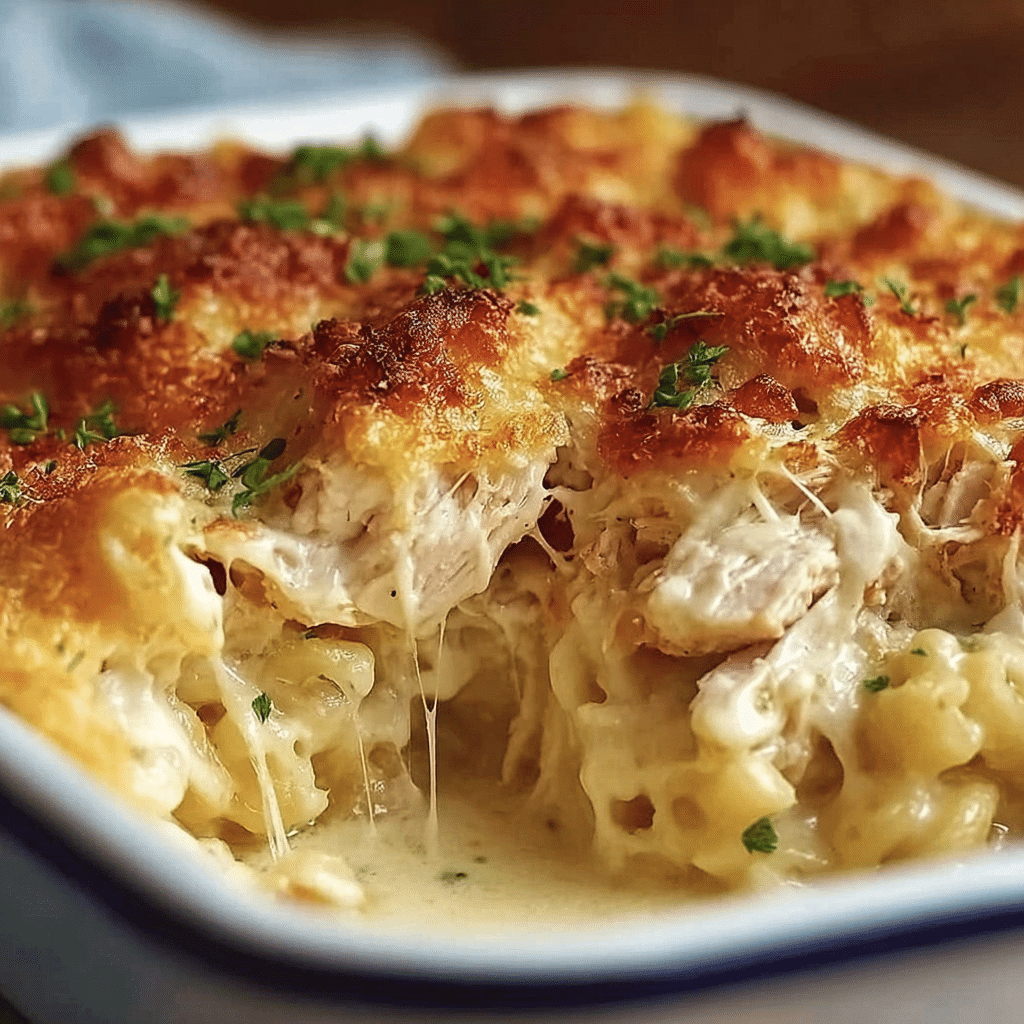
In the pantheon of American home cooking, few figures loom as large as Paula Deen. Known for her unapologetic embrace of butter, cream, and the rich traditions of Southern hospitality, her recipes have become staples in households looking for heartiness and flavor. Among her many celebrated dishes, the Chicken Casserole stands out as a quintessential example of “comfort food.”
A casserole is more than just a convenient one-pot meal; it is a culinary architecture where textures and flavors are layered to create a cohesive, satisfying experience. This specific recipe—featuring tender chicken, perfectly cooked pasta, and a three-cheese sauce sharpened by red pepper flakes—represents the pinnacle of this form. Whether you are preparing a meal for a family gathering, a potluck, or a quiet Sunday dinner, understanding the techniques behind this dish will elevate it from a simple weeknight bake to a professional-grade masterpiece.
In this comprehensive guide, we will explore the history of the casserole, the science of the perfect cheese sauce, and a step-by-step methodology to ensure your version of Paula Deen’s classic is the best it can possibly be.
The Anatomy of a Perfect Casserole
To appreciate this recipe, one must understand the three pillars of a great casserole: the protein, the starch, and the binder.
- The Protein (Chicken): In this recipe, the chicken provides the structure and the savory foundation. By using pre-cooked chicken, we ensure that the meat remains tender during the baking process without releasing excess moisture that could thin out the sauce.
- The Starch (Pasta): The choice of pasta—penne, cavatappi, or rigatoni—is intentional. These shapes are “tubular” or “ridged,” designed specifically to trap the cheese sauce inside and outside the grain, ensuring every bite is infused with flavor.
- The Binder (The Sauce): This is where the magic happens. A combination of a traditional roux, whole milk, sour cream, and a trio of cheeses creates a sauce that is both stable and incredibly rich.
The Ingredients: A Deep Dive into Flavor
Before we begin the preparation, let us examine the specific ingredients provided. In a professional kitchen, knowing why an ingredient is used is just as important as knowing how much to use.
The Base Components
- 2 cups cooked chicken, cut into bite-sized pieces: For the best results, use a mix of white and dark meat. Rotisserie chicken is a professional secret for home cooks—it’s seasoned, tender, and saves time.
- 4 cups cooked and drained pasta: Whether you choose penne (sleek and classic), cavatappi (corkscrew-shaped with great “chew”), or rigatoni (large and robust), the key is to cook the pasta al dente. It will continue to cook in the oven, so starting with slightly firm pasta prevents it from becoming mushy.
The Aromatics and Fat
- 3 tablespoons butter: Butter is the vehicle for flavor. It provides the fat for the roux and a richness that oil simply cannot replicate.
- 1 small onion, finely chopped: Onions provide “umami” and a subtle sweetness that balances the heavy dairy.
- 2 garlic cloves, minced: Garlic adds an aromatic punch that cuts through the richness of the cheese.
The Sauce and Seasoning
- 2 tablespoons flour: The thickening agent. When combined with butter, it creates a roux that stabilizes the milk and sour cream.
- 1/2 cup sour cream: This is a classic Paula Deen touch. Sour cream adds a necessary tanginess (acidity) that prevents the three cups of cheese from feeling overwhelming on the palate.
- 1 cup milk: The liquid base for our creamy sauce.
- 3 cups grated cheese: You have the choice of Cheddar (sharpness), Colby Jack (melting quality), Swiss (nutty complexity), or a combination. A professional tip: grate your own cheese. Pre-shredded cheese contains anti-caking agents that can lead to a grainy sauce.
- 1/2 teaspoon red pepper flakes: This doesn’t make the dish “hot,” but rather provides a “back-heat” that wakes up the taste buds.
- Salt and black pepper to taste: Essential for highlighting all other flavors.
Complete Ingredients List
- 2 cups cooked chicken, cut into bite-sized pieces
- 4 cups cooked and drained pasta (penne, cavatappi, or rigatoni)
- 3 tablespoons butter
- 1 small onion, finely chopped
- 2 garlic cloves, minced
- 2 tablespoons flour
- 1/2 cup sour cream
- 1 cup milk
- 3 cups grated cheese (cheddar, Colby jack, Swiss, or a combination)
- 1/2 teaspoon red pepper flakes
- Salt and black pepper to taste
The Preparation Method: A Professional Step-by-Step
Following a recipe is about more than just mixing ingredients; it is about managing heat and timing. Follow these steps to ensure a perfect result.
Phase 1: Preparation and Mise en Place
- Preheat the Oven: Set your oven to 175°C (350°F). Proper preheating is crucial for an even bake.
- Prepare the Baking Dish: Grease a 9×13 inch (or equivalent) baking dish with butter or non-stick spray.
- Pasta Prep: If you haven’t already, boil your pasta in heavily salted water. Aim for 2 minutes less than the package instructions for “al dente.” Drain and set aside.
Phase 2: Building the Aromatic Base
- Sautéing: In a large skillet or heavy-bottomed pot, melt the 3 tablespoons of butter over medium heat. Once the butter is foaming, add the finely chopped onion.
- Softening: Cook the onion for 3–4 minutes until it becomes translucent and soft.
- The Garlic: Add the minced garlic. Sauté for only about 30–60 seconds. Garlic burns easily and becomes bitter, so you only want to cook it until it becomes fragrant.
Phase 3: The Roux and the Creamy Base
- The Roux: Sprinkle the 2 tablespoons of flour over the butter and onion mixture. Use a whisk to stir constantly for about 1 minute. You want to “cook out” the raw flour taste, but don’t let it brown—this is a white roux meant for cream sauces.
- The Liquids: Slowly whisk in the 1 cup of milk. Adding it slowly prevents lumps. Once the milk is incorporated, whisk in the 1/2 cup of sour cream.
- Thickening: Continue to cook over medium heat, stirring frequently, until the sauce begins to thicken and bubble slightly.
Phase 4: The Cheese and Seasoning
- Melting: Reduce the heat to low. Reserve about 1/2 cup of the grated cheese for the top of the casserole. Stir the remaining 2 1/2 cups into the sauce.
- Emulsifying: Stir gently until the cheese is completely melted and the sauce is a smooth, velvety consistency.
- Spice it Up: Add the 1/2 teaspoon of red pepper flakes, and season with salt and black pepper to taste. Taste the sauce! This is your last chance to adjust the seasoning before it goes into the oven.
Phase 5: Assembly and the Bake
- Combining: In a large mixing bowl (or directly in the pot if it’s large enough), fold the cooked chicken and cooked pasta into the cheese sauce. Ensure every piece of pasta is coated.
- Transfer: Pour the mixture into your prepared baking dish. Spread it out evenly with a spatula.
- The Topping: Sprinkle the reserved 1/2 cup of cheese evenly over the top.
- Baking: Place the dish in the center of the oven. Bake for 20–30 minutes. You are looking for the edges to be bubbling and the cheese on top to be melted and slightly golden.
- Resting: This is the most underrated step. Remove the casserole from the oven and let it cool for 5–10 minutes before serving. This allows the sauce to set slightly so it doesn’t run all over the plate.
The Science of the “Golden Top”
Why do we bake a casserole that already contains cooked ingredients? The answer lies in two scientific processes: flavor fusion and the Maillard reaction.
As the casserole sits in the oven, the starch from the pasta releases slightly into the cheese sauce, further thickening it. Simultaneously, the chicken absorbs some of the moisture and seasoning from the sauce. The heat also causes the proteins and sugars in the cheese topping to undergo the Maillard reaction, creating that distinct, savory “browned cheese” flavor that is the hallmark of a great bake.
Advanced Tips for Customization
While Paula Deen’s recipe is perfect as written, professional chefs often look for ways to add a signature touch.
- The Crunch Factor: If you enjoy a bit of texture, mix 1/2 cup of crushed Ritz crackers or Panko breadcrumbs with a tablespoon of melted butter and sprinkle it over the cheese before baking.
- Vegetable Integration: To make this a more balanced meal, you can stir in 1 cup of steamed broccoli florets or sautéed mushrooms during the assembly phase.
- The “Swiss” Twist: If you use the Swiss cheese option, consider adding a pinch of ground nutmeg to the sauce. Nutmeg and Swiss cheese have a natural affinity that tastes incredibly professional.
- Herb Freshness: While not in the original list, adding a tablespoon of fresh chopped parsley or chives at the very end (after baking) provides a visual and flavor contrast to the rich dairy.
Serving Suggestions
To balance the richness of this casserole, serve it with something bright and acidic. A crisp green salad with a lemon vinaigrette or a side of roasted green beans with a squeeze of fresh lemon juice works perfectly. For wine enthusiasts, a buttery Chardonnay or a light-bodied Pinot Noir provides an excellent pairing that complements the creaminess of the cheese.
Conclusion
Paula Deen’s Amazing Chicken Casserole is a testament to the power of simple ingredients treated with care. By building a solid roux, using a blend of high-quality cheeses, and ensuring your pasta is cooked al dente, you transform a standard dinner into an “ultimate comfort food” experience. It is a dish that speaks of home, warmth, and the joy of sharing a meal with loved ones.
Frequently Asked Questions (FAQ)
Q: Can I use different pasta shapes?
A: Yes. While penne, cavatappi, and rigatoni are recommended because they hold sauce well, you can use rotini or shells. Avoid long, thin pastas like spaghetti or linguine, as they are difficult to serve in a casserole format and tend to clump together.
Q: How do I prevent my casserole from being dry?
A: Dryness usually comes from overcooking the pasta before it goes into the oven or leaving the casserole in the oven too long. Ensure your sauce is thick but still pourable before assembly. If it looks too thick, add an extra splash of milk.
Q: Can I make this casserole ahead of time?
A: Absolutely. You can assemble the casserole (up to the point of baking), cover it tightly with foil, and refrigerate it for up to 24 hours. When you are ready to eat, bake it at 350°F. You may need to add 10–15 minutes to the baking time if it is coming straight from the fridge.
Q: Can I freeze this chicken casserole?
A: Yes. This dish freezes well. Assemble it in a freezer-safe dish, wrap it in a double layer of plastic wrap and then aluminum foil. It will stay good for up to 3 months. Thaw it in the refrigerator overnight before baking.
Q: Is there a substitute for sour cream?
A: If you don’t have sour cream, you can use plain Greek yogurt. It provides a similar tang and creaminess. However, be careful not to boil the sauce too vigorously once the yogurt is added, as it can curdle more easily than sour cream.
Q: What is the best way to reheat leftovers?
A: To keep the pasta from getting mushy and the sauce from breaking, reheat portions in the oven at 325°F covered with foil. If using a microwave, add a small splash of milk and cover the dish to create steam, which helps re-hydrate the sauce.
Q: Can I use raw chicken in this recipe?
A: It is not recommended to put raw chicken directly into this casserole. The baking time (20–30 minutes) is not long enough to guarantee the chicken will reach a safe internal temperature of 165°F, and raw chicken will release juices that will make your cheese sauce watery. Always use pre-cooked chicken.
Q: My sauce turned out grainy. What happened?
A: Graininess usually happens for two reasons: either you used pre-shredded cheese with anti-caking starch, or the heat was too high when you added the cheese. High heat can cause the proteins in the cheese to clump. Always add cheese over low heat and stir until just melted.
Q: How can I make this dish lighter?
A: While this is a “comfort food” recipe, you can use 2% milk and a light sour cream. You can also increase the ratio of vegetables to pasta. However, keep in mind that the fat in the cheese and butter is what creates the signature texture of the dish.
Q: Can I use a different type of onion?
A: Yellow onions are standard for their balanced flavor, but a white onion will provide a sharper bite, and a shallot will provide a more delicate, gourmet flavor. Avoid red onions, as they can turn a greyish color when baked in a cream sauce.
Q: What do I do if I don’t have a skillet large enough for the sauce?
A: You can make the sauce in a medium saucepan and then combine everything in the large pot you used to boil the pasta. Just make sure the pasta pot is drained and dry before you start mixing.
Q: Is it necessary to use red pepper flakes?
A: They are highly recommended for balance, but if you are extremely sensitive to spice, you can omit them. Alternatively, you can replace them with a half-teaspoon of dry mustard powder, which provides a similar “lift” to the cheese flavor without any heat.
Q: How long does the casserole last in the fridge?
A: When stored in an airtight container, it will stay fresh for 3 to 4 days.
Q: Can I use gluten-free pasta?
A: Yes, but be cautious. Gluten-free pasta tends to break down more easily than wheat pasta. Cook it very minimally (very al dente) before baking, and ensure you use a gluten-free flour blend for the roux.
Paula Deen’s Amazing Chicken Casserole: The Ultimate Guide to Southern Comfort Mastery
This Paula Deen-inspired chicken casserole is the ultimate comfort food made with tender chicken, pasta, creamy cheese sauce, and a golden baked topping.
- Prep Time: 15 minutes
- Cook Time: 30 minutes
- Total Time: 45 minutes
- Yield: 6 servings
- Category: Main Dish, Casserole
- Method: Bake
- Cuisine: Southern American
Ingredients
- 2 cups cooked chicken, bite-sized pieces
- 4 cups cooked pasta (penne, cavatappi, or rigatoni)
- 3 tbsp butter
- 1 small onion, finely chopped
- 2 garlic cloves, minced
- 2 tbsp flour
- 1/2 cup sour cream
- 1 cup milk
- 3 cups grated cheese (cheddar, Colby jack, Swiss, or mix)
- 1/2 tsp red pepper flakes
- Salt and black pepper to taste
Instructions
- Preheat oven to 350°F (175°C).
- Melt butter in skillet and sauté onion and garlic for 3–4 minutes.
- Stir in flour and cook 1 minute.
- Whisk in milk and sour cream until sauce thickens.
- Add cheese and stir until melted and smooth.
- Mix in chicken, cooked pasta, red pepper flakes, salt, and pepper.
- Transfer to greased baking dish and top with extra cheese if desired.
- Bake 20–30 minutes until bubbly and golden.
- Cool slightly and serve warm.
Notes
- Use rotisserie chicken for quick prep.
- Freshly grated cheese melts smoother.
- Add breadcrumbs on top for extra crunch.