
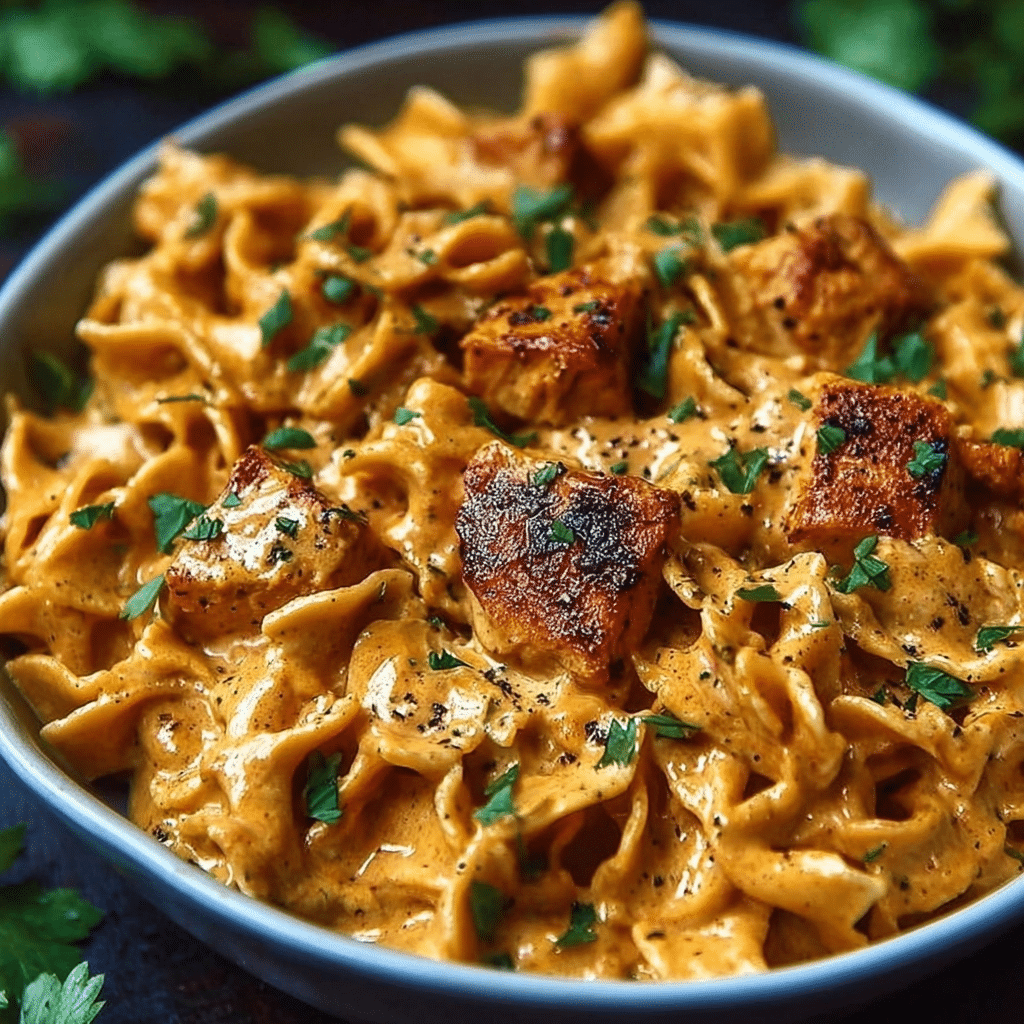
Pasta is the ultimate comfort food, but the secret to a truly memorable dish lies in the balance of the sauce. This Creamy Cowboy Butter Chicken Pasta takes the rustic, bold flavors of a classic steakhouse compound butter—garlic, red pepper, and rich dairy—and transforms them into a velvety silk sauce that clings to every noodle.
By utilizing a combination of heavy cream and high-quality Parmesan, this recipe achieves a luxurious mouthfeel without the need for thickeners like flour. The key to success here is the “pan-sauce” method, where the chicken is seared first to create a flavorful base, followed by a gentle reduction of aromatics and dairy. This guide will walk you through the technical steps to ensure your chicken remains juicy and your sauce stays perfectly emulsified.
Why This Recipe Works
This dish excels because of the layering of fats and acids. While many cream sauces can feel one-dimensional, the “Cowboy” element—specifically the garlic and red pepper flakes—provides a sharp contrast to the richness of the heavy cream.
Furthermore, the use of reserved pasta water is a professional technique that shouldn’t be overlooked. The starches released by the pasta during the boiling process act as a natural binder, helping the butter and cream fuse into a glossy coating rather than sitting on top of the noodles. This ensures a cohesive dish where the protein, pasta, and sauce act as one.
Essential Ingredients for Cowboy Butter Pasta
To achieve the best results, prioritize fresh aromatics. Pre-minced garlic or dried onions will not provide the same sweetness and depth as fresh ingredients sautéed in butter.
The Foundation
- 12 oz pasta (Penne rigate or Fettuccine are ideal for holding heavy sauces)
- 1 lb boneless, skinless chicken breast, cut into uniform bite-sized pieces
- 2 tbsp unsalted butter (for searing the chicken)
- Salt and freshly cracked black pepper to taste
The Cowboy Butter Sauce
- 4 tbsp unsalted butter (for the sauce base)
- 4 large cloves fresh garlic, minced
- 1 medium white onion, finely diced
- 1 cup heavy whipping cream (at room temperature to prevent curdling)
- 1 cup high-quality chicken broth
- 1 cup freshly grated Parmesan cheese
- 1 tbsp dried Italian seasoning
- 1 tsp red pepper flakes (adjust based on your heat preference)
Finishing Touches
- 1/2 cup reserved starchy pasta water (add more as needed)
- Fresh flat-leaf parsley, finely chopped for garnish
Step-by-Step Preparation Method
Follow these stages to ensure each component is cooked perfectly before being combined.
Phase 1: Boiling the Pasta
Bring a large pot of heavily salted water to a rolling boil. Add the pasta and cook until it is “al dente”—firm to the bite. Before draining the pasta into a colander, carefully scoop out at least 1 cup of the cloudy pasta water and set it aside. This liquid is essential for adjusting the final consistency of your sauce.
Phase 2: Searing the Chicken
Pat the chicken pieces completely dry with paper towels; moisture on the surface prevents browning. Season generously with salt and pepper. In a large skillet, melt 2 tablespoons of butter over medium-high heat. Once the butter foams, add the chicken in a single layer. Sear until golden brown and cooked through (about 5–7 minutes). Remove the chicken from the skillet and place it on a clean plate, leaving any browned bits (the fond) in the pan.
Phase 3: Building the Aromatic Base
Reduce the skillet heat to medium. Add the remaining 4 tablespoons of butter. Once melted, add the diced onion and sauté for 3–4 minutes until translucent. Add the minced garlic and sauté for an additional 60 seconds until fragrant. Be careful not to brown the garlic, as this can introduce a bitter flavor to the cream.
Phase 4: Simmering the Cream Sauce
Pour in the chicken broth and use a wooden spoon to scrape the bottom of the pan, releasing the flavorful chicken bits. Stir in the heavy cream, Italian seasoning, and red pepper flakes. Bring the mixture to a very gentle simmer—do not let it reach a violent boil. Allow the sauce to reduce slightly for about 5 minutes until it begins to thicken.
Phase 5: The Final Emulsification
Return the cooked chicken and the drained pasta to the skillet. Sprinkle the grated Parmesan cheese over the top and toss everything together using tongs or a large spoon. If the sauce appears too thick or “tight,” add the reserved pasta water 2 tablespoons at a time, tossing continuously. The starch will help the cheese and cream create a glossy, smooth coating. Cook for 2 more minutes to allow the flavors to meld, garnish with fresh parsley, and serve immediately.
Expert Tips for Success
The Temperature of the Dairy
When adding heavy cream to a hot pan, it is best if the cream is not ice-cold. Take it out of the refrigerator 15 minutes before you plan to use it. Cold cream added to a very hot pan can sometimes “shock” the sauce, leading to a grainy texture.
Don’t Overcook the Pasta
Because the pasta spends the final two minutes of cooking inside the hot sauce, it will continue to soften. By draining it when it is slightly underdone, you ensure it reaches the perfect texture by the time it hits the dinner plate.
Frequently Asked Questions (FAQ)
Can I use chicken thighs instead of breasts?
Yes, boneless, skinless chicken thighs are an excellent substitute. They are more forgiving and remain juicier even if slightly overcooked. They may require an extra 1–2 minutes of searing time compared to breast meat.
My sauce is separating; how do I fix it?
A sauce usually separates (breaks) if the heat is too high or if the cheese is added too quickly. To fix a broken sauce, remove the pan from the heat immediately and whisk in a tablespoon of very hot pasta water. The starch and the drop in temperature often help the fats re-emulsify.
Is there a substitute for heavy cream?
For the most authentic, rich Cowboy Butter experience, heavy cream is necessary. However, you can use half-and-half if you are looking for a lighter option. Keep in mind that half-and-half is more prone to curdling, so keep the heat very low and avoid boiling the sauce once it’s added.
What other vegetables can I add?
This pasta base is very versatile. Sautéed mushrooms, baby spinach, or sun-dried tomatoes pair beautifully with these flavors. If using spinach, fold it in during the final two minutes of cooking so it wilts gently in the residual heat.
How do I store and reheat leftovers?
Store leftovers in an airtight container for up to 3 days. When reheating, the pasta will have absorbed much of the sauce. Reheat in a skillet over low heat with a splash of milk or chicken broth to restore the creamy consistency. Avoid the microwave if possible, as it tends to make the chicken rubbery and the sauce oily.
PrintThe Ultimate Guide to Creamy Cowboy Butter Chicken Pasta
Creamy Cowboy Butter Chicken Pasta is a rich, spicy, and comforting pasta dish made with tender chicken, a buttery garlic cream sauce, and Parmesan cheese.
- Prep Time: 10 minutes
- Cook Time: 25 minutes
- Total Time: 35 minutes
- Yield: 4 servings
- Category: Main Dish, Pasta
- Method: Stovetop
- Cuisine: American
Ingredients
Pasta
- 12 oz pasta (penne or fettuccine)
Chicken
- 1 lb chicken breast, cut into bite-sized pieces
- Salt and pepper to taste
- 2 tbsp butter (for cooking)
Sauce
- 4 tbsp unsalted butter
- 4 cloves garlic, minced
- 1 medium onion, diced
- 1 cup heavy cream
- 1 cup chicken broth
- 1 cup Parmesan cheese, grated
- 1 tbsp Italian seasoning
- 1 tsp red pepper flakes
Garnish
- Fresh parsley (optional)
Instructions
- Cook pasta in salted water until al dente. Reserve 1 cup pasta water, then drain.
- Heat 2 tbsp butter and cook chicken until golden and cooked through. Remove.
- Melt remaining butter, sauté garlic and onion until soft.
- Add cream, broth, seasoning, and red pepper flakes. Simmer 5 minutes.
- Return chicken and pasta to skillet.
- Stir in Parmesan cheese until melted and combined.
- Adjust consistency with pasta water if needed.
- Simmer 2 more minutes, garnish, and serve.
Notes
- Adjust spice level by increasing or decreasing red pepper flakes.
- Freshly grated Parmesan melts best.
- Add mushrooms or spinach for extra texture.