
Introduction
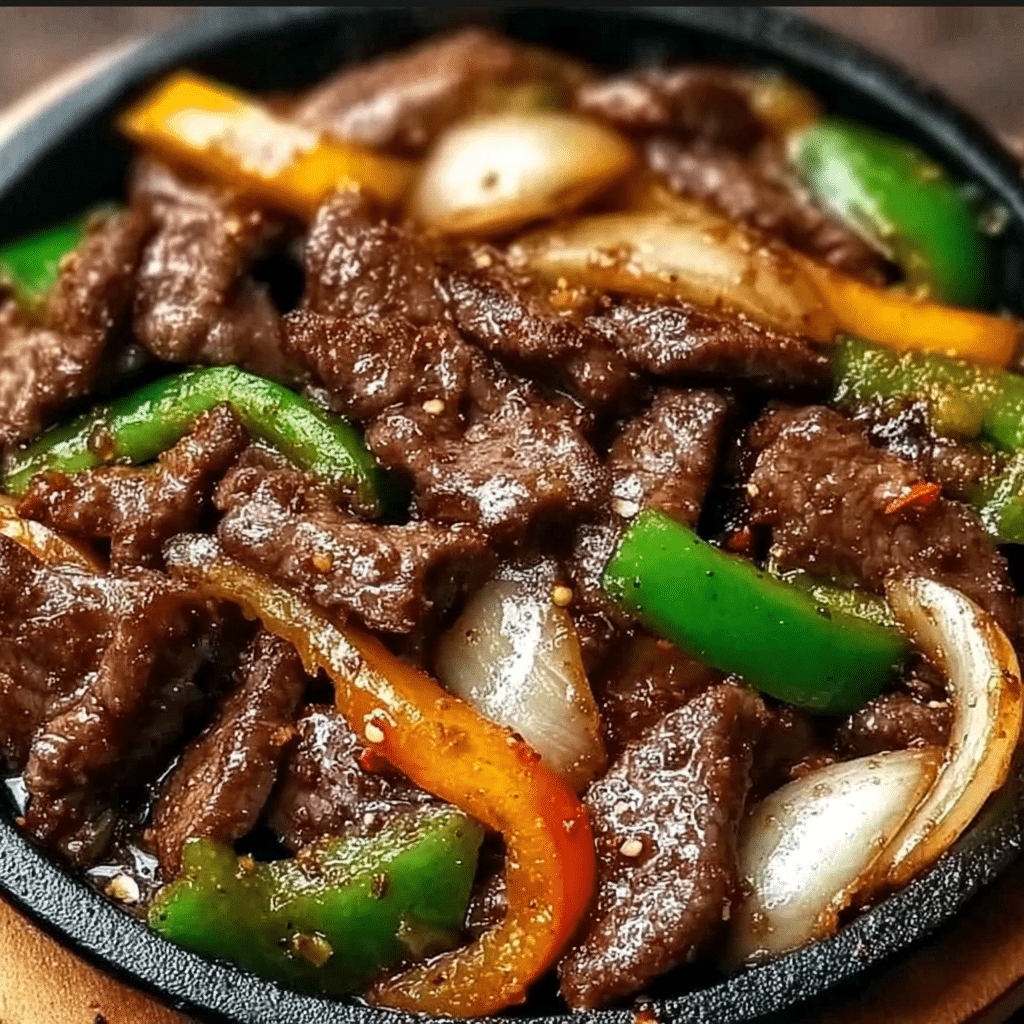
There are dishes that feed the body, and then there are dishes that transport you. Sizzling Chinese Pepper Steak with Onions belongs to the latter category. It is a stir-fry that captures the very essence of Chinese-American cuisine: bold, savory, slightly sweet, deeply aromatic, and cooked at temperatures that transform simple ingredients into something extraordinary. The moment the sauce hits the hot wok, the aromas of soy, ginger, garlic, and sesame fill the kitchen. The beef caramelizes at the edges. The onions soften into sweet, tender ribbons. And the sauce—a masterful balance of salty, sweet, tangy, and umami—coats every strip of meat in a glossy, irresistible glaze.
This is not the pepper steak of your average takeout menu, where the beef is often tough, the vegetables are overcooked, and the sauce is a one-note sweet sludge. This is a professional-grade version made with the ingredients you provided: beef strips (sirloin or ribeye), vegetable oil, garlic, fresh ginger, soy sauce, optional oyster sauce, sesame oil, salt, pepper, a large onion, more vegetable oil, more soy sauce, more optional oyster sauce, hoisin sauce, rice vinegar, and cornstarch. Each ingredient has a specific role. Each step builds upon the last. And the result is a dish that is sizzling, fragrant, deeply flavorful, and ready in less than 30 minutes.
This article is your professional guide to mastering Sizzling Chinese Pepper Steak with Onions. We will explore each ingredient in depth, discuss the critical difference between sirloin and ribeye, explain the science of velveting and marinating, and provide a foolproof, step-by-step preparation method. We will also address the optional oyster sauce—included twice in your ingredient list (once for the marinade and once for the sauce)—and explain why it enhances the dish but is not strictly necessary. Whether you are a home cook looking to elevate your stir-fry game or a culinary enthusiast seeking to understand the balance of Chinese sauces, this guide will give you the confidence and knowledge to produce a perfect pepper steak every time.
Why does this recipe work so well? The answer lies in three pillars: high heat, proper sequencing, and sauce balance. Stir-frying demands a pan that is screaming hot—so hot that the beef sears rather than steams. The recipe instructs you to cook the beef for only 2-3 minutes. This is not a typo. Thin strips of beef cook almost instantly at high temperatures; any longer and they become tough and dry. The onions are cooked separately first, then removed and returned at the end. This prevents them from becoming mushy and ensures they retain their structure and sweetness. The sauce, thickened with cornstarch, creates a glossy coating that clings to the beef rather than pooling at the bottom of the plate. The combination of soy sauce (salty), hoisin sauce (sweet and savory), rice vinegar (tangy), and oyster sauce (umami) creates a complexity that no single sauce can achieve alone.
Throughout this article, we will treat the optional oyster sauce as exactly that—optional but highly recommended for depth. We will also discuss the role of fresh ginger and garlic as the aromatic backbone of the dish. Unlike dried spices, fresh aromatics release volatile oils that perfume the entire stir-fry.
Now, let us assemble our ingredients and begin the journey to the best Chinese Pepper Steak you have ever tasted.
Ingredients
*This recipe serves 4 people as part of a multi-dish Chinese meal or 3 as a hearty main course with steamed rice. The quantities are carefully balanced to create a glossy, flavorful sauce that coats the beef and onions without being excessive.*
For the Beef and Marinade:
- 1 lb (450g) beef strips (sirloin or ribeye) – This is your protein foundation. Sirloin is leaner, more affordable, and has a clean beef flavor. It benefits greatly from marinating. Ribeye is more marbled with fat, resulting in a juicier, more tender, and more flavorful final dish. Ribeye is the preferred choice for professional Chinese restaurants when budget allows. The beef should be cut into strips approximately 1/4 inch (0.5 cm) thick and 2-3 inches (5-7 cm) long. To achieve thin strips, partially freeze the beef for 20-30 minutes before slicing. Always slice across the grain (perpendicular to the muscle fibers) to ensure tenderness.
- 2 tbsp vegetable oil (for beef) – This oil is used for stir-frying the beef. Vegetable oil has a high smoke point (around 400-450°F / 204-232°C), making it ideal for high-heat cooking. Canola, peanut, sunflower, or avocado oil are all acceptable substitutes. Do not use olive oil (smoke point too low) or butter (will burn).
- 2 cloves garlic, minced – Fresh garlic is essential. Mince it finely. Do not use jarred, pre-minced garlic, which has a harsh, acrid flavor. The garlic is used in the marinade, allowing its flavor to penetrate the beef before cooking.
- 1 tbsp grated fresh ginger – Fresh ginger is non-negotiable. Do not substitute with dried ground ginger, which has a completely different flavor profile (spicy and sharp rather than warm and aromatic). To grate ginger, use a microplane or the fine side of a box grater. You do not need to peel the ginger if it is young and fresh; if the skin is thick, scrape it off with a spoon before grating. One tablespoon of grated ginger requires approximately a 1-inch (2.5 cm) piece of fresh ginger root.
- 1 tbsp soy sauce (for marinade) – Regular (all-purpose) soy sauce is ideal. This seasons the beef from the inside out and begins the tenderization process.
- 1 tbsp oyster sauce (optional, for marinade) – Oyster sauce is a thick, brown, savory sauce made from oyster extracts, sugar, salt, and cornstarch. It adds deep umami and a subtle sweetness. It is optional but highly recommended. If you omit it, increase the soy sauce in the marinade to 1.5 tablespoons.
- 1 tsp sesame oil – Sesame oil has a low smoke point but a powerful, nutty, toasted aroma. It is used in the marinade (not for cooking) to add a fragrant finish. A little goes a long way. Do not substitute with regular vegetable oil; the distinct flavor of sesame is essential to the dish’s character.
- Salt and pepper to taste – Use fine sea salt or kosher salt and freshly ground black pepper. Add these to the beef before cooking or season the final dish.
For the Onions:
- 1 large onion, sliced – One large yellow onion is ideal. Yellow onions have the best balance of sweetness and savory depth when stir-fried. Slice the onion into 1/4-inch (0.5 cm) half-moons or strips, similar in size to the beef strips. Do not use red onions (too sharp) or sweet onions (too watery, will not caramelize properly).
- 1 tbsp vegetable oil (for onions) – Separate oil for cooking the onions. This prevents cross-flavors and ensures each component is cooked optimally.
For the Sauce:
- 2 tbsp soy sauce (for sauce) – Additional soy sauce forms the salty base of the stir-fry sauce.
- 2 tbsp oyster sauce (optional, for sauce) – Additional oyster sauce adds more umami and body to the sauce. If you omitted it from the marinade, consider including it here. If you omit it entirely, increase the hoisin sauce to 3 tablespoons.
- 2 tbsp hoisin sauce – Hoisin sauce is a thick, dark, sweet and savory Chinese sauce made from fermented soybeans, sugar, vinegar, garlic, and chili. It adds sweetness, complexity, and a rich, dark color. Do not substitute with any other sauce; hoisin is unique.
- 2 tbsp rice vinegar – Rice vinegar is mild, slightly sweet, and less acidic than white distilled vinegar. It provides the tangy counterpoint to the sweet and savory elements. Do not substitute with white vinegar (too harsh) or apple cider vinegar (too fruity). Unseasoned rice vinegar is preferred; seasoned rice vinegar contains added sugar and salt.
- 1 tbsp cornstarch – Cornstarch is the thickening agent. When whisked into the cold sauce mixture, it dissolves and then activates when heated, creating a glossy, velvety coating. Do not substitute with all-purpose flour (will make the sauce cloudy and pasty). Cornstarch is gluten-free.
For Serving (Not in your ingredient list, but recommended):
- Steamed jasmine or white rice
- Sliced green onions for garnish (optional)
- Toasted sesame seeds for garnish (optional)
Special Equipment:
- Wok or large, heavy-bottomed skillet (12-inch / 30cm or larger) – A wok is ideal because of its high, sloped sides and ability to retain high heat. A large stainless steel or cast iron skillet works well.
- Sharp chef’s knife and cutting board
- Small bowls for marinade and sauce
- Whisk or fork for mixing sauce
- Spatula or wok spatula (a flat, wooden or metal spatula is best for stir-frying)
- Microplane or grater (for fresh ginger)
- Measuring spoons (1 tbsp, 1 tsp)
Preparation Method
This method is organized into four logical phases: preparing the beef and marinade, cooking the onions, stir-frying the beef and making the sauce, and final assembly. Stir-frying is a fast process. Read through the entire method before beginning, and have all your ingredients measured and within arm’s reach. This is called “mise en place” (everything in its place).
Phase 1: Marinate the Beef
Marinating is brief—only 10-15 minutes—but it makes a significant difference in flavor and texture.
Step 1.1: Prepare the beef strips.
If your beef is not already cut into strips, do so now. Partially freeze the beef for 20-30 minutes to make slicing easier. Using a sharp chef’s knife, slice the beef across the grain into strips that are 1/4 inch (0.5 cm) thick and 2-3 inches (5-7 cm) long. Place the strips in a medium bowl.
Step 1.2: Make the marinade.
In a small bowl, combine the following ingredients:
- 1 tbsp soy sauce (for marinade)
- 1 tbsp oyster sauce (optional, for marinade)
- 1 tbsp grated fresh ginger
- 2 cloves minced garlic
- 1 tsp sesame oil
Whisk or stir with a fork until combined. The mixture will be thin and aromatic.
Step 1.3: Marinate the beef.
Pour the marinade over the beef strips. Use your hands or tongs to toss the beef until every strip is evenly coated. Cover the bowl with plastic wrap or a plate and let sit at room temperature for 10-15 minutes. Do not marinate for longer than 30 minutes, as the acids in the soy sauce and oyster sauce can begin to break down the meat’s texture, making it mushy. While the beef marinates, prepare the onions and the sauce.
Phase 2: Prepare the Onions and Sauce
Step 2.1: Slice the onion.
Peel the large onion. Cut it in half from root to stem. Lay each half flat on the cutting board and slice into 1/4-inch (0.5 cm) half-moons or strips. Separate the layers slightly with your fingers so they cook evenly.
Step 2.2: Make the stir-fry sauce.
In a separate small bowl, combine the following ingredients:
- 2 tbsp soy sauce (for sauce)
- 2 tbsp oyster sauce (optional, for sauce)
- 2 tbsp hoisin sauce
- 2 tbsp rice vinegar
- 1 tbsp cornstarch
Whisk vigorously until the cornstarch is completely dissolved and no white lumps remain. The sauce will be dark brown, thick (due to the cornstarch), and aromatic. Set aside. The cornstarch will settle over time, so whisk again just before adding to the pan.
Phase 3: Cook the Onions
Cooking the onions separately ensures they are perfectly tender and caramelized without being overcooked when combined with the beef.
Step 3.1: Heat the pan for onions.
Place your wok or large skillet over medium heat. Add 1 tablespoon of vegetable oil (for onions). Heat for 1 minute until the oil shimmers and flows easily when you tilt the pan.
Step 3.2: Sauté the onions.
Add all the sliced onions to the pan. Spread them into an even layer. Cook for 4-5 minutes, stirring occasionally, until the onions are soft and translucent. For lightly caramelized onions (recommended), continue cooking for an additional 2-3 minutes until the edges turn golden brown. Season with a pinch of salt and pepper while cooking.
Step 3.3: Remove and set aside.
Using a spatula, transfer the cooked onions to a plate or bowl. Do not wipe out the pan. Any residual oil and onion bits will add flavor to the beef. Set the onions aside.
Phase 4: Stir-Fry the Beef and Make the Sauce
This phase moves quickly. Have your marinated beef, prepared sauce, and cooked onions within easy reach.
Step 4.1: Heat the pan for beef.
Return the same pan to the stove. Turn the heat to high. Add 2 tablespoons of vegetable oil (for beef). Heat for 1-2 minutes until the oil is shimmering and almost smoking. A properly heated pan is critical for stir-frying. To test, flick a drop of water into the pan. It should evaporate instantly. Or hold your hand 2 inches above the pan—you should feel intense heat.
Step 4.2: Stir-fry the beef.
Add the marinated beef strips to the hot pan in a single layer. Do not overcrowd. If your pan is small, cook the beef in two batches. Spread the beef out and let it sear undisturbed for 45 seconds. This allows a golden-brown crust to form. Then stir-fry vigorously for 1-2 minutes, using your spatula to flip and toss the beef continuously. The beef is done when it is browned on the outside and just cooked through (no longer pink inside). Total cooking time: 2-3 minutes. Overcooking will make the beef tough.
Step 4.3: Add the sauce.
Whisk the sauce mixture again (the cornstarch will have settled). Pour the sauce into the pan with the beef. Stir immediately and continuously. The sauce will begin to thicken within 30-60 seconds as it heats. Continue stirring until the sauce becomes glossy, thick, and coats every strip of beef evenly. This takes approximately 1 minute.
Step 4.4: Return the onions.
Add the reserved cooked onions to the pan. Toss everything together for 1-2 minutes until the onions are reheated and evenly distributed throughout the beef and sauce. The onions should retain their structure and not be mushy.
Step 4.5: Final seasoning.
Taste the dish. Add salt and freshly ground black pepper as needed. Remember that soy sauce, oyster sauce, and hoisin sauce are all salty, so add salt cautiously. Transfer the Sizzling Chinese Pepper Steak with Onions to a serving platter.
Phase 5: Serve
Serve immediately while hot. The dish is traditionally accompanied by steamed jasmine or white rice, which absorbs the flavorful sauce. Garnish with sliced green onions or toasted sesame seeds if desired (not in your ingredient list but a common and beautiful addition). Provide chopsticks or forks and spoons for serving.
Conclusion
You have just created a stir-fry that captures the sizzling, aromatic, deeply satisfying essence of Chinese pepper steak. Using the ingredients you provided—beef strips, vegetable oil, garlic, fresh ginger, soy sauce, optional oyster sauce, sesame oil, salt, pepper, a large onion, more vegetable oil, more soy sauce, more optional oyster sauce, hoisin sauce, rice vinegar, and cornstarch—you have produced a dish that is greater than the sum of its parts.
Let us reflect on why this recipe succeeds. The brief marinade, with its combination of soy, ginger, garlic, and sesame oil, infuses the beef with flavor and begins the tenderization process. The separate cooking of the onions ensures they are sweet, soft, and lightly caramelized rather than mushy or raw. The high-heat stir-frying of the beef creates a beautiful sear that locks in juices. The sauce, thickened with cornstarch, transforms from a thin liquid to a glossy glaze that clings to every strip of meat. And the final toss with the onions brings everything together in a harmonious, aromatic whole.
This recipe is also remarkably adaptable. The optional oyster sauce can be included or omitted based on your pantry and preference. You can add bell peppers (red, green, or yellow) for color and crunch—sauté them with the onions. You can add a teaspoon of chili garlic sauce or red pepper flakes for heat. You can substitute the beef strips with chicken, pork, or tofu (adjust cooking times accordingly). The technique remains the same.
Below, you will find detailed answers to the most common questions about this recipe. These FAQs address ingredient substitutions, troubleshooting common problems (tough beef, lumpy sauce, burnt garlic), storage and reheating, and dietary adaptations. Whether you are wondering about the difference between sirloin and ribeye, how to achieve the perfect sauce consistency, or whether you can make this dish ahead of time, you will find the answer here.
Frequently Asked Questions (FAQs)
Q1: Should I use sirloin or ribeye? Which is better?
Both work, but they produce different results. Ribeye is the superior choice for texture and flavor. Its higher fat content (marbling) keeps the beef juicy and tender even when cooked at high heat. The fat also adds richness to the sauce. Sirloin is leaner and more affordable. It benefits greatly from the marinade and careful cooking. If you use sirloin, be especially careful not to overcook it (2 minutes maximum). For the most tender result, slice sirloin very thinly against the grain. If budget allows, choose ribeye. If you are watching fat or cost, sirloin is perfectly acceptable.
Q2: My beef turned out tough and chewy. What went wrong?
Tough beef is the most common stir-fry problem. Here are the culprits:
- You sliced with the grain, not across it. Always slice across the muscle fibers. Slicing with the grain leaves long, intact fibers that are chewy.
- You overcooked the beef. Stir-frying beef strips takes only 2-3 minutes total. Any longer and the proteins tighten and expel moisture.
- Your pan was not hot enough. If the pan is not screaming hot, the beef will steam rather than sear, leading to a gray, tough texture.
- You used the wrong cut. Very lean cuts like round steak or flank steak (if not sliced paper-thin) can be tough. Stick with sirloin or ribeye.
- You marinated too long. Marinating for more than 30 minutes can begin to break down the meat’s structure, making it mushy rather than tender.
Q3: Can I use fresh bell peppers in this recipe?
Yes, absolutely. Bell peppers (green, red, yellow, or orange) are a classic addition to Chinese pepper steak. Add 1 medium bell pepper, sliced into strips, to the pan along with the onions in Phase 3. Sauté the peppers and onions together for 4-5 minutes until softened. Remove them together, then return them with the beef as directed. The peppers add color, crunch, and a mild, sweet flavor.
Q4: My sauce is lumpy. What did I do wrong?
Lumpy sauce is almost always caused by cornstarch that was not fully dissolved before being added to the hot pan. To prevent lumps:
- Whisk the cornstarch into the cold sauce liquid (soy sauce, hoisin, vinegar, etc.) until completely smooth. There should be no white specks.
- Whisk again immediately before pouring into the pan, as cornstarch settles quickly.
- Pour the sauce into the hot pan while stirring continuously. Do not pour and then start stirring; the stirring must be simultaneous.
If your sauce is already lumpy, you can strain it through a fine-mesh sieve before serving, but the texture will still be compromised. For future batches, follow the above steps carefully.
Q5: Is oyster sauce necessary? What can I substitute?
Oyster sauce is optional, as noted in your ingredient list. It adds deep umami and a subtle sweetness. If you omit it entirely (from both marinade and sauce), the dish will still be delicious but less complex. Substitutions:
- Hoisin sauce (extra): Increase the hoisin sauce to 3 tablespoons total. This will make the dish sweeter and thicker.
- Soy sauce + sugar: Add 1/2 teaspoon of brown sugar and an extra 1/2 teaspoon of soy sauce.
- Fish sauce + sugar: Use 1 teaspoon of fish sauce (very pungent) plus 1/2 teaspoon of sugar.
- Mushroom sauce: A vegetarian oyster sauce alternative made from mushrooms. Works well.
The best approach is to keep oyster sauce in your pantry. It keeps for months in the refrigerator.
Q6: Can I make this recipe gluten-free?
Yes, with careful substitutions:
- Soy sauce: Use gluten-free tamari or coconut aminos. Regular soy sauce contains wheat.
- Oyster sauce: Many oyster sauces contain wheat. Look for a gluten-free brand or use a gluten-free hoisin sauce instead.
- Hoisin sauce: Many hoisin sauces contain wheat. Look for a gluten-free brand or make a substitute with gluten-free soy sauce, peanut butter, and spices.
- Rice vinegar and cornstarch: Naturally gluten-free.
- Sesame oil and vegetable oil: Naturally gluten-free.
Ensure all your sauces are certified gluten-free. The cornstarch-based thickening is naturally gluten-free.
Q7: Why do I need to use so much oil? Can I reduce it?
Stir-frying requires high heat and sufficient oil to prevent sticking and promote browning. The total oil in this recipe is 3 tablespoons (1 tbsp for onions, 2 tbsp for beef). That is moderate for stir-fry. If you reduce the oil, the beef may stick to the pan, tear, and cook unevenly. You can try reducing the beef oil to 1.5 tablespoons, but do not go lower. If you are concerned about fat, blot the finished dish with a paper towel before serving, or serve over brown rice to increase fiber.
Q8: Can I use ground ginger instead of fresh?
No. Ground ginger and fresh ginger are not interchangeable. Ground ginger is dried, concentrated, and has a sharp, spicy, almost peppery flavor. Fresh ginger is aromatic, warm, and slightly sweet with a hint of citrus. Using ground ginger will produce a completely different (and inferior) dish. Fresh ginger is essential to Chinese stir-fries. If you cannot find fresh ginger, omit it rather than substitute with ground. The dish will be less aromatic but still tasty.
Q9: How do I store leftovers, and how long do they last?
Store leftovers in an airtight container in the refrigerator for up to 4 days. The sauce will thicken further as it cools. To reheat:
- Stovetop (best method): Reheat in a skillet over medium-low heat, adding 2-3 tablespoons of water or beef broth to loosen the sauce. Stir frequently until hot.
- Microwave: Reheat in 30-second bursts, stirring between each, adding a splash of water if needed.
Do not freeze this dish. The texture of the beef and onions will become mushy upon thawing, and the cornstarch-thickened sauce will break.
Q10: Can I add chili or heat to this recipe?
Yes. Chinese pepper steak is traditionally mild, but you can add heat easily:
- Add 1 teaspoon of chili garlic sauce (sambal oelek) to the sauce mixture.
- Add 1/2 teaspoon of red pepper flakes to the pan when you add the garlic and ginger.
- Add 1-2 teaspoons of sriracha to the finished dish.
- Slice 1-2 fresh red chilies (Thai bird’s eye or serrano) and stir-fry them with the beef.
Adjust the amount to your heat preference.
Q11: Why is this called “pepper steak” when there is no black pepper in the sauce?
Excellent question. Traditional Chinese pepper steak does include black pepper—often a generous amount of coarsely ground black pepper that provides a pungent, spicy kick. Your ingredient list does not include black pepper in the sauce, only “salt and pepper to taste” as a general seasoning. For a more authentic pepper steak flavor, add 1 teaspoon of coarsely ground black pepper to the sauce mixture. This will give the dish its characteristic peppery bite. The recipe as written (with pepper only to taste) is a milder version.
Q12: Can I use a different vinegar if I don’t have rice vinegar?
Rice vinegar is preferred for its mild, slightly sweet profile. Substitutions:
- White wine vinegar: Acceptable substitute; slightly sharper.
- Apple cider vinegar: Acceptable but has a fruity note that is not traditional.
- Sherry vinegar: Adds complexity but is more expensive.
- Lemon juice: Use 1.5 tablespoons of fresh lemon juice; adds citrus brightness.
- White distilled vinegar: Not recommended; too harsh and acidic.
If you have none of these, omit the vinegar entirely. The dish will be less tangy but still good. Add an extra 1/2 teaspoon of hoisin sauce to compensate for lost complexity.
Q13: Can I make this recipe in a slow cooker or Instant Pot?
This recipe is not suitable for slow cookers or pressure cookers. Stir-frying relies on high, dry heat to sear the beef and create a glaze. Slow cookers and pressure cookers use moist heat, which will result in steamed, gray beef and a watery sauce. If you must use an Instant Pot, use the Sauté function at its highest setting and follow the stovetop method exactly. Do not pressure cook.
Q14: The recipe calls for the onion to be cooked first and then removed. Why can’t I just cook it with the beef?
Cooking the onion separately ensures it is perfectly cooked. If you added raw onion to the pan with the beef, one of two things would happen:
- The onion would be undercooked (still crunchy and sharp) by the time the beef was done (2-3 minutes).
- You would overcook the beef while waiting for the onion to soften (5-7 minutes).
By cooking the onion first, you give it the time it needs to soften and caramelize without compromising the beef’s texture.
Q15: My sauce is too thin. How can I fix it?
A thin sauce means the cornstarch did not activate properly or there was not enough cornstarch. To fix:
- In a small bowl, mix 1 teaspoon of cornstarch with 2 teaspoons of cold water to make a slurry.
- Push the beef and onions to one side of the pan.
- Pour the slurry into the liquid in the pan and stir immediately.
- Cook for an additional 30-60 seconds until the sauce thickens.
For future batches, ensure your pan is hot enough when you add the sauce. Cornstarch requires heat to thicken. Also, whisk the sauce again just before adding, as cornstarch settles.
Q16: What should I serve with this dish?
Sizzling Chinese Pepper Steak with Onions is traditionally served with steamed jasmine or white rice, which absorbs the flavorful sauce. Other excellent accompaniments include:
- Steamed or stir-fried vegetables: Broccoli, bok choy, snow peas, or green beans.
- Egg rolls or spring rolls: For a complete Chinese-American meal.
- Hot and sour soup or egg drop soup: As a starter.
- Fried rice: Instead of plain rice, though plain rice is traditional.
- Pickled vegetables: For a tangy contrast.
Avoid serving with heavy, creamy sides (mashed potatoes, creamy pasta) that clash with the Asian flavor profile.
Q17: Can I double this recipe?
Yes, but you must cook in batches. A standard home wok or skillet can handle about 1 pound of beef at a time. If you double to 2 pounds of beef:
- Cook the onions in two batches or use a larger pan.
- Cook the beef in two separate batches, using 2 tablespoons of oil for each batch. Do not overcrowd.
- Double the sauce ingredients exactly.
- Return all beef and onions to the pan at the end to combine with the doubled sauce.
Expect the total cooking time to increase by 10-15 minutes.
Sizzling Chinese Pepper Steak with Onions
Sizzling Chinese Pepper Steak with tender beef strips, onions, and a rich savory sauce. A quick and flavorful stir-fry classic perfect for weeknight dinners.
- Prep Time: 15 minutes
- Cook Time: 10 minutes
- Total Time: 25 minutes
- Yield: 4 servings
- Category: Main Dish
- Method: Stir-Fry
- Cuisine: Chinese-American
Ingredients
- 1 lb (450g) beef strips (sirloin or ribeye)
- 2 tbsp vegetable oil (for beef)
- 2 cloves garlic, minced
- 1 tbsp grated fresh ginger
- 1 tbsp soy sauce (for marinade)
- 1 tbsp oyster sauce (optional, for marinade)
- 1 tsp sesame oil
- Salt and pepper to taste
- 1 large onion, sliced
- 1 tbsp vegetable oil (for onions)
- 2 tbsp soy sauce (for sauce)
- 2 tbsp oyster sauce (optional, for sauce)
- 2 tbsp hoisin sauce
- 2 tbsp rice vinegar
- 1 tbsp cornstarch
Instructions
- In a bowl, mix soy sauce, oyster sauce, ginger, garlic, and sesame oil. Add beef and marinate for 10–15 minutes.
- Heat 1 tbsp oil in a pan over medium heat. Sauté onions until soft and lightly caramelized. Season with salt and pepper. Remove and set aside.
- Heat 2 tbsp oil in the same pan over high heat. Stir-fry beef for 2–3 minutes until browned.
- In a bowl, whisk soy sauce, oyster sauce, hoisin sauce, rice vinegar, and cornstarch.
- Pour sauce into the pan with beef and cook until it thickens and coats the meat.
- Return onions to the pan, toss everything together, and cook for 1–2 minutes.
- Serve hot with steamed rice.
Notes
- Slice beef thinly against the grain for tenderness.
- Cook on high heat for best stir-fry texture.
- Add bell peppers for extra crunch and color.