
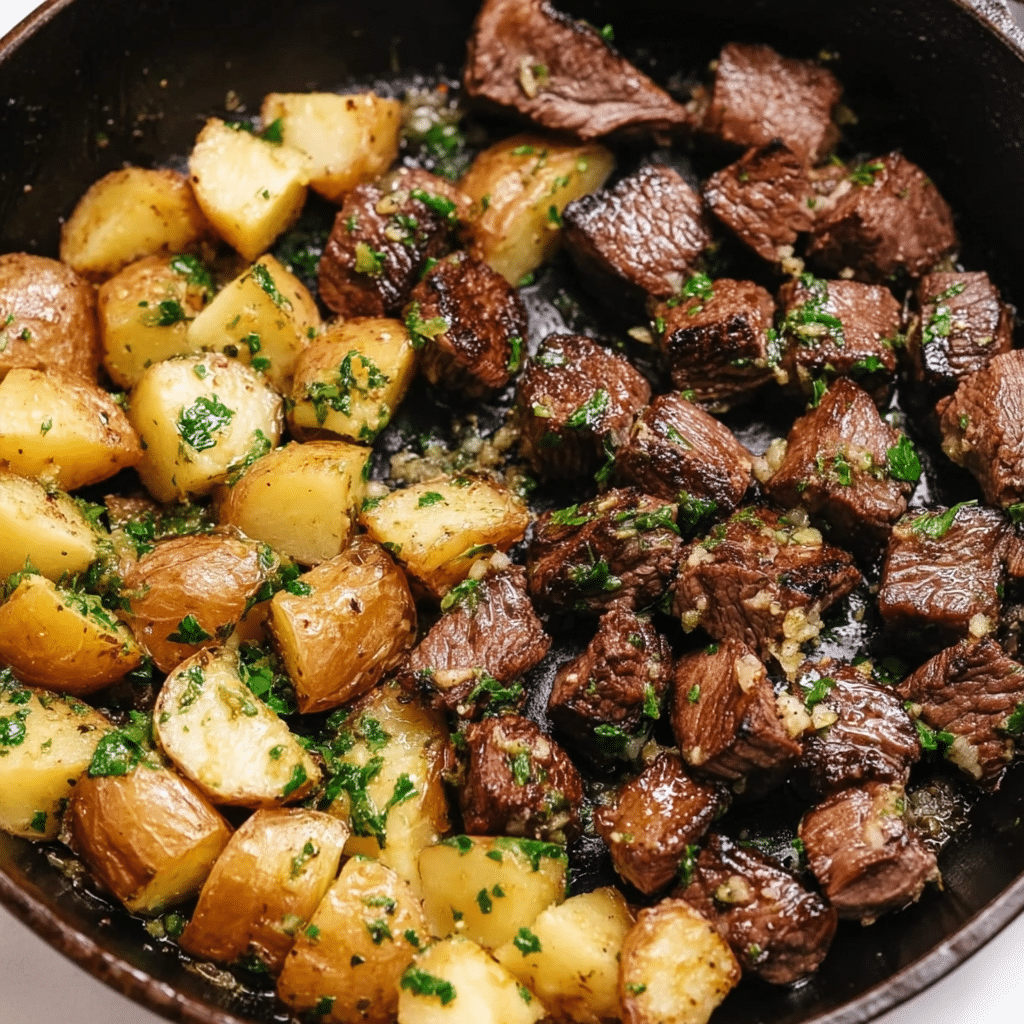
Introduction: The Ultimate Weeknight Skillet Dinner
There is a special kind of magic that happens when steak and potatoes come together in a hot skillet. It is a pairing as old as cooking itself—the rich, savory depth of seared beef against the creamy, golden crust of perfectly cooked potatoes. Add garlic butter into the equation, and you have a dish that transcends ordinary weeknight cooking and enters the realm of the unforgettable. The Garlic Butter Steak Bites and Potatoes recipe is exactly that: a one-pan wonder that delivers restaurant-quality flavor with minimal fuss and even less cleanup.
Let us be clear about what this recipe is not. It is not a complicated, multi-step production requiring hours of marinating, multiple pots and pans, or obscure ingredients. It is not a dish that demands a sous-chef or a culinary degree. What it is, however, is a masterclass in efficiency and flavor. In a single cast-iron skillet, using just a handful of simple ingredients, you can create a meal that is hearty enough to satisfy the hungriest appetite, elegant enough to serve to guests, and fast enough to make on a busy Tuesday night.
The beauty of this recipe lies in its technique. By cooking the potatoes first, we give them the head start they need to become tender and golden. Then, using the same skillet, we sear the steak bites at high heat, developing a deep, caramelized crust while keeping the interiors juicy and pink. Finally, we toss everything together with garlic butter, fresh herbs, and a shower of parsley. The result is a dish where every component complements the others: the potatoes soak up the garlicky, beefy juices, the steak bites retain their seared perfection, and the entire skillet becomes a canvas of golden browns and vibrant greens.
This recipe is also remarkably adaptable. It welcomes substitutions (sweet potatoes instead of Yukon gold, chicken instead of steak, different herb combinations) and scales easily for larger crowds. It is naturally gluten-free, low-carb diets can omit the potatoes (or reduce them), and the entire dish comes together in under 30 minutes. Perhaps most importantly, it is delicious—the kind of meal that generates silence at the table, broken only by requests for seconds.
In this article, we will explore every nuance of the Garlic Butter Steak Bites and Potatoes. We will discuss the best ingredients, from choosing the right cut of steak to understanding the role of ghee versus butter. We will walk through a detailed, step-by-step method that ensures success, whether you are a cast-iron novice or a seasoned skillet master. Finally, we will answer the most frequently asked questions, offering substitutions, storage tips, and creative variations to make this recipe a permanent fixture in your dinner rotation.
Heat your skillet. It is time to cook something extraordinary.
Ingredients: The Building Blocks of Buttery, Beefy Perfection
Before we fire up the stove, let us take a moment to understand each ingredient. This recipe is intentionally lean—just nine core components plus a garnish—but every one plays a critical role. Below is the complete list, followed by detailed notes on selection, quality, and potential substitutions.
The Core Ingredients:
- ¼ cup ghee or butter, divided
- 1 tablespoon olive oil
- 1 lb Yukon gold potatoes, cut into ½-inch cubes
- 3 garlic cloves, minced
- 1 teaspoon dried thyme
- ½ teaspoon dried oregano
- ½ teaspoon sea salt, plus more to taste
- ¼ teaspoon ground black pepper, plus more to taste
- 1 ¼ lb sirloin steak, cut into ½-inch cubes
- Fresh parsley, chopped (for garnish)
Cook Mode Note: As you prepare this recipe, you may want to prevent your screen from going dark. Most devices offer a “stay awake” or “cook mode” setting in their display options, allowing you to reference the instructions without constantly tapping the screen.
Ingredient Deep Dive
1. Ghee or Butter (¼ cup, divided)
Ghee is clarified butter—butter that has been simmered to remove water and milk solids, leaving behind pure butterfat. It has a higher smoke point (around 485°F) than regular butter (350°F), making it ideal for high-heat searing without burning. Ghee also has a nuttier, richer flavor than butter. That said, regular unsalted butter works beautifully in this recipe, especially if you are careful not to let it burn. The ¼ cup is divided: 2 tablespoons for the potatoes, 2 tablespoons for the steak. If using regular butter, keep the heat at medium (not medium-high) when adding it to prevent burning. If you are dairy-free, coconut oil or avocado oil can substitute, though the flavor will change.
2. Olive Oil (1 tablespoon)
Olive oil is added to the skillet along with the first 2 tablespoons of ghee or butter. Its primary role is to raise the smoke point of the cooking fat mixture, allowing you to achieve a higher temperature without burning the butter. It also adds its own fruity, peppery flavor. Extra-virgin olive oil is ideal. If you do not have olive oil, avocado oil or grapeseed oil are excellent neutral substitutes.
3. Yukon Gold Potatoes (1 lb, cut into ½-inch cubes)
Yukon Gold potatoes are the gold standard (pun intended) for this recipe. They have a naturally buttery, creamy texture, thin skins that do not need peeling, and a lower starch content than russet potatoes, which means they hold their shape when cubed and cooked. The ½-inch cubes are the perfect size: small enough to cook through in 8–10 minutes, large enough to maintain a satisfying bite. Do not substitute russet potatoes unless you peel them first and are prepared for a slightly mealier texture. Red potatoes or baby potatoes (cut into similar-sized pieces) are acceptable alternatives. One pound is approximately 3–4 medium Yukon Gold potatoes.
4. Garlic (3 cloves, minced)
Garlic is the aromatic soul of this dish. Three cloves, minced finely, infuse the potatoes and the butter with that irreplaceable pungent, sweet, nutty flavor. The garlic is added at the same time as the potatoes, which allows it to soften and mellow as the potatoes cook, rather than burning. For the best flavor, use fresh garlic cloves rather than pre-minced jarred garlic, which often contains preservatives and has a flat, bitter taste. If you are a garlic lover, feel free to add a fourth or fifth clove.
5. Dried Thyme (1 teaspoon)
Thyme is a classic partner to beef and potatoes. Its earthy, slightly floral, lemony notes complement the richness of the steak and the butteriness of the potatoes. Dried thyme is specified because it is more concentrated than fresh and can withstand the heat of the skillet without wilting. If you have fresh thyme, use 1 tablespoon of fresh leaves (stripped from the stems). Do not substitute ground thyme, which is a different product with a more medicinal flavor.
6. Dried Oregano (½ teaspoon)
Oregano adds a warm, slightly bitter, aromatic note that evokes Mediterranean and rustic cooking. It pairs beautifully with thyme and garlic. Half a teaspoon is enough to add complexity without dominating. If you have fresh oregano, use 1½ teaspoons of chopped fresh leaves. Dried marjoram is a close substitute.
7. Sea Salt (½ teaspoon, plus more to taste)
Sea salt is preferred over table salt because its larger, flakier crystals dissolve more evenly and provide a cleaner, less metallic taste. The salt is divided: some for the potatoes, some for the steak. Half a teaspoon is a starting point; you will likely add more at the end. If using table salt, reduce the amount by half (¼ teaspoon initially) because table salt is denser and saltier by volume.
8. Ground Black Pepper (¼ teaspoon, plus more to taste)
Freshly ground black pepper is always superior to pre-ground. It adds a subtle warmth and bite that complements both the steak and the potatoes. Grind it coarsely for more texture and flavor. A quarter teaspoon is a baseline; add more to taste at the end.
9. Sirloin Steak (1 ¼ lb, cut into ½-inch cubes)
Sirloin steak is the perfect cut for this recipe. It is flavorful, relatively tender, and more affordable than ribeye or filet mignon. When cut into ½-inch cubes and seared quickly over high heat, sirloin remains juicy and tender with a beautiful browned crust. Other excellent cuts include: ribeye (richer, more marbled), strip steak (also called New York strip), or flank steak (slice against the grain after cooking). Avoid tough cuts like round steak or chuck, which require long, slow cooking to become tender. One and a quarter pounds is approximately two small sirloin steaks or one large one. Cut the steak into uniform ½-inch cubes so they cook evenly.
10. Fresh Parsley (for garnish)
Fresh parsley is not just decoration—though it does add a beautiful pop of green against the golden potatoes and browned steak. It provides a fresh, slightly peppery, herbaceous note that cuts through the richness of the garlic butter. Flat-leaf (Italian) parsley is preferred over curly parsley for its stronger flavor. Chop the parsley finely and sprinkle it over the finished dish just before serving. If you do not have parsley, fresh chives, thyme, or even a sprinkle of dried oregano can work as substitutes.
Preparation Method: Step-by-Step to Skillet Perfection
Now, we move from ingredient appreciation to action. Follow these instructions carefully, and you will be rewarded with perfect Garlic Butter Steak Bites and Potatoes. The total active time is approximately 25–30 minutes.
Step 1: Prepare Your Ingredients (5–10 minutes)
Action: Before you turn on the heat, complete all your prep work. This cooking method moves quickly, and you will not have time to chop or measure once the skillet is hot.
- Potatoes: Wash the Yukon Gold potatoes thoroughly. You do not need to peel them. Cut them into ½-inch cubes. Try to make the pieces as uniform as possible so they cook evenly.
- Steak: Pat the sirloin steak dry with paper towels. Cut it into ½-inch cubes. Uniformity is key here too.
- Garlic: Mince 3 cloves of garlic finely.
- Herbs: Measure out the dried thyme and oregano. Chop the fresh parsley for garnish.
- Butter/Ghee: Measure out ¼ cup total. You will add 2 tablespoons first, then the remaining 2 tablespoons later.
Why this matters: Mise en place—French for “putting in place”—is the most important skill in cooking. Having everything prepped and ready before you start cooking prevents burning, overcooking, and stress. The steak cubes in particular must be ready to go the moment the skillet is hot; every second counts when searing.
Pro Tip: Place the steak cubes on a paper-towel-lined plate to absorb excess moisture. Dry meat sears better than wet meat.
Step 2: Heat the Skillet and Start the Potatoes (2 minutes)
Action: Place a cast-iron skillet (or another heavy-bottomed skillet) over medium heat. Add 1 tablespoon of olive oil and 2 tablespoons of ghee or butter. Allow the fats to melt and heat until shimmering—the butter should be bubbling but not browning or smoking.
Add the 1 lb of potato cubes to the skillet. Add the 3 cloves of minced garlic, 1 teaspoon of dried thyme, ½ teaspoon of dried oregano, ½ teaspoon of sea salt, and ¼ teaspoon of ground black pepper. Stir everything together until the potatoes are evenly coated with the fat and seasonings.
Why this matters: Starting the potatoes over medium heat (rather than high) allows them to cook through to tenderness before the outsides burn. The fat mixture of olive oil and ghee/butter provides both flavor and a higher smoke point. Adding the garlic and dried herbs at the beginning allows them to infuse the potatoes as they cook. Cast iron is ideal because it retains heat exceptionally well and creates a superior crust.
Pro Tip: If your skillet is not cast iron, any heavy-bottomed skillet (stainless steel or carbon steel) will work. Avoid non-stick skillets for this recipe; they cannot achieve the high heat needed for proper searing.
Step 3: Cook the Potatoes Until Golden and Tender (8–10 minutes)
Action: Let the potatoes cook for 2–3 minutes without stirring. This initial undisturbed period allows the bottom layer to develop a golden-brown crust. After 2–3 minutes, stir the potatoes, flipping them to expose new surfaces to the heat.
Continue cooking for another 6–8 minutes, stirring every 1–2 minutes. The potatoes are done when they are golden brown on multiple sides and fork-tender—a fork or knife tip should slide in easily with no resistance. The total cooking time should be 8–10 minutes.
Why this matters: The combination of resting (not stirring) and occasional stirring creates the ideal potato texture: crispy and browned on the outside, creamy and tender on the inside. If you stir constantly, the potatoes will never develop a crust. If you never stir, they will burn on one side and remain raw on the other. The garlic will soften and sweeten as it cooks, losing its raw sharpness. The dried herbs will bloom in the hot fat, releasing their essential oils.
Pro Tip: Do not overcrowd the skillet. The potatoes should be in a single layer with a little space between pieces. If your skillet is small (less than 10 inches), cook the potatoes in two batches. Overcrowding causes steaming instead of browning, resulting in pale, soft potatoes.
Step 4: Remove the Potatoes and Set Aside (1 minute)
Action: Once the potatoes are golden and tender, use a slotted spoon or spatula to transfer them to a plate or bowl. Leave behind as much of the garlic butter and herbs in the skillet as possible—those browned bits are packed with flavor. Set the potatoes aside.
Why this matters: Removing the potatoes from the skillet serves two purposes. First, it prevents them from overcooking while you sear the steak. Second, it allows the skillet to get very hot for the steak without the potatoes steaming or burning. The browned bits left behind (called the fond) will add incredible flavor to the steak.
Pro Tip: If the skillet looks dry after removing the potatoes, do not worry. The remaining ghee and steak will provide enough fat. If there is excessive burnt residue, wipe the skillet gently with a paper towel, but leave a thin layer of fond.
Step 5: Increase Heat and Sear the Steak Bites (4–5 minutes)
Action: Increase the heat under the skillet to medium-high. Add the remaining 2 tablespoons of ghee or butter. Allow it to melt and heat until it is shimmering and nearly smoking.
Add the 1 ¼ lb of sirloin steak cubes to the skillet in a single, even layer. Do not overcrowd—if necessary, cook in two batches. Season the steak cubes lightly with additional salt and pepper (about ¼ teaspoon salt and ⅛ teaspoon pepper, or to taste).
Let the steak cook for at least 2 minutes without stirring or moving it. This is critical. After 2 minutes, stir or flip the steak cubes. Continue cooking for another 1–2 minutes, stirring occasionally, until the steak is browned on all sides. The steak should be cooked to medium-rare or medium (internal temperature of 130–140°F). Because the cubes are small, they will cook quickly.
Why this matters: High heat and minimal movement are the secrets to a great sear. The Maillard reaction—the chemical process that creates deep, savory, browned flavors—requires direct, intense heat and time. If you stir the steak constantly, it will steam and turn gray instead of browning. The 2-minute undisturbed sear creates a beautiful crust. Sirloin steak is best served medium-rare to medium; cooking it beyond that will make it tough and dry. The residual heat will continue cooking the steak slightly even after you remove it from the heat.
Pro Tip: Use a thermometer if you are unsure. Insert an instant-read thermometer into the largest steak cube. 125°F is rare, 135°F is medium-rare, 145°F is medium. Remove the steak from the heat when it is 5°F below your target temperature; it will continue to cook as it rests.
Step 6: Return the Potatoes and Combine (1 minute)
Action: Return the cooked potatoes to the skillet with the steak bites. Stir everything together gently but thoroughly, allowing the potatoes to soak up the garlic butter and beef juices. The residual heat will warm the potatoes back up. Taste and adjust seasoning, adding more salt, pepper, or dried herbs as desired.
Why this matters: Combining the potatoes and steak allows their flavors to meld. The potatoes, which were already coated in garlic butter, now also absorb the savory, beefy fond from the skillet. The steak benefits from the herbal notes of the potatoes. This final toss ensures every bite contains a bit of both components.
Pro Tip: If the dish seems dry, add an additional tablespoon of butter or ghee and toss until melted. If it seems too greasy, blot gently with a paper towel before serving.
Step 7: Garnish and Serve (1 minute)
Action: Remove the skillet from the heat. Sprinkle chopped fresh parsley generously over the top. Serve immediately, directly from the skillet (the cast iron will keep the dish warm at the table) or transfer to a serving platter. This dish is excellent on its own, but it also pairs beautifully with a simple green salad, roasted vegetables, or a crusty piece of bread to soak up the garlic butter.
Why this matters: Fresh parsley adds a pop of color and a bright, herbaceous note that cuts through the richness of the garlic butter and beef. Serving immediately ensures the steak is at its peak—hot, juicy, and perfectly cooked. The longer the dish sits, the more the steak will continue to cook and potentially dry out.
Pro Tip: For an extra flourish, add a squeeze of fresh lemon juice over the finished dish. The acidity brightens all the flavors and balances the richness.
Conclusion: One Skillet, Endless Possibilities
The Garlic Butter Steak Bites and Potatoes recipe is proof that you do not need complicated techniques or a long ingredient list to create a memorable meal. With a single cast-iron skillet, a handful of pantry staples, and about 25 minutes, you can produce a dish that is hearty, flavorful, and deeply satisfying.
What makes this recipe so successful is its balance: the creamy, golden potatoes against the juicy, seared steak; the aromatic garlic and herbs against the rich butter; the bright, fresh parsley against the deep, savory fond. Each bite offers a combination of textures and flavors that keeps you coming back for more.
But perhaps the greatest gift of this recipe is its versatility. As you will see in the frequently asked questions below, this dish welcomes adaptation. Swap the steak for chicken, shrimp, or tofu. Change the herbs to rosemary and sage. Add vegetables like asparagus or bell peppers. Make it spicy with red pepper flakes. The technique remains the same, and the results are always delicious.
So heat your skillet, cube those potatoes, and sear that steak. Your one-pan masterpiece awaits.
Frequently Asked Questions (FAQ)
1. Can I use a different cut of steak instead of sirloin?
Absolutely. This recipe works beautifully with many cuts. Ribeye is richer and more marbled, resulting in even juicier steak bites. Strip steak (New York strip) is another excellent choice. Flank steak or skirt steak can be used but should be sliced against the grain after cooking rather than cubed before cooking; cube them after slicing. Avoid tough cuts like round steak, chuck, or brisket, which require long, slow cooking to become tender. If using a very lean cut like filet mignon, reduce the cooking time slightly (filet cooks faster).
2. Can I use sweet potatoes instead of Yukon Gold potatoes?
Yes, sweet potatoes are a delicious substitute. They have a different texture (creamier when cooked) and flavor (sweeter). Cut them into the same ½-inch cubes. Note that sweet potatoes may cook slightly faster (7–9 minutes total) because they are less dense. Watch carefully to prevent burning. The flavor pairing of sweet potatoes with garlic butter and steak is excellent—the sweetness contrasts beautifully with the savory beef.
3. Do I need to peel the potatoes?
No. Yukon Gold potatoes have thin, tender skins that become deliciously crispy when pan-fried. The skins also add fiber, color, and a rustic appearance. If you prefer peeled potatoes, you can peel them, but it is not necessary. If using russet potatoes, you should peel them because their skins are thicker and tougher.
4. Can I make this recipe dairy-free?
Yes. Substitute the ghee or butter with coconut oil, avocado oil, or a high-quality dairy-free butter alternative (such as Miyoko’s or Earth Balance). Use 4 tablespoons total, divided as directed. The flavor will change slightly (coconut oil adds a hint of coconut), but the dish will still be delicious. All other ingredients are naturally dairy-free.
5. How do I store and reheat leftovers?
Store leftovers in an airtight container in the refrigerator for up to 3 days. To reheat, the skillet is best: place leftovers in a hot skillet over medium heat, stirring occasionally, until heated through (about 3–4 minutes). The microwave is faster: place a portion on a microwave-safe plate and heat in 30-second intervals until hot. Note that the steak will continue to cook during reheating, so it will be more well-done than originally. Leftovers can also be frozen for up to 2 months; thaw overnight in the refrigerator before reheating in a skillet.
6. Why is my steak tough even though I cooked it correctly?
Several factors could be at play. First, you may have used a tough cut of beef (like round or chuck). Stick to sirloin, ribeye, or strip steak. Second, you may have overcooked the steak. Sirloin is best at medium-rare to medium; beyond that, it becomes tough and dry. Third, you may have cut the steak with the grain instead of against it. Look at the raw steak—you will see lines running through the meat (the grain). Cut perpendicular (across) those lines to shorten the muscle fibers. Finally, you may have overcrowded the skillet, causing the steak to steam instead of sear.
7. Can I add vegetables to this dish?
Yes, and it is a great way to make it a complete one-pan meal. Add vegetables during the potato cooking stage. Good options include: asparagus (cut into 1-inch pieces, add with potatoes), bell peppers (chopped, add with potatoes), mushrooms (sliced, add after removing potatoes, before cooking steak), broccoli (small florets, add with potatoes but note they may need an extra 2–3 minutes), or green beans (trimmed, add with potatoes). If adding mushrooms, cook them after removing the potatoes and before the steak, as they release water that would prevent the steak from searing.
8. Can I use fresh herbs instead of dried?
Yes, absolutely. Fresh herbs provide a brighter, more vibrant flavor. Use 1 tablespoon of fresh thyme leaves (instead of 1 teaspoon dried) and 1½ teaspoons of fresh oregano leaves (instead of ½ teaspoon dried). Add fresh herbs during the last 2 minutes of cooking the potatoes, or stir them in at the end with the parsley. Dried herbs are more concentrated and can withstand longer cooking; fresh herbs are more delicate and are best added toward the end.
9. My potatoes are burning on the outside but are still hard in the center. What went wrong?
This is usually caused by heat that is too high. Potatoes need time to cook through to tenderness. If the heat is too high, the outsides will burn before the insides are done. Reduce the heat to medium-low (or even low) and cover the skillet for 3–4 minutes to steam the potatoes, then remove the lid and increase the heat to re-crisp the outsides. Also, ensure your potato cubes are uniformly ½-inch; larger pieces take longer to cook. Finally, make sure you are using Yukon Gold or another waxy potato; russet potatoes are starchier and can become gluey or burn more easily.
10. Can I make this recipe in an air fryer?
Yes, with adjustments. Toss the potato cubes with 2 tablespoons of melted ghee, garlic, herbs, salt, and pepper. Air fry at 400°F for 10–12 minutes, shaking halfway, until golden and tender. Meanwhile, toss the steak cubes with the remaining 2 tablespoons of melted ghee, salt, and pepper. Air fry the steak cubes at 400°F for 4–6 minutes (depending on desired doneness), shaking halfway. Combine in a bowl, garnish with parsley, and serve. The texture will be slightly different (less fond, more even browning), but the result is still delicious.
11. Is ghee necessary, or can I use regular butter?
You can use regular unsalted butter, but be careful. Regular butter has a lower smoke point (around 350°F) than ghee (around 485°F). When cooking at medium-high heat for the steak, regular butter may burn, turning brown and bitter. To use regular butter, reduce the heat slightly (medium rather than medium-high for the steak) and watch carefully. Clarifying your own butter (simmering to remove milk solids) is easy and gives you the benefits of ghee at a lower cost. That said, many home cooks use regular butter successfully in this recipe—just do not let it smoke.
12. Can I add cheese to this dish?
Absolutely. Crumbled feta, shredded Parmesan, or crumbled blue cheese are all excellent additions. Add the cheese after you return the potatoes to the skillet, just before serving. Stir gently to melt slightly, or sprinkle on top as a garnish. Parmesan adds salty, nutty umami. Feta adds tangy creaminess. Blue cheese adds bold, pungent contrast. Avoid adding cheese during cooking, as high heat can cause it to separate and become oily.
13. How do I get a better sear on my steak bites?
Several tips will improve your sear. First, pat the steak cubes completely dry with paper towels before seasoning. Moisture is the enemy of browning. Second, do not crowd the skillet. If the cubes are too close together, they will steam instead of sear. Cook in two batches if necessary. Third, let the skillet get very hot before adding the steak. The fat should be shimmering and nearly smoking. Fourth, do not stir for at least 2 minutes after adding the steak. Let the heat do its work. Fifth, use a cast-iron skillet if possible; it retains heat better than other materials.
14. Can I prepare this recipe ahead of time for meal prep?
This dish is best fresh, but it can be part of a meal prep strategy. Cook the potatoes and steak as directed, but stop before combining them. Store the potatoes and steak separately in airtight containers in the refrigerator for up to 3 days. When ready to eat, reheat the potatoes in a skillet over medium heat until hot and crispy, then add the steak and reheat for 1–2 minutes. This prevents the steak from overcooking during reheating. You can also portion the finished dish into meal prep containers; the steak will be more well-done upon reheating, but it will still be tasty.
15. What should I serve with this dish?
This is a hearty, complete meal on its own, but it welcomes accompaniments. A simple green salad with a lemony vinaigrette cuts through the richness. Roasted asparagus or steamed green beans add color and freshness. Crusty bread is perfect for sopping up the remaining garlic butter. A dollop of sour cream or Greek yogurt adds tangy creaminess. For a low-carb option, serve over a bed of sautéed spinach or zucchini noodles. And of course, a cold beer or a glass of red wine (a Malbec or Cabernet Sauvignon) is never a bad idea.
Garlic Butter Steak Bites and Potatoes: Easy One-Pan Skillet Recipe
This garlic butter steak bites and potatoes recipe is an easy one-pan skillet dinner with tender seared steak, crispy potatoes, and rich garlic herb butter.
- Prep Time: 10 minutes
- Cook Time: 20 minutes
- Total Time: 30 minutes
- Yield: 4 servings
- Category: Main Dish, Skillet
- Method: Stovetop
- Cuisine: American
Ingredients
- 1/4 cup ghee or butter, divided
- 1 tbsp olive oil
- 1 lb Yukon gold potatoes, cubed
- 3 garlic cloves, minced
- 1 tsp dried thyme
- 1/2 tsp dried oregano
- 1/2 tsp sea salt (plus more to taste)
- 1/4 tsp black pepper (plus more to taste)
- 1 1/4 lb sirloin steak, cubed
- Fresh parsley, chopped
Instructions
- Heat cast iron skillet over medium heat. Add olive oil and 2 tbsp ghee.
- Add potatoes and season with garlic, thyme, oregano, salt, and pepper.
- Cook 2–3 minutes before stirring, then cook until golden and tender (8–10 minutes).
- Remove potatoes and set aside.
- Increase heat to medium-high and add remaining ghee.
- Sear steak cubes for at least 2 minutes before stirring.
- Cook until browned on all sides, about 1–2 more minutes.
- Return potatoes to skillet and mix together.
- Adjust seasoning and garnish with parsley.
- Serve hot.
Notes
- Do not overcrowd pan when searing steak.
- Cut potatoes evenly for even cooking.
- Let steak rest briefly for best juiciness.