
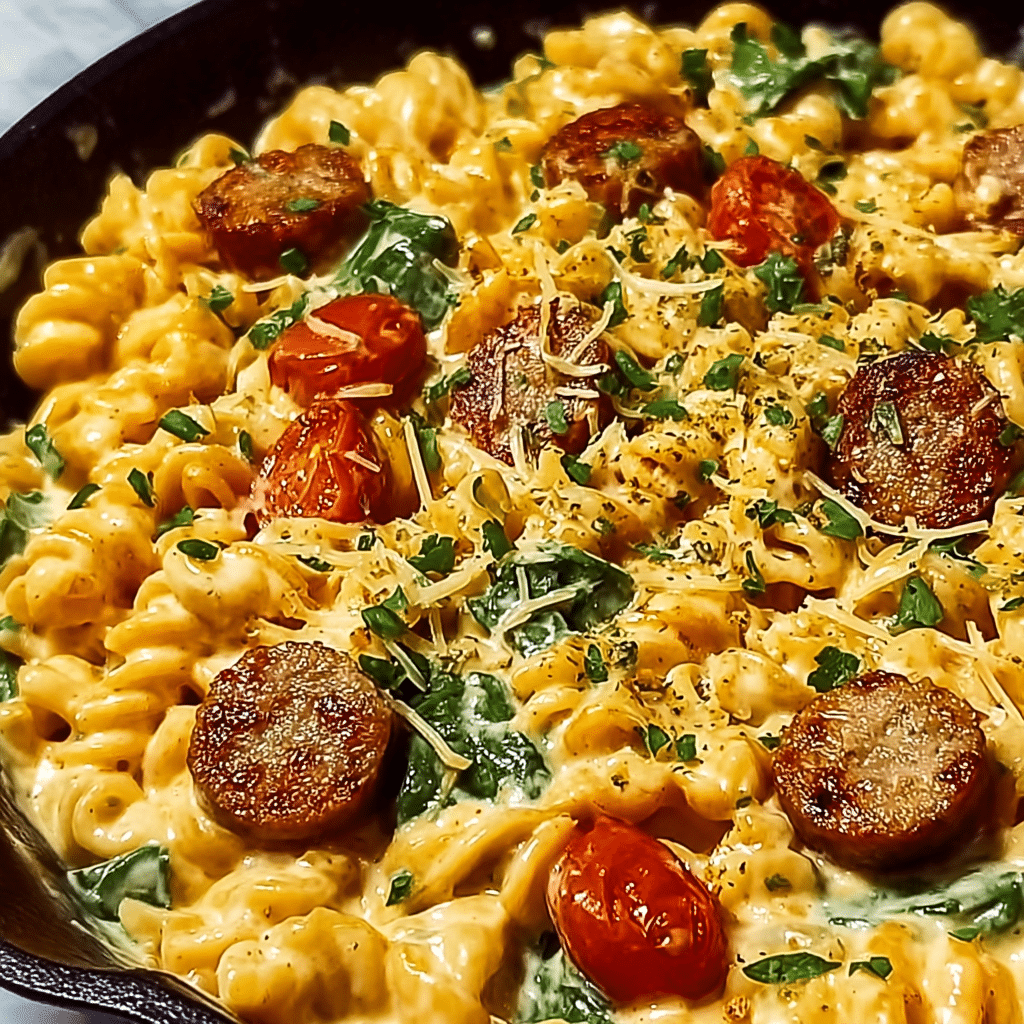
Introduction: The Dinner That Practically Cooks Itself
There are certain recipes that feel like they belong in a different category altogether—not quite “weeknight dinner,” not quite “special occasion,” but something in between. Something magical. The One-Pan White Cheddar Ranch Sausage Magic Pasta is exactly that: a dish that delivers creamy, cheesy, savory perfection with almost no effort and, more importantly, almost no cleanup.
Let us address the word “magic” in the title, because it is not hyperbole. The magic here is twofold. First, there is the practical magic of cooking the pasta directly in the sauce. No separate pot of boiling water. No colander. No waiting for a massive pot to come to a boil. The pasta cooks right in the skillet, absorbing the chicken broth, milk, and ranch seasoning as it softens, becoming infused with flavor from the inside out. Second, there is the flavor magic: the combination of creamy white cheddar, zesty ranch seasoning, smoky sausage, sweet roasted red peppers, and fresh spinach creates a dish that tastes far more complex than its simple preparation would suggest.
This recipe solves nearly every problem that plagues weeknight cooking. It is fast—on the table in about 30 minutes. It is economical—sausage is more affordable than steak or seafood, and the other ingredients are pantry and refrigerator staples. It is a complete meal in one pan: protein, carbohydrates, dairy, and vegetables all come together without requiring multiple pots or a complicated timeline. And it is forgiving—if you are missing an ingredient, there is almost always a substitute (see the FAQ section).
The inspiration for this dish draws from several beloved culinary traditions. The creamy, cheesy pasta sauce evokes classic stovetop macaroni and cheese. The ranch seasoning brings a tangy, herby, garlicky note that is unmistakably American. The smoked sausage adds a hearty, savory depth reminiscent of Cajun and Southern cooking. And the spinach and roasted red peppers contribute color, freshness, and a subtle sweetness that balances the richness.
Perhaps the greatest compliment to this recipe is that it works for almost everyone. Children love the creamy pasta and mild sausage. Adults appreciate the sophisticated flavor combination and the fact that it includes vegetables without hiding them. It is impressive enough for guests but easy enough for a Tuesday when you have exactly zero energy left. It is the definition of a “keeper” recipe—the kind you make so often that you eventually stop measuring and just know.
In this article, we will explore every nuance of the One-Pan White Cheddar Ranch Sausage Magic Pasta. We will discuss the best ingredients, from choosing the right sausage to understanding the role of the pasta cooking liquid. We will walk through a detailed, step-by-step method that ensures success, whether you are a confident cook or a kitchen novice. Finally, we will answer the most frequently asked questions, offering substitutions, storage tips, and creative variations to make this recipe a permanent fixture in your dinner rotation.
Heat your skillet. It is time to make some magic.
Ingredients: The Building Blocks of Creamy, Cheesy Magic
Before we fire up the stove, let us take a moment to understand each ingredient. This recipe is thoughtfully constructed, with each component playing a specific role. Below is the complete list, followed by detailed notes on selection, quality, and potential substitutions.
The Core Ingredients:
- 12 oz rotini pasta
- 14 oz smoked sausage, sliced into rounds
- 1 ½ cups shredded white cheddar cheese
- 1 packet ranch seasoning mix
- 2 cups milk
- 2 cups chicken broth
- 2 tablespoons butter
- 3 cloves garlic, minced
- 2 cups baby spinach
- ½ cup roasted red peppers, chopped
- 1 tablespoon olive oil
- Salt and pepper, to taste
Cook Mode Note: As you prepare this recipe, you may want to prevent your screen from going dark. Most devices offer a “stay awake” or “cook mode” setting in their display options, allowing you to reference the instructions without constantly tapping the screen.
Ingredient Deep Dive
1. Rotini Pasta (12 oz)
Rotini is the ideal pasta shape for this one-pan method. Its tight, spiral corkscrews and ridges are designed to capture and hold sauce, ensuring every bite is creamy and flavorful. The shape also holds up well to the 12–15 minute simmer without becoming mushy. If you do not have rotini, excellent substitutes include fusilli (spiral), cavatappi (hollow corkscrews), penne, or gemelli. Avoid long, thin pasta like spaghetti or angel hair, which can clump together in the skillet. Also avoid very small pasta like orzo or ditalini, which may overcook. The 12-ounce amount is intentional; using a full pound (16 ounces) would require more liquid and result in a less saucy dish.
2. Smoked Sausage (14 oz, sliced into rounds)
Smoked sausage is the protein anchor of this dish, providing savory, smoky depth and a satisfying chew. The smoking process infuses the sausage with flavor, so even simple preparation yields complex results. Look for fully cooked smoked sausage—most grocery store varieties are pre-cooked, which means you are simply browning and heating them, not cooking raw meat. Flavors that work beautifully include: andouille (spicy, Cajun-style), kielbasa (Polish, garlicky), beef smoked sausage, or turkey smoked sausage (leaner). Slice the sausage into rounds about ¼-inch thick. If your sausage comes in a long link, slice it on a slight diagonal for larger, more attractive pieces. Fourteen ounces is a standard package size.
3. White Cheddar Cheese (1 ½ cups, shredded)
White cheddar is the cheese of choice for this recipe, and for good reason. It has a sharper, more complex flavor than yellow cheddar (the color difference comes from annatto, a natural plant-based dye; white cheddar is simply cheddar without coloring). Sharp or extra-sharp white cheddar provides a tangy, nutty, slightly salty punch that stands up to the smoked sausage and ranch seasoning. Shred your own cheese from a block whenever possible. Pre-shredded cheese is coated with anti-caking agents (cellulose or potato starch) that prevent it from melting smoothly and can leave a gritty texture. A block of white cheddar shredded on a box grater takes only 60 seconds and makes a noticeable difference in creaminess. If you cannot find white cheddar, sharp yellow cheddar, Gouda, or a blend of Monterey Jack and Parmesan will work.
4. Ranch Seasoning Mix (1 packet)
Ranch seasoning is the secret weapon that gives this dish its distinctive, craveable flavor. A standard packet (about 1 ounce) contains a blend of buttermilk powder, garlic powder, onion powder, dried dill, dried parsley, salt, and other spices. It adds tanginess, herbaceousness, and savory depth without requiring you to measure six different spices. If you prefer to make your own ranch seasoning, combine: 2 tablespoons buttermilk powder, 1 tablespoon dried parsley, 1 teaspoon dried dill, 1 teaspoon garlic powder, 1 teaspoon onion powder, ½ teaspoon salt, and ¼ teaspoon black pepper. Use 2–3 tablespoons of this homemade blend. Be aware that some ranch packets contain gluten or MSG; check the label if you have dietary restrictions.
5. Milk (2 cups)
Milk is the liquid base of the creamy sauce. It provides richness, body, and a smooth texture. Whole milk (3.25% fat) yields the creamiest, most luxurious sauce. However, 2% milk works very well and is only slightly less rich. Avoid skim milk (0% fat) or low-fat (1%) milk; they lack the fat necessary to create a stable, creamy emulsion and may result in a thin, watery sauce. If you are dairy-free, unsweetened oat milk or full-fat canned coconut milk can substitute, though the flavor will change.
6. Chicken Broth (2 cups)
Chicken broth is the second liquid component, providing savory depth and a meaty backbone that complements the sausage. It also helps cook the pasta and deglazes the pan, lifting the browned bits from the sausage for maximum flavor. Use low-sodium or unsalted chicken broth whenever possible, as the ranch seasoning and cheese already contribute significant salt. If you only have regular chicken broth, reduce or omit additional salt at the end. Vegetable broth can substitute for a vegetarian version. For even richer flavor, use chicken bone broth.
7. Butter (2 tablespoons)
Butter adds richness and helps create the base for the sauce. It is used to sauté the garlic after the sausage is removed, capturing the fond (browned bits) left behind. Unsalted butter is recommended because the ranch seasoning and cheese provide ample salt. If you only have salted butter, reduce or omit additional salt in the recipe.
8. Garlic (3 cloves, minced)
Garlic is the aromatic foundation of the sauce. Three cloves, minced finely, will infuse the butter and the liquid with that irreplaceable pungent, sweet, nutty flavor. The garlic is sautéed for only about 30 seconds—just long enough to become fragrant but not long enough to brown or burn, which would make it bitter. For the best flavor, use fresh garlic cloves rather than pre-minced jarred garlic, which often contains preservatives and has a flat, bitter taste.
9. Baby Spinach (2 cups)
Baby spinach adds color, nutrition, and a mild, earthy flavor that wilts beautifully into the hot pasta. Two cups may look like a lot when raw, but spinach reduces dramatically in volume when heated—it will wilt down to about ½ cup. The spinach is added at the very end and simply stirred until wilted, preserving its bright green color and fresh taste. If you do not have baby spinach, chopped regular spinach, arugula (for a peppery kick), or kale (add earlier, as it takes longer to wilt) can substitute. Frozen spinach (thawed and squeezed dry) also works; add 1 cup.
10. Roasted Red Peppers (½ cup, chopped)
Roasted red peppers add sweetness, smokiness, and a pop of vibrant red color that contrasts beautifully with the creamy white sauce and green spinach. They are available jarred in most grocery stores (often near the olives and pickles). Drain them and pat them dry before chopping to prevent excess liquid from thinning the sauce. If you prefer to roast your own, char red bell peppers over an open flame or under a broiler until blackened, then steam in a covered bowl, peel, seed, and chop. If you do not have roasted red peppers, sun-dried tomatoes (rehydrated and chopped) or fresh red bell peppers (sautéed briefly before adding the liquid) can substitute.
11. Olive Oil (1 tablespoon)
Olive oil is used to brown the sausage. It has a relatively high smoke point and adds its own fruity, peppery flavor. Extra-virgin olive oil is ideal. If you do not have olive oil, avocado oil or vegetable oil are fine neutral substitutes.
12. Salt and Pepper (to taste)
These foundational seasonings are added at the very end, after all other ingredients are combined. The ranch seasoning, cheese, and broth all contain salt, so you may need very little additional salt. Taste first, then add. Freshly ground black pepper adds a subtle warmth and bite.
Preparation Method: Step-by-Step to One-Pan Magic
Now, we move from ingredient appreciation to action. Follow these instructions carefully, and you will be rewarded with perfect One-Pan White Cheddar Ranch Sausage Magic Pasta. The total active time is approximately 30–35 minutes.
Step 1: Prepare Your Ingredients (5 minutes)
Action: Before you turn on the heat, complete all your prep work. This cooking method moves quickly, and you will not have time to chop or measure once the skillet is hot.
- Sausage: Slice the 14 oz smoked sausage into ¼-inch rounds. If the sausage is in a long link, slice on a slight diagonal for larger pieces.
- Garlic: Mince 3 cloves of garlic finely.
- Roasted Red Peppers: Drain the jarred peppers and pat them dry with paper towels. Chop them into ½-inch pieces.
- Spinach: Measure out 2 cups of baby spinach. No need to chop.
- Cheese: Shred 1 ½ cups of white cheddar cheese from a block.
- Pasta: Have the 12 oz of rotini ready.
- Liquids: Measure out 2 cups of milk and 2 cups of chicken broth.
Why this matters: Mise en place—French for “putting in place”—is the most important skill in cooking. Having everything prepped and ready before you start cooking prevents burning, overcooking, and stress. Once the pasta goes into the skillet, the process moves quickly.
Pro Tip: Place the shredded cheese in a bowl at room temperature so it melts more quickly and smoothly when added.
Step 2: Brown the Sausage (5–6 minutes)
Action: Place a large, deep skillet or Dutch oven over medium-high heat. Add 1 tablespoon of olive oil. Once the oil is shimmering, add the sliced sausage rounds in a single layer. Do not overcrowd the skillet; if necessary, brown in two batches.
Cook the sausage for 2–3 minutes per side, flipping once, until both sides are golden brown and slightly crispy. The sausage is already fully cooked, so you are browning for flavor and texture, not cooking raw meat. Once browned, use a slotted spoon to remove the sausage from the skillet and transfer it to a plate. Set aside.
Why this matters: Browning the sausage creates the Maillard reaction—the chemical process that produces deep, savory, caramelized flavor. The browned bits left behind in the skillet (called the fond) are packed with flavor and will be incorporated into the sauce. Removing the sausage before making the sauce prevents it from becoming overcooked or tough.
Pro Tip: Do not crowd the skillet. If the sausage slices are too close together, they will steam instead of brown. Leave space between each piece. A 12-inch skillet can handle 14 oz of sliced sausage in a single layer without overcrowding.
Step 3: Sauté the Garlic and Build the Sauce Base (2 minutes)
Action: Reduce the heat to medium. Add 2 tablespoons of butter to the same skillet (do not wipe it out—the fond is flavor gold). Once the butter has melted, add the 3 cloves of minced garlic. Sauté for about 30 seconds, stirring constantly, until the garlic is fragrant and just beginning to turn golden. Do not let it brown or burn.
Pour in 2 cups of chicken broth and 2 cups of milk. Use a wooden spoon or spatula to scrape up any browned bits from the bottom of the pan. These bits (the fond) will dissolve into the liquid, infusing the sauce with savory flavor.
Why this matters: Sautéing the garlic briefly in butter releases its aromatic compounds without burning it (burnt garlic becomes bitter). Deglazing the pan with liquid lifts the fond off the bottom, incorporating it into the sauce for maximum flavor. This step transforms a simple cream sauce into something deeply savory and complex.
Pro Tip: If the fond is stubborn, let the liquid simmer for a minute before scraping. The heat will help loosen the browned bits.
Step 4: Add Ranch Seasoning and Bring to a Simmer (1 minute)
Action: Stir in 1 packet of ranch seasoning mix. Whisk or stir until the seasoning is fully dissolved into the liquid. Increase the heat to bring the mixture to a gentle simmer. You should see small bubbles breaking the surface, not a rolling boil.
Why this matters: Dissolving the ranch seasoning into the liquid ensures its flavor is evenly distributed throughout the sauce, not concentrated in patches. Simmering (rather than boiling vigorously) prevents the milk from curdling or scorching on the bottom of the pan.
Pro Tip: If you are using homemade ranch seasoning, start with 2 tablespoons, taste, and add more if desired. Homemade blends can vary in intensity.
Step 5: Cook the Pasta Directly in the Sauce (12–15 minutes)
Action: Add 12 oz of rotini pasta to the skillet. Push the pasta down with a spoon or spatula so it is mostly submerged in the liquid. Some pasta may stick up above the surface—this is fine, as it will soften and sink as it cooks.
Cover the skillet with a lid. Reduce the heat to medium-low (maintaining a gentle simmer). Cook for 12–15 minutes, stirring every 3–4 minutes to prevent the pasta from sticking to the bottom of the pan. The pasta is done when it is al dente (firm to the bite) and most of the liquid has been absorbed, leaving a creamy sauce.
Why this matters: Cooking the pasta directly in the sauce is the “magic” of this recipe. As the pasta cooks, it releases starch into the liquid, which naturally thickens the sauce. The pasta also absorbs the flavorful liquid, becoming infused with ranch, garlic, and broth from the inside out. Covering the skillet traps heat and moisture, ensuring even cooking. Stirring periodically prevents sticking.
Pro Tip: If the liquid evaporates too quickly and the pasta is not yet tender, add ¼ cup of water or additional broth and continue cooking. If the pasta is tender but the sauce is too thin, remove the lid for the final 2–3 minutes to allow evaporation and thickening.
Step 6: Add the White Cheddar Cheese (2 minutes)
Action: Once the pasta is al dente, reduce the heat to low. Add 1 ½ cups of shredded white cheddar cheese in handfuls, stirring constantly after each addition. Stir until the cheese is completely melted and smooth, and the sauce has become creamy and cohesive. Do not boil the sauce after adding the cheese, as high heat can cause the cheese to separate and become oily.
Why this matters: Adding the cheese off the heat (or over very low heat) ensures it melts gently and emulsifies into the sauce rather than clumping or breaking. The starch released from the pasta helps the cheese and liquid form a stable, creamy emulsion. Stirring constantly prevents the cheese from sinking to the bottom and burning.
Pro Tip: If the sauce seems too thick after adding the cheese, stir in a splash of reserved warm milk or broth. If it seems too thin, let it sit off the heat for 2–3 minutes—the pasta will continue to absorb liquid as it cools slightly.
Step 7: Add Spinach and Roasted Red Peppers (2 minutes)
Action: Add 2 cups of baby spinach and ½ cup of chopped roasted red peppers to the skillet. Stir gently to combine. The residual heat from the pasta will wilt the spinach within 30–60 seconds. Stir until the spinach has reduced in volume and is evenly distributed throughout the dish.
Why this matters: Adding the spinach at the very end preserves its bright green color and fresh flavor. If cooked for too long, spinach becomes dark, slimy, and bitter. The roasted red peppers add sweetness, smokiness, and a pop of color that makes the dish visually appealing.
Pro Tip: If you are using regular spinach (not baby spinach), chop it roughly before adding. If you are using kale, add it 2–3 minutes earlier, as it takes longer to wilt.
Step 8: Return the Sausage and Finish (1 minute)
Action: Return the browned sausage slices to the skillet. Stir everything together gently until the sausage is evenly distributed throughout the pasta. Taste the dish and season with salt and black pepper to taste. Remember that the ranch seasoning and cheese already contain salt, so add sparingly at first.
Why this matters: Returning the sausage at the end prevents it from becoming overcooked or tough. The residual heat warms it through without additional cooking. Tasting and adjusting seasoning at the end ensures the dish is perfectly balanced.
Pro Tip: For a finishing touch, sprinkle additional shredded white cheddar or fresh parsley on top before serving. A squeeze of fresh lemon juice can also brighten the flavors.
Step 9: Serve and Enjoy (1 minute)
Action: Serve the pasta immediately, directly from the skillet (the cast iron or heavy-bottomed pan will keep it warm at the table) or transferred to a serving bowl. This dish is a complete meal on its own, but it also pairs beautifully with a simple green salad, crusty bread, or roasted vegetables.
Why this matters: Pasta dishes are best served immediately, while the sauce is creamy and the pasta is at its ideal texture. As the dish sits, the pasta will continue to absorb liquid, and the sauce may thicken further.
Pro Tip: If you are not serving immediately, keep the skillet covered over the lowest possible heat, stirring occasionally. Add a splash of milk or broth when reheating to restore the creamy consistency.
Conclusion: The Magic Is Real
The One-Pan White Cheddar Ranch Sausage Magic Pasta delivers on every promise its name makes. It is truly a one-pan recipe—no separate pot for boiling pasta, no colander to clean, no multiple dishes to juggle. It is creamy, cheesy, and deeply satisfying, with the smoky sausage providing savory depth, the spinach and roasted red peppers adding color and freshness, and the ranch seasoning tying everything together with its tangy, herby magic.
What makes this recipe so successful is its thoughtful design. Every step serves a purpose: browning the sausage builds flavor, deglazing the pan captures fond, cooking the pasta in the sauce infuses it from within, and adding the cheese off the heat ensures a smooth, creamy emulsion. The result is a dish that tastes like it took far more effort than it actually did.
This is the kind of recipe that becomes a household staple. It is fast enough for weeknights, impressive enough for company, and flexible enough to accommodate whatever you have in your refrigerator. It is comfort food at its finest—unpretentious, generous, and absolutely delicious.
So grab your largest skillet, slice that sausage, and shred that cheese. Your one-pan magic show is about to begin.
Frequently Asked Questions (FAQ)
1. Can I use a different type of pasta instead of rotini?
Yes. The best substitutes are short, ridged, or spiral pasta shapes that can hold the creamy sauce. Excellent options include: fusilli (spiral), cavatappi (hollow corkscrews), penne, rigatoni, gemelli, or shells. Avoid long, thin pasta like spaghetti, fettuccine, or angel hair, as they tend to clump together in the skillet. Also avoid very small pasta like orzo or ditalini, which may overcook and become mushy. If using a different shape, the cooking time may vary slightly; check for doneness at the 10-minute mark.
2. Can I use a different type of sausage?
Absolutely. This recipe works beautifully with many sausages. Andouille sausage adds spicy, Cajun heat. Kielbasa (Polish sausage) offers a garlicky, smoky flavor. Beef smoked sausage is richer and heartier. Turkey smoked sausage is leaner and lighter. Chicken sausage (various flavors like sun-dried tomato or spinach and feta) works well but may be less smoky. For a vegetarian version, use plant-based sausage or substitute 8 oz of sliced mushrooms (sauté them with the garlic). If using raw sausage (not pre-cooked), cook it thoroughly before proceeding with the recipe.
3. Can I make this recipe gluten-free?
Yes, with two substitutions. First, use gluten-free rotini pasta (made from rice, corn, or chickpeas). Be aware that gluten-free pasta can become mushy more quickly than wheat pasta; check for doneness at the 8–10 minute mark and do not overcook. Second, ensure your ranch seasoning mix is gluten-free (many brands are, but check the label; some contain maltodextrin or other gluten-derived ingredients). All other ingredients—sausage, cheese, milk, broth, butter, garlic, spinach, peppers, oil—are naturally gluten-free.
4. Can I use half-and-half or heavy cream instead of milk?
Yes, and the result will be even richer and creamier. If using half-and-half, use the same 2 cups. If using heavy cream, use 1 cup of heavy cream and 1 cup of chicken broth (or water) to prevent the sauce from becoming too thick and heavy. Reduce the cooking time slightly, as cream-based sauces can scorch more easily. Do not use skim milk or low-fat milk; they lack the fat needed for a creamy texture.
5. How do I store and reheat leftovers?
Store leftovers in an airtight container in the refrigerator for up to 3 days. To reheat, the stovetop is best: place leftovers in a skillet over medium-low heat, add a splash of milk or broth to loosen the sauce, and stir gently until heated through. The microwave is faster: place a portion in a microwave-safe bowl, cover loosely, and heat in 45-second intervals on medium power, stirring between intervals. The pasta will absorb more liquid as it sits, so leftovers will be thicker and less saucy than the fresh dish—this is normal and still delicious.
6. Can I freeze this dish?
Freezing is possible but not ideal. The creamy sauce may separate or become grainy upon thawing and reheating, and the pasta texture will suffer, becoming softer and less distinct. If you must freeze, do so without the spinach (add fresh spinach after reheating). Store in a freezer-safe container for up to 2 months. Thaw overnight in the refrigerator, then reheat gently on the stovetop with an extra splash of milk or broth. For best results, enjoy this dish fresh.
7. The sauce in my dish turned out grainy or separated. What went wrong?
Grainy or separated sauce is usually caused by one of three issues. First, the heat may have been too high when adding the cheese. Cheese should be added over low heat or off the heat entirely; high heat causes the proteins to seize and the fats to separate. Second, you may have used pre-shredded cheese, which contains anti-caking agents that prevent smooth melting. Always shred your own cheese. Third, you may have boiled the sauce after adding the cheese. Once cheese is added, do not let the sauce boil—gentle warmth only. To fix a separated sauce, remove from heat immediately, add a splash of cold milk, and whisk vigorously—this can sometimes bring it back together.
8. Can I add other vegetables to this dish?
Yes, this dish welcomes additional vegetables. Good options include: mushrooms (sliced, sauté with the garlic), broccoli (small florets, add with the pasta, may need an extra 2–3 minutes), cauliflower (small florets, add with the pasta), zucchini (diced, add with the pasta), or sun-dried tomatoes (chopped, add with the roasted red peppers). Avoid watery vegetables like fresh tomatoes or celery unless pre-cooked, as they will release liquid and thin the sauce. Frozen vegetables (peas, corn, green beans) can be added with the spinach.
9. I don’t have a lid for my skillet. What can I use instead?
You have several options. Cover the skillet with a large baking sheet, a piece of aluminum foil (crimp the edges to seal), or an inverted skillet of the same size. If you have no cover at all, you can still cook the pasta uncovered, but you will need to add an extra ½ to 1 cup of liquid and stir more frequently to prevent the pasta from drying out. The cooking time may also increase by 3–5 minutes.
10. Can I make this recipe in an Instant Pot or slow cooker?
This recipe is designed for stovetop, but adaptations are possible. For Instant Pot: Use the sauté function to brown the sausage, then add garlic, broth, milk, ranch seasoning, and pasta. Pressure cook on high for 5 minutes, then quick release. Stir in cheese, spinach, peppers, and sausage. For slow cooker: Brown the sausage on the stovetop first, then transfer to the slow cooker with all ingredients except cheese, spinach, and peppers. Cook on low for 2–3 hours or high for 1–2 hours (pasta cooking times vary significantly in slow cookers). Stir in cheese, spinach, and peppers at the end. Both methods produce slightly different textures than the stovetop version.
11. Can I use a different cheese instead of white cheddar?
Yes. Excellent substitutes include: sharp yellow cheddar (similar flavor, orange color), Gouda (smoky, creamy), Monterey Jack (mild, melts beautifully), Colby Jack (mild, creamy), or a blend of Parmesan and mozzarella (adds nutty and stretchy notes). Avoid very soft cheeses like brie or camembert (too fatty, won’t melt smoothly) or very hard cheeses like aged Parmesan (won’t melt into a creamy sauce on its own). If using a milder cheese, consider adding an extra ¼ cup for the same flavor intensity.
12. Is this recipe spicy? Can I make it spicier?
The recipe as written is not spicy. The ranch seasoning provides tangy, herby flavor without heat. To make it spicy, use andouille sausage (which contains cayenne and red pepper flakes) and add ¼–½ teaspoon of red pepper flakes or a pinch of cayenne pepper when you add the ranch seasoning. For even more heat, add a few dashes of hot sauce (like Tabasco or Frank’s RedHot) at the end. To keep it mild, use a mild smoked sausage (like regular kielbasa) and omit any spicy additions.
13. Can I use fresh spinach instead of baby spinach?
Yes. Regular spinach leaves are larger and slightly tougher than baby spinach. Chop them roughly before adding. You may need to cook them for an additional 30–60 seconds to wilt completely. The same volume applies: 2 cups of packed regular spinach leaves. If using frozen spinach, thaw it completely and squeeze out as much water as possible before adding; use 1 cup of thawed, squeezed frozen spinach.
14. Why do I need to stir the pasta every 3–4 minutes?
Stirring prevents the pasta from sticking to the bottom of the skillet and to itself. Pasta releases starch as it cooks, which can cause it to clump together or adhere to the pan. Regular stirring also ensures even cooking, as the pasta at the bottom of the skillet is exposed to more direct heat than the pasta at the top. If you forget to stir, you may end up with a stuck, burned layer on the bottom of your pan.
15. Can I double this recipe for a crowd?
Yes. Double all ingredients. You will need a very large skillet or Dutch oven (at least 7–8 quarts) to accommodate the doubled volume. If your skillet is not large enough, cook the recipe in two separate skillets or in batches (pasta first, then keep warm while you cook the second batch). The cooking time may increase slightly (by 3–5 minutes) because of the greater mass. Watch carefully and stir more frequently to prevent sticking. For large crowds, this recipe also scales up beautifully for a large Dutch oven or a deep roasting pan on the stovetop.
One-Pan White Cheddar Ranch Sausage Magic Pasta: Creamy Easy Dinner Recipe
This one-pan white cheddar ranch sausage magic pasta is a creamy, cheesy, and comforting easy dinner recipe packed with smoky sausage, ranch flavor, and tender pasta.
- Prep Time: 10 minutes
- Cook Time: 25 minutes
- Total Time: 35 minutes
- Yield: 4–6 servings
- Category: Main Dish, Pasta
- Method: One-Pan
- Cuisine: American Comfort Food
Ingredients
- 12 oz rotini pasta
- 14 oz smoked sausage, sliced
- 1 1/2 cups white cheddar cheese, shredded
- 1 packet ranch seasoning
- 2 cups milk
- 2 cups chicken broth
- 2 tbsp butter
- 3 cloves garlic, minced
- 2 cups baby spinach
- 1/2 cup roasted red peppers, chopped
- 1 tbsp olive oil
- Salt and pepper to taste
Instructions
- Heat olive oil in a large skillet and brown sausage slices. Remove and set aside.
- Melt butter and sauté garlic until fragrant.
- Add chicken broth, milk, and ranch seasoning. Bring to a simmer.
- Add pasta and cook covered until al dente, stirring occasionally.
- Stir in white cheddar until melted and creamy.
- Add spinach and roasted red peppers and let spinach wilt.
- Return sausage to skillet and mix well.
- Season with salt and pepper and serve warm.
Notes
- Stir pasta frequently to prevent sticking.
- Add extra broth if sauce thickens too much.
- Fresh spinach can be swapped with kale if preferred.