
Introduction
Meatloaf is one of those rare dishes that transcends generations. It is the meal your grandmother made on cold Sunday afternoons, the dinner your mother prepared on busy weeknights when only something hearty would do, and the recipe you now crave when you need a taste of home. But for all its nostalgic charm, traditional meatloaf has a few shortcomings: it can be dry, it often lacks the crispy edges that everyone fights over, and it rarely has enough cheese. The Cheesy Meatloaf Casserole solves all of these problems in one brilliant, bubbling, golden-topped dish.
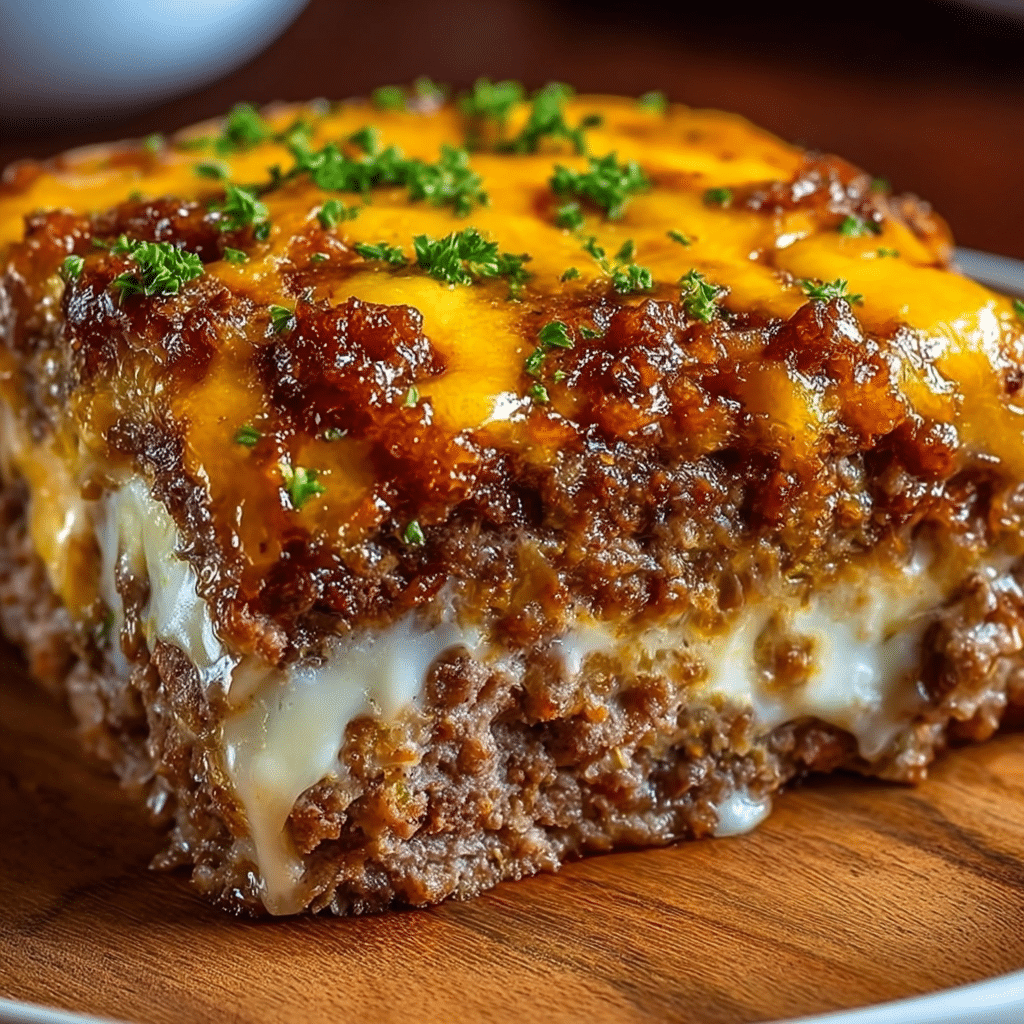
This is not your average meatloaf. By transforming the classic loaf into a casserole format, we achieve something remarkable: maximum surface area for caramelization, even cooking throughout, and a glorious blanket of melted cheese that turns every bite into a gooey, savory delight. The meatloaf itself is perfectly seasoned with garlic powder and Italian seasoning, kept exceptionally moist with milk, ketchup, and eggs, and studded throughout with shredded cheddar cheese. Then, just before the end of baking, an additional layer of cheese is sprinkled on top and melted into a bubbly, golden-brown crust that will have everyone racing to the dinner table.
What makes this recipe truly special is its balance of textures and flavors. The ground beef (80/20 is essential for juiciness) provides a rich, meaty foundation. The breadcrumbs bind everything together without making the loaf dense. The milk and ketchup add moisture and a subtle tangy sweetness. The onion, garlic powder, and Italian seasoning build a savory depth that tastes like it simmered all day. And the cheese—oh, the cheese—is woven throughout the meatloaf and piled on top, creating pockets of melted richness in every single slice.
This casserole is also incredibly forgiving and adaptable. You can sneak in finely chopped vegetables for picky eaters. You can swap the ground beef for turkey, chicken, or a plant-based alternative. You can change the cheese blend to suit your family’s preferences. You can make it ahead, freeze it for later, or transform leftovers into the most incredible meatloaf sandwiches you have ever tasted. Yet even with all that flexibility, the core experience remains unchanged: a warm, cheesy, satisfying meal that feels like a hug on a plate.
This article will guide you through every step of creating this masterpiece. We will explore ingredient choices in detail, provide a thorough step-by-step method with professional tips, and conclude with a comprehensive FAQ section addressing common questions about substitutions, storage, troubleshooting, and creative variations. Whether you are a meatloaf traditionalist or a casserole convert, this recipe will earn a permanent place in your rotation.
Preheat your oven to 350°F (175°C). Let us make some cheesy magic.
Ingredients
The beauty of this recipe lies in its simplicity and the quality of its components. Read through this list carefully, paying attention to the notes on fat content, cheese selection, and seasoning.
Main Ingredients
- 2 pounds ground beef (Use 80/20 for best juiciness and flavor): The foundation of any great meatloaf is the meat itself. An 80/20 blend (80% lean meat, 20% fat) is ideal because the fat renders during cooking, keeping the meatloaf moist, flavorful, and tender. If you use leaner beef (90/10 or 93/7), the meatloaf will be drier and less flavorful. If you use fattier beef (70/30), the casserole may be greasy. For a different flavor profile, you can substitute half of the ground beef with ground pork, ground veal, or ground turkey (see FAQ for adjustments).
- 1 cup breadcrumbs (Plain or panko breadcrumbs can be used): Breadcrumbs act as a binder and a tenderizer. They absorb moisture from the milk, eggs, and ketchup, then release it during baking, keeping the meatloaf moist and preventing it from becoming dense. Plain breadcrumbs are traditional; panko breadcrumbs create a slightly lighter texture. Avoid Italian-seasoned breadcrumbs unless you reduce or omit the Italian seasoning in the recipe. For a gluten-free version, use gluten-free breadcrumbs or crushed pork rinds.
- 1 cup shredded cheddar cheese (Shred your own from a block for best melting): Sharp cheddar is the star of this dish. It adds a tangy, assertive flavor that cuts through the richness of the beef. Shredding your own cheese from a block is essential—pre-shredded cheese contains anti-caking agents (cellulose, potato starch) that prevent smooth melting. The cheese is divided: most goes into the meatloaf mixture, and the remainder becomes the glorious topping.
- ½ cup milk (Helps keep the meatloaf moist): Milk adds moisture and helps the breadcrumbs hydrate, creating a tender texture. Whole milk is best for richness, but 2% or even 1% milk works. Do not use skim milk, as it lacks the fat needed for moisture and texture. For a dairy-free version, use unsweetened oat, almond, or soy milk.
- ¼ cup ketchup (For flavor and moisture): Ketchup adds sweetness, tanginess, and moisture. It also contributes to the classic meatloaf flavor profile. You can substitute barbecue sauce for a smokier flavor, tomato sauce for a milder taste, or a mixture of tomato paste and a touch of brown sugar.
- ¼ cup chopped onion (Finely chopped or grated; sauté for a milder flavor): Onion adds sweetness, moisture, and aromatic depth. For a milder, more integrated flavor, grate the onion on the fine side of a box grater. For a more pronounced onion flavor, finely chop it. If you or your family members dislike chunks of onion, grating is the best solution. Sautéing the onion before adding it mellows its sharpness even further.
- 2 eggs (Room temperature preferred for better mixing): Eggs are the primary binder. They hold all the ingredients together, ensuring the meatloaf slices cleanly without crumbling. Room-temperature eggs incorporate more easily than cold eggs. If you forget to take them out of the refrigerator ahead of time, place them in a bowl of warm water for 5 minutes.
- to taste salt and pepper (Adjust based on preference): Salt enhances all the other flavors and helps the meat retain moisture. Use kosher salt or sea salt. Black pepper adds warmth and earthiness. Start with 1 teaspoon of salt and ½ teaspoon of pepper, then adjust to your taste.
- 1 teaspoon garlic powder (For additional flavor): Garlic powder provides a savory, aromatic backbone without the moisture or texture of fresh garlic. Do not substitute garlic salt, which would add unwanted sodium. For a more pronounced garlic flavor, you can also add 2–3 cloves of fresh minced garlic.
- 1 teaspoon Italian seasoning (Adds an herbal touch): Italian seasoning is a blend of dried herbs—typically oregano, basil, rosemary, thyme, and marjoram. It adds a Mediterranean warmth that complements the beef and cheese beautifully. If you do not have Italian seasoning, mix ½ teaspoon dried oregano, ¼ teaspoon dried basil, and ¼ teaspoon dried thyme.
- 1 cup additional cheese for topping (Any cheese of choice for a melty finish): This is the crowning glory. While cheddar is excellent, you can use any melting cheese: mozzarella (for stretchiness), provolone (for tang), Monterey Jack (for mild creaminess), pepper jack (for heat), or a blend. Shred your own for best melting.
Equipment
- Large mixing bowl (for combining ingredients)
- Baking dish (9×13-inch or similar 3-quart capacity; a loaf pan also works but reduces surface area for topping)
- Measuring cups and spoons
- Chef’s knife and cutting board (for chopping onion)
- Box grater (for shredding cheese and optionally grating onion)
- Spatula or wooden spoon (for mixing)
- Meat thermometer (recommended for checking doneness)
- Grease or cooking spray (for the baking dish)
Preparation Method
This recipe comes together in three phases: mixing the meatloaf, baking it, and adding the cheese topping for the final melt. Total time is approximately 1 hour and 15 minutes (15 minutes active, 60 minutes passive). Serves 6 to 8.
Phase 1: Preheat and Prepare
Step 1: Preheat the oven.
Preheat your oven to 350°F (175°C). Position an oven rack in the middle position. A properly preheated oven ensures even cooking.
Step 2: Grease the baking dish.
Generously grease a 9×13-inch baking dish (or a large loaf pan) with butter, cooking oil, or non-stick cooking spray. Ensure the bottom and sides are fully coated to prevent sticking and to make serving easier. Set the dish aside.
Step 3: Prepare the onion.
Finely chop or grate the ¼ cup of onion. If you prefer a milder flavor, you can sauté the chopped onion in a small pan with a teaspoon of butter or oil over medium heat for 3–4 minutes until translucent. Let it cool slightly before adding to the meat mixture.
Step 4: Shred the cheese.
Shred the cheddar cheese (and any additional cheese for topping) using the large holes of a box grater. You will need approximately 1 cup for the meatloaf mixture plus 1 cup for the topping. If using a different cheese for the topping, shred that as well.
Step 5: Bring eggs to room temperature (if time permits).
If you remembered, take the eggs out of the refrigerator 30 minutes before starting. If not, place them in a bowl of warm water for 5 minutes.
Phase 2: Combine the Ingredients
Step 6: Combine all ingredients in a large bowl.
In a large mixing bowl, place:
- 2 pounds ground beef (80/20)
- 1 cup breadcrumbs
- 1 cup shredded cheddar cheese
- ½ cup milk
- ¼ cup ketchup
- ¼ cup chopped onion (raw or sautéed)
- 2 eggs (room temperature)
- 1 teaspoon salt (or to taste)
- ½ teaspoon black pepper (or to taste)
- 1 teaspoon garlic powder
- 1 teaspoon Italian seasoning
Step 7: Mix until just combined.
Use your clean hands (this is the most effective tool) or a sturdy spatula to mix the ingredients together. The key phrase here is do not overmix. Overmixing develops the proteins in the meat, resulting in a dense, tough, rubbery meatloaf. Mix only until the ingredients are evenly distributed and the mixture holds together when pressed gently. You should still be able to see small bits of meat and cheese; a homogeneous paste is a sign of overmixing.
Step 8: Transfer to the baking dish.
Transfer the meat mixture to the prepared baking dish. Using your hands or a spatula, shape it into a loaf (if using a loaf pan or if you want a traditional loaf shape in a larger dish) or spread it evenly across the entire baking dish for a casserole-style flat layer. Smooth the top so the cheese topping will melt evenly. A flat, even surface also promotes uniform cooking.
Phase 3: Bake the Meatloaf
Step 9: Bake for 45 minutes.
Place the baking dish in the preheated oven. Bake for 45 minutes.
Step 10: Check for doneness.
After 45 minutes, the meatloaf should be pulling slightly away from the edges of the dish. The most reliable way to check doneness is with an instant-read meat thermometer. Insert the thermometer into the thickest part of the meatloaf (avoiding the bottom of the dish). The internal temperature should read 155°F to 160°F (68°C to 71°C). The meatloaf will continue to cook slightly during the cheese-topping phase, so 155°F is acceptable. If the temperature is below 155°F, bake for an additional 5–10 minutes and check again.
Step 11: Drain excess fat (optional but recommended).
If there is visible pooled fat or liquid in the baking dish, carefully tilt the dish and spoon off the excess, or use a turkey baster. This step is not essential but prevents the final casserole from being greasy. Leave a small amount of liquid for moisture.
Phase 4: Add the Cheese Topping
Step 12: Sprinkle with additional cheese.
Remove the baking dish from the oven. Sprinkle the 1 cup of additional cheese (shredded cheddar or your chosen cheese) evenly over the top of the meatloaf. Ensure the cheese covers the surface completely for that glorious, melty crust.
Step 13: Return to the oven.
Return the baking dish to the oven. Bake for an additional 10 to 15 minutes, until the cheese is fully melted, bubbly, and has developed golden-brown spots. If you prefer a deeply browned, almost crispy cheese topping, you can turn on the oven’s broiler for the final 1–2 minutes. Watch carefully to prevent burning.
Phase 5: Rest and Serve
Step 14: Let the casserole rest.
Remove the baking dish from the oven. Let the Cheesy Meatloaf Casserole rest for 5 to 10 minutes before slicing. Resting allows the juices to redistribute throughout the meatloaf, ensuring each slice is moist and flavorful. It also makes the meatloaf easier to slice cleanly without crumbling.
Step 15: Slice and serve.
Slice the meatloaf into portions and serve warm. This casserole is a complete meal on its own, but it pairs wonderfully with mashed potatoes, roasted vegetables, a green salad, steamed broccoli, or crusty bread. Leftovers (if any remain) make incredible sandwiches the next day.
Conclusion
The Cheesy Meatloaf Casserole is everything you want in a comfort food classic: moist, flavorful, deeply savory, and topped with a glorious blanket of melted cheese. By transforming traditional meatloaf into a casserole format, we have maximized the best parts—caramelized edges, even cooking, and plenty of cheese—while eliminating the common pitfalls of dryness and dense texture. This is the meatloaf that will have your family asking for seconds, your guests requesting the recipe, and your picky eaters cleaning their plates.
This recipe is also a canvas for creativity. You can add finely chopped vegetables like bell peppers, carrots, or zucchini. You can swap the cheese blend to suit your mood. You can make it ahead, freeze it for busy nights, or turn leftovers into the most incredible sandwiches. Yet even with all that flexibility, the heart of the dish remains unchanged: simple, honest ingredients transformed into something truly special.
Below, you will find answers to the most frequently asked questions about this recipe, covering everything from turkey substitutions and vegetable additions to storage instructions and troubleshooting tips.
Frequently Asked Questions (FAQ)
1. Can I use ground turkey or chicken instead of ground beef?
Yes. Substitute 2 pounds of ground turkey (93/7 or 85/15) or ground chicken. Because poultry is leaner than beef, add 2 tablespoons of olive oil or an extra ¼ cup of milk to compensate for the lack of fat. You may also want to add an extra egg for binding. Poultry meatloaf will be paler in color and have a milder flavor. Cook to an internal temperature of 165°F (74°C). For extra moisture, consider adding ½ cup of finely grated zucchini (squeeze out excess water first).
2. Can I make this recipe gluten-free?
Yes. Substitute the breadcrumbs with gluten-free breadcrumbs (many brands available) or crushed gluten-free crackers, crushed pork rinds (for a low-carb option), or rolled oats (certified gluten-free). Ensure your other ingredients (ketchup, Italian seasoning, garlic powder) are gluten-free—most are, but check labels. All other ingredients are naturally gluten-free.
3. Why did my meatloaf turn out dry?
Dry meatloaf is usually caused by one of these issues:
- Using lean ground beef: 80/20 is essential. Leaner beef (90/10 or 93/7) lacks the fat needed for moisture.
- Overmixing: Overworking the meat develops proteins, leading to a dense, dry texture. Mix only until combined.
- Overbaking: Use a meat thermometer. The meatloaf is done at 155–160°F. Baking beyond that dries it out.
- Not enough moisture: Ensure you are using the full ½ cup of milk and ¼ cup of ketchup.
- No rest period: Resting for 5–10 minutes allows juices to redistribute. Slicing immediately lets those juices escape.
4. Can I add vegetables to this meatloaf?
Absolutely. Finely chopped or grated vegetables add moisture, nutrition, and flavor. Good options include:
- Bell peppers: ½ cup finely chopped
- Carrots: ½ cup finely grated
- Zucchini: ½ cup finely grated (squeeze out excess water)
- Mushrooms: ½ cup finely chopped (sauté first to remove moisture)
- Spinach: 1 cup fresh spinach, finely chopped
- Celery: ½ cup finely chopped
Add up to 1 cup of vegetables without significantly altering the recipe. Sauté harder vegetables (carrots, celery, bell peppers) briefly to soften them before adding.
5. Can I use a different cheese blend?
Yes. The cheese in the meatloaf and on top is highly customizable:
- Sharp cheddar: Tangy and bold (as written)
- Mild cheddar: Creamier, less tangy
- Mozzarella: Stretchy and mild (great for topping)
- Provolone: Tangy and sharp
- Monterey Jack: Mild and creamy
- Pepper Jack: Adds heat
- Gouda (smoked): Smoky and nutty
- Swiss: Nutty and mild
- Parmesan: Salty and umami (best mixed with another cheese for melting)
For the topping, a blend of mozzarella (for stretch) and cheddar (for flavor) is exceptional.
6. Can I make this meatloaf in a loaf pan instead of a baking dish?
Yes. A standard 9×5-inch loaf pan works beautifully. Grease the pan thoroughly. Press the meat mixture into the pan, smoothing the top. Bake at 350°F for 50–55 minutes (slightly longer than the casserole version because the loaf is thicker). Check for an internal temperature of 155–160°F. Add the cheese topping and bake for an additional 10 minutes. Note that a loaf pan reduces the surface area for the cheese topping, so you may want to increase the topping cheese to 1 ½ cups.
7. How do I store and reheat leftovers?
Store leftovers in an airtight container in the refrigerator for up to 4 days. To reheat:
- Oven method (best): Place slices in a baking dish, cover with foil, and warm at 325°F for 10–15 minutes.
- Microwave method (quick): Microwave individual slices on medium power for 60–90 seconds. Add a damp paper towel over the top to prevent drying.
- Skillet method: Reheat slices in a non-stick skillet over medium-low heat for 2–3 minutes per side.
Leftover meatloaf also makes incredible sandwiches: place a cold or reheated slice between bread with ketchup, barbecue sauce, or additional cheese.
8. Can I freeze this meatloaf?
Yes, meatloaf freezes exceptionally well. There are two methods:
- Freeze before baking: Assemble the meatloaf in a freezer-safe dish (do not add the cheese topping). Cover tightly with plastic wrap and then foil. Freeze for up to 3 months. Thaw overnight in the refrigerator, then bake as directed (add the cheese topping during the last 10–15 minutes).
- Freeze after baking: Bake the meatloaf completely (including cheese topping). Cool completely, then wrap tightly in plastic wrap and foil. Freeze for up to 3 months. Thaw overnight in the refrigerator, then reheat in a 325°F oven for 20–25 minutes until warmed through.
9. Can I use fresh garlic instead of garlic powder?
Yes. Use 3–4 cloves of fresh garlic, minced finely. Sauté the garlic briefly with the onion (if sautéing) or add it raw to the meat mixture. Fresh garlic provides a brighter, more pungent flavor than garlic powder. If using fresh garlic, you can still include ½ teaspoon of garlic powder for depth.
10. Can I make mini meatloaves or meatloaf muffins?
Yes, this is a great option for portion control, faster cooking, and individual servings. Divide the meat mixture evenly among 12 greased muffin cups or shape into 8–10 mini loaves on a baking sheet. Bake at 350°F for 20–25 minutes (for muffins) or 25–30 minutes (for mini loaves). Add the cheese topping during the last 5 minutes of baking. Mini meatloaves cook faster, so watch carefully.
11. What is the best way to grate onion for meatloaf?
To grate an onion, cut the onion in half from root to tip. Peel off the papery skin. Using the fine side of a box grater (the same side you would use for zesting citrus or grating Parmesan), grate the cut side of the onion against the grater. You will get a pulpy, juicy mixture. Use the entire amount, including the juice. This method integrates the onion completely into the meatloaf, adding moisture and sweetness without any distinct onion pieces.
12. Can I use a meatloaf glaze instead of (or in addition to) the cheese topping?
Yes. A classic meatloaf glaze adds sweetness and tang. Mix together: ½ cup ketchup, 2 tablespoons brown sugar, and 1 tablespoon mustard (yellow or Dijon). Spread the glaze over the meatloaf during the last 15 minutes of baking (before the cheese topping). Then add the cheese topping for the final 10 minutes. The combination of sweet glaze and melted cheese is extraordinary.
13. Why do I need to let the meatloaf rest before slicing?
Resting is critical. When meatloaf cooks, the juices inside are forced toward the center. If you slice immediately, those juices will run out onto the cutting board, leaving you with a dry meatloaf. Resting for 5–10 minutes allows the juices to redistribute evenly throughout the meatloaf. Every slice will be moist and flavorful. This is the same principle as resting a steak after cooking.
14. Can I add bacon to this meatloaf?
Yes, and it is delicious. Cook 6–8 slices of bacon until crisp, then crumble or chop. Add the crumbled bacon to the meat mixture before baking. Alternatively, for a bacon-wrapped meatloaf, weave bacon slices together into a lattice, place the meatloaf mixture on top, and wrap the bacon around it before baking. The bacon adds smokiness, saltiness, and crispy texture.
15. How do I know when the meatloaf is done without a thermometer?
While a meat thermometer is the most accurate tool, you can use visual cues. The meatloaf is done when:
- It pulls away from the sides of the baking dish.
- The top is browned and the edges are caramelized.
- The juices run clear, not pink, when you poke the center with a knife or skewer.
- A knife inserted into the center comes out hot to the touch (not warm).
- The meatloaf feels firm to the touch, not jiggly.
These visual cues are less precise than a thermometer, so consider investing in an inexpensive instant-read thermometer for perfect results every time.
16. Can I use panko breadcrumbs instead of plain breadcrumbs?
Yes. Panko breadcrumbs are larger and flakier than plain breadcrumbs, creating a slightly lighter, less dense texture. Use the same amount (1 cup). If you want an even lighter texture, you can increase the panko to 1 ¼ cups and add an extra tablespoon of milk. Panko also creates a slightly crispier exterior.
17. Is this recipe keto-friendly or low-carb?
As written, no, because breadcrumbs are high in carbohydrates. To make a keto-friendly version:
- Substitute the breadcrumbs with ½ cup of almond flour or crushed pork rinds.
- Use full-fat dairy (whole milk, full-fat cheese).
- Ensure your ketchup is sugar-free (or substitute tomato paste with a pinch of stevia).
- Skip the onion or use onion powder (1 teaspoon).
This version will be significantly lower in carbohydrates and higher in fat.
18. Can I make this in a slow cooker?
Yes, but the texture will be different—more like a meatloaf “loaf” that steams rather than bakes. Shape the meat mixture into a loaf and place it in a greased slow cooker. Cook on LOW for 4–5 hours or on HIGH for 2–3 hours, until the internal temperature reaches 155–160°F. Add the cheese topping during the last 15–20 minutes of cooking, cover, and let it melt. The meatloaf will be very moist but will lack the caramelized edges of the oven-baked version.
19. Can I use this recipe to make meatballs?
Yes. This mixture makes excellent meatballs. Roll the mixture into 1.5-inch meatballs. Place them on a parchment-lined baking sheet. Bake at 400°F for 15–18 minutes until browned and cooked through. Top with cheese during the last 2–3 minutes of baking, or serve with marinara sauce and additional cheese. These meatballs are perfect for spaghetti and meatballs, meatball subs, or party appetizers.
20. Why is there milk in this meatloaf recipe?
Milk serves two crucial purposes in meatloaf. First, it hydrates the breadcrumbs, allowing them to absorb moisture and fat, which then releases during baking to keep the meatloaf moist. Second, the fat in milk (especially whole milk) adds richness and tenderness. Without milk, the breadcrumbs would absorb moisture directly from the meat, leading to a drier, denser final product. Do not skip the milk.
21. Can I add hot sauce or red pepper flakes for heat?
Absolutely. Add 1–2 teaspoons of hot sauce (such as Frank’s RedHot or Tabasco) to the meat mixture, or sprinkle ½ to 1 teaspoon of red pepper flakes. For a more integrated heat, use ¼ teaspoon of cayenne pepper. If you want a spicy cheese topping, use pepper jack cheese instead of cheddar.
22. Can I prepare this meatloaf the night before?
Yes. Assemble the meat mixture and press it into the greased baking dish. Cover tightly with plastic wrap and refrigerate overnight. Do not add the cheese topping yet. The next day, remove the dish from the refrigerator 30 minutes before baking to take the chill off. Bake as directed, adding 5–10 minutes to the baking time because the meatloaf starts cold. Add the cheese topping during the final 10–15 minutes as written.
23. What sides go best with Cheesy Meatloaf Casserole?
This casserole is rich and hearty, so lighter, fresher sides work best:
- Mashed potatoes: Classic pairing (try cauliflower mash for a lighter option).
- Roasted vegetables: Broccoli, asparagus, Brussels sprouts, or green beans.
- Green salad: With a tangy vinaigrette to cut through the richness.
- Steamed vegetables: Peas, carrots, or corn.
- Mac and cheese: For the ultimate comfort food overload (but be prepared for a very heavy meal).
- Crusty bread: For sopping up any juices.
- Coleslaw: Adds crunch and acidity.
Cheesy Meatloaf Casserole: The Ultimate Family Comfort Dish
This Philly Cheesesteak Mac & Cheese Bliss combines creamy mac and cheese with savory beef, peppers, and onions for the ultimate comfort fusion dish.
- Prep Time: 10 minutes
- Cook Time: 20 minutes
- Total Time: 30 minutes
- Yield: 4 servings
- Category: Main Dish, Pasta
- Method: Stovetop
- Cuisine: American Fusion
Ingredients
- 8 oz dry macaroni
- 1 lb lean ground beef (or turkey/chickpeas)
- 1 cup chopped white onion
- 2 cloves garlic, minced
- 2 cups bell peppers (mixed colors), chopped
- 2 tbsp butter (or olive oil)
- 8 oz cream cheese
- 1 cup shredded mozzarella
- 4 slices melting cheese
- 1 tsp salt
- 1 tsp pepper
- 1 tsp paprika
- 1/2 tsp chili flakes
- 1/4 cup fresh parsley (optional)
Instructions
- Boil macaroni in salted water until al dente. Reserve pasta water, then drain.
- Sauté garlic, onion, and bell peppers in butter until soft.
- Add ground beef and cook until browned. Drain excess fat.
- Season with salt, pepper, paprika, and chili flakes.
- Lower heat and stir in cream cheese, mozzarella, and sliced cheese until melted.
- Add cooked macaroni and a splash of reserved pasta water.
- Mix until creamy and fully combined.
- Garnish with parsley and serve hot.
Notes
- Use freshly shredded cheese for smoother melting.
- Adjust chili flakes for spice level.
- Swap beef for turkey or plant-based protein if preferred.