
Introduction
There are certain meals that taste like a hug in a bowl. Chicken pot pie is unquestionably one of them—that golden, flaky crust giving way to a steamy, creamy filling packed with tender chicken and sweet vegetables. It is the definition of comfort food. But traditional pot pie, for all its virtues, is not a quick dinner. Between making (or rolling out) the pastry, assembling the individual pies or a large deep-dish version, and waiting for the crust to bake to perfection, you are looking at well over an hour of active time. On a busy Tuesday night when the kids have homework, you have a meeting in twenty minutes, and everyone is already hungry, pot pie feels like a weekend luxury.
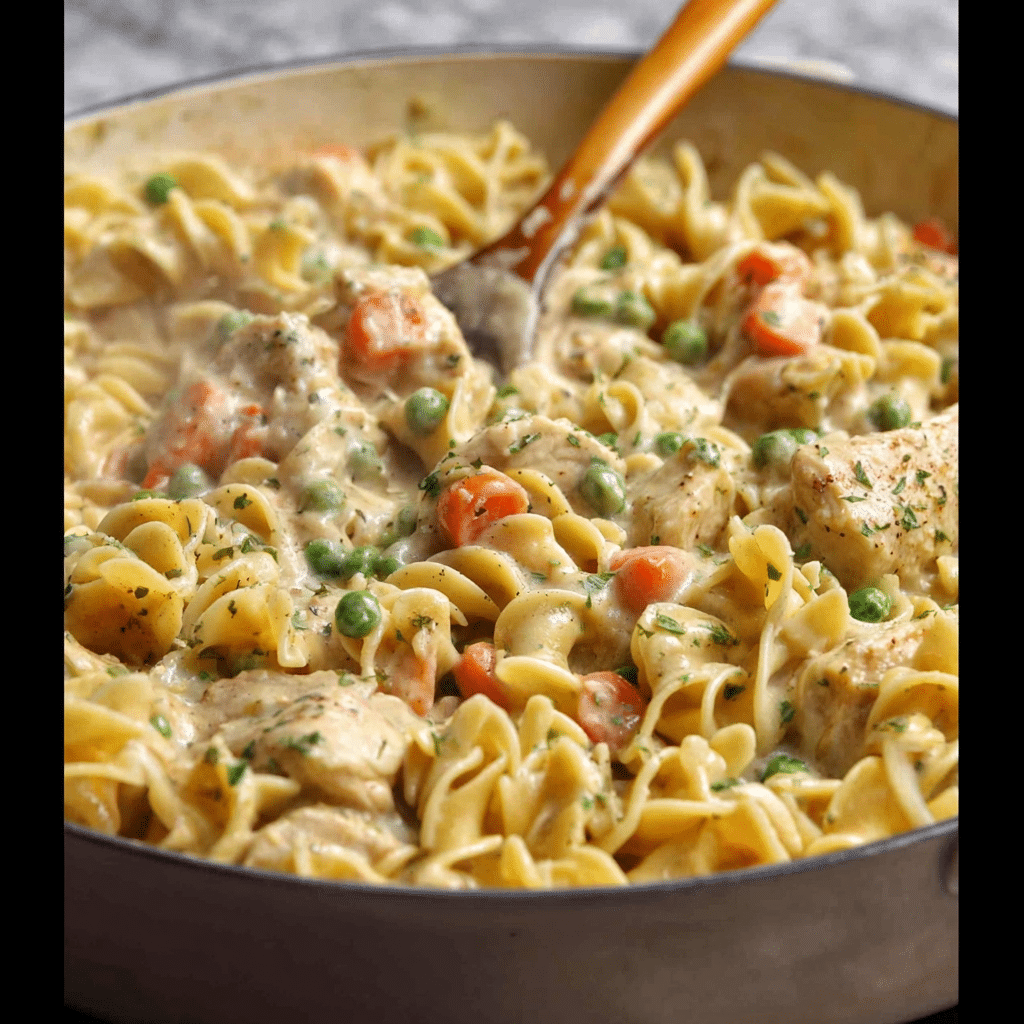
Enter this Quick Chicken Pot Pie Pasta. It takes every single thing you love about classic chicken pot pie—the creamy, savory sauce; the tender chicken; the comforting blend of peas, carrots, and corn; the aromatic onion and garlic—and transforms it into a one-skillet pasta dish that comes together in under thirty minutes. No crust to roll. No pie dish to fuss with. No waiting for pastry to brown. Instead, you get all the flavor of a slow-simmered pot pie, draped over a bed of soft, buttery egg noodles that soak up every drop of that glorious cream-of-mushroom-and-chicken sauce.
This recipe is engineered for busy families, beginner cooks, and anyone who craves deep comfort without spending hours in the kitchen. It uses pantry-friendly ingredients: frozen mixed vegetables (no chopping required), condensed cream soups (the reliable workhorses of creamy casseroles), and egg noodles (which cook faster than most pastas and have that perfect homey texture). The chicken bouillon and paprika add layers of savory depth that make the sauce taste like it simmered for hours, when in reality it takes about five minutes on the stove.
What follows is a complete guide to making this dish perfectly every time. You will learn why each ingredient matters, how to avoid common pitfalls like mushy noodles or bland sauce, and how to customize the recipe for dietary needs or personal taste. By the time you pull that skillet off the stove—the noodles glistening with creamy sauce, the vegetables bright against the golden chicken—you will understand why this dish is destined to become a weeknight hero in your kitchen.
Let us dive in.
Ingredients
Before you turn on the stove, gather all your ingredients. This recipe moves quickly once you start cooking, so having everything measured and ready will make the process smooth and stress-free.
For the Pasta Base
- 12 oz egg noodles – Egg noodles are the ideal pasta for this dish. They are wider and flatter than standard pasta, with a tender, slightly chewy texture that stands up to creamy sauces without becoming mushy. Their subtle egg flavor complements the pot pie profile beautifully. You can substitute wide pappardelle or even broken lasagna noodles, but egg noodles are strongly preferred. Do not use thin spaghetti or angel hair; they will disintegrate when mixed with the thick sauce.
For the Protein and Aromatics
- 3 boneless, skinless chicken breasts, cut into 1-inch chunks – Chicken breasts provide lean, neutral-tasting protein that lets the creamy sauce shine. Cutting them into uniform 1-inch pieces ensures even cooking—no dry edges with raw centers. You can substitute boneless, skinless chicken thighs for a juicier, more flavorful result; thighs are more forgiving if you accidentally overcook them.
- ½ yellow onion, diced – Yellow onion has the perfect balance of sharpness and sweetness. It forms the aromatic base of the dish. Dice it into small, even pieces (about ¼-inch) so they soften quickly and blend seamlessly into the sauce.
- 2 tbsp butter – Butter is used for sautéing the onion and chicken. It adds richness and a subtle nuttiness that oil alone cannot provide. Unsalted butter is recommended so you control the sodium level.
- 1 tbsp garlic, minced – Fresh garlic is essential here. It adds a pungent, aromatic kick that lifts the entire dish. Mince it finely (or use a garlic press) so it cooks in 30–45 seconds without burning. Jarred minced garlic works in a pinch, but fresh is noticeably more fragrant.
- 1 tbsp chicken bouillon – This is a concentrated flavor bomb. Bouillon paste (like Better Than Bouillon) or powdered granules both work. The bouillon adds deep, savory chicken flavor that reinforces the cream soups and makes the sauce taste richly homemade. Be mindful of salt; most bouillon is quite salty, so taste before adding extra salt later.
- ½ tsp paprika – Paprika adds a gentle smokiness and a hint of color. Sweet paprika is standard, but smoked paprika will give the dish a more pronounced, barbecue-adjacent depth. Both work beautifully.
For the Vegetables and Sauce
- 12 oz frozen mixed vegetables – This is your convenience powerhouse. A standard frozen mix typically contains peas, carrots, corn, and green beans—exactly what you would find in a traditional chicken pot pie. No chopping, no peeling, no waste. Do not thaw them beforehand; they go straight into the skillet frozen. If you prefer fresh vegetables, see the FAQ for guidance.
- 1 can (10.5 oz) condensed cream of mushroom soup – Cream of mushroom adds earthy, savory umami. It also contributes a slightly thicker texture than cream of chicken alone. Use a reputable brand like Campbell’s.
- 1 can (10.5 oz) condensed cream of chicken soup – Cream of chicken reinforces the poultry flavor and provides the classic pot pie taste. Together with the mushroom version, these two soups create a sauce that is creamy, complex, and deeply satisfying.
- ½ cup milk – Milk thins the condensed soups to a pourable, sauce-like consistency. Whole milk produces the richest result. 2% milk works well. Avoid skim milk, which can make the sauce taste thin and watery. For an ultra-creamy version, substitute half-and-half.
For Seasoning
- Salt and black pepper, to taste – Add these gradually. The chicken bouillon and condensed soups already contain significant sodium, so you may need very little extra salt. Black pepper adds gentle heat; fresh-cracked is best.
For Cooking
- Salted water for boiling pasta – Use a large pot with generously salted water (about 1 tablespoon of salt per gallon). This seasons the egg noodles from the inside out.
Preparation Method
Step 1: Boil the Egg Noodles
Fill a large pot with water and bring it to a rolling boil over high heat. Add a generous amount of salt—about 1 tablespoon for every 4 quarts of water. The water should taste briny, like seawater.
Add the 12 ounces of egg noodles and stir immediately to prevent them from clumping together. Cook according to the package directions until al dente. For most egg noodles, this takes 6 to 8 minutes. Al dente means the noodles are tender but still offer a slight resistance when bitten. They will absorb a bit more liquid when combined with the sauce, so slightly undercooking them is better than overcooking.
When the noodles are ready, drain them in a colander. Do not rinse them. Rinsing removes the surface starch that helps the sauce cling to the noodles. Shake the colander gently to remove excess water, then set the noodles aside. If they will sit for more than 5 minutes before you add them to the sauce, toss them with a tiny drizzle of olive oil to prevent sticking.
Step 2: Start the Skillet – Sauté the Onion
While the noodles boil, place a large skillet or sauté pan over medium-high heat. A 12-inch skillet is ideal to accommodate the chicken, vegetables, sauce, and noodles all at once. If your skillet is smaller, use a Dutch oven instead.
Add the 2 tablespoons of butter to the skillet. Let it melt completely, swirling the pan to coat the bottom. The butter should be sizzling but not browning or smoking.
Add the diced yellow onion. Sauté for 2 to 4 minutes, stirring occasionally, until the onion becomes translucent and softened. You are looking for a gentle, sweet aroma—not caramelized or burnt. If the onion starts to brown too quickly, reduce the heat to medium.
Step 3: Cook the Chicken with Seasonings
Add the 1-inch chicken breast chunks to the skillet with the softened onion. Do not crowd the pan; if the chicken pieces are piled on top of each other, they will steam instead of brown. Spread them into a single layer as much as possible.
Season the chicken directly in the pan with:
- 1 tablespoon chicken bouillon
- ½ teaspoon paprika
- Salt and black pepper to taste (start with ¼ teaspoon each, then adjust later)
Cook the chicken for 5 to 7 minutes, stirring occasionally, until it is lightly browned on the outside and no longer pink in the center. The internal temperature should reach 165°F (74°C). The bouillon will create a savory coating on the chicken pieces. If the pan becomes too dry, add a splash of water or a little more butter—but the chicken should release some of its own moisture as it cooks.
Chef’s tip: Do not stir the chicken constantly. Let it sit undisturbed for 60 to 90 seconds at a time to develop a golden-brown sear. That browning (the Maillard reaction) is where deep flavor comes from.
Step 4: Add the Frozen Vegetables
Add the entire 12-ounce bag of frozen mixed vegetables directly to the skillet. There is no need to thaw them first. Stir to combine with the chicken and onion.
Cook for about 5 minutes, stirring occasionally, until the vegetables are tender. Frozen vegetables cook quickly; you will know they are ready when the peas and corn are bright and the carrot pieces are fork-tender. If the pan seems dry during this step, add a tablespoon of water to create a little steam, which helps the vegetables cook evenly.
Step 5: Add the Garlic
Add the 1 tablespoon of minced garlic to the skillet. Stir constantly for 30 to 45 seconds. You will immediately smell the garlic’s pungent aroma—this is your signal that it is ready. Do not cook it longer than 45 seconds, or it will burn and become bitter.
Step 6: Build the Creamy Pot Pie Sauce
Reduce the heat to low. This is critical: high heat can cause the condensed soups to scorch or the milk to curdle.
Add the following ingredients directly to the skillet:
- 1 can condensed cream of mushroom soup
- 1 can condensed cream of chicken soup
- ½ cup milk
Stir slowly but continuously, using a wooden spoon or a silicone spatula. The mixture will look thick and lumpy at first—that is normal. Keep stirring. As the soups warm up and combine with the milk, they will transform into a smooth, creamy, pale-golden sauce.
Continue stirring for 2 to 3 minutes as the sauce heats through. You will see it begin to bubble gently around the edges. The sauce will thicken slightly as it simmers. Do not let it come to a full, vigorous boil, which can break the emulsion and cause the sauce to separate.
Taste the sauce now. This is your moment to adjust seasoning. Does it need more black pepper? A pinch more paprika? A little salt? Remember that the noodles will absorb some salt, so the sauce should taste slightly more seasoned than you want the final dish to be.
Step 7: Combine the Noodles
Add the drained egg noodles to the skillet. Use tongs or two large spoons to gently toss everything together. The goal is to coat every noodle evenly in the creamy, vegetable-studded sauce without breaking the noodles apart.
If the sauce seems too thick to coat the noodles easily, add a splash of milk (1 to 2 tablespoons) or a little of the reserved pasta water (if you saved any). Stir again. The residual heat will loosen the sauce.
If the sauce seems too thin, let the skillet sit over low heat for another 1 to 2 minutes, stirring occasionally. The sauce will continue to thicken as it reduces.
Step 8: Serve Hot
Remove the skillet from the heat. The dish is ready to serve immediately. Portion into bowls or onto plates, making sure each serving gets a good mix of chicken, vegetables, noodles, and sauce.
For a beautiful finish, garnish with:
- Fresh parsley, chopped (adds color and freshness)
- A sprinkle of paprika (for visual warmth)
- Freshly cracked black pepper
Serve hot, with crusty bread on the side if you want to soak up every last drop of sauce.
Conclusion
This Quick Chicken Pot Pie Pasta delivers on every promise its name makes. It is quick—from the first sizzle of butter to the final toss of noodles, you are looking at about 25 minutes of active cooking. It is creamy—the combination of two condensed soups, butter, and milk creates a sauce that is rich, velvety, and deeply satisfying. It is cozy—the familiar flavors of chicken, peas, carrots, corn, and onions swimming in a savory gravy will transport you straight to the best comfort-food memories of your childhood. And it is an easy family dinner—no complicated techniques, no hard-to-find ingredients, and just one skillet to clean (plus the pasta pot).
What makes this recipe truly special is how it honors the spirit of chicken pot pie while discarding the obstacles. You get the same soul-warming experience without the stress of pastry. The egg noodles stand in beautifully for the crust, providing a tender, substantial base that soaks up the sauce like a sponge. The frozen vegetables save you precious minutes of chopping. The chicken bouillon adds a depth of flavor that tricks the palate into thinking this simmered all afternoon.Whether you are feeding a hungry family on a school night, meal-prepping for the week, or simply craving something warm and nostalgic, this dish belongs in your rotation. It is forgiving enough for a beginner cook to nail on the first try and flavorful enough to impress guests who have no idea you used canned soup. Keep this recipe close. You will come back to it again and again.
PrintQuick Chicken Pot Pie Pasta: Creamy, Cozy & Easy Family Dinner
This quick chicken pot pie pasta is a creamy, cozy, and easy family dinner combining tender chicken, vegetables, and rich soups with egg noodles.
- Prep Time: 10 minutes
- Cook Time: 25 minutes
- Total Time: 35 minutes
- Yield: 6 servings
- Category: Main Dish, Pasta
- Method: Stovetop
- Cuisine: American
Ingredients
- 12 oz frozen mixed vegetables
- 1/2 yellow onion, diced
- 2 tbsp butter
- 3 boneless skinless chicken breasts, cubed
- Salt and black pepper, to taste
- 1 tbsp garlic, minced
- 1 tbsp chicken bouillon
- 1/2 tsp paprika
- 1 can cream of mushroom soup
- 1 can cream of chicken soup
- 1/2 cup milk
- 12 oz egg noodles
Instructions
- Cook egg noodles until al dente, drain and set aside.
- Melt butter in a large skillet over medium-high heat.
- Sauté onion for 2–4 minutes until soft.
- Add chicken and season with bouillon, paprika, salt, and pepper. Cook until browned.
- Add frozen vegetables and cook 5 minutes.
- Stir in garlic and cook 30–45 seconds.
- Add cream of chicken soup, cream of mushroom soup, and milk.
- Simmer until creamy and heated through.
- Mix in cooked noodles until fully coated.
- Serve hot.
Notes
- Rotisserie chicken can be used for faster prep.
- Add extra milk if sauce is too thick.
- Season to taste before serving.
Frequently Asked Questions (FAQ)
1. Can I use a different pasta instead of egg noodles?
Yes, but the texture will change. Wide egg noodles are ideal because they are tender and flat, with a gentle chew that mimics the mouthfeel of a pot pie filling. Acceptable substitutes include pappardelle, fettuccine broken into shorter lengths, or even rotini (which will trap sauce in its spirals). Avoid thin pastas like spaghetti, angel hair, or vermicelli—they will become mushy when combined with the thick sauce.
2. Can I use fresh vegetables instead of frozen?
Absolutely. Use about 2 cups of fresh diced vegetables: carrots, peas (fresh or thawed frozen), corn kernels, and green beans cut into 1-inch pieces. Add the fresh vegetables in stages: harder vegetables like carrots should go into the skillet with the onion to soften for 3–4 minutes before adding the chicken. Softer vegetables like peas and corn can go in with the frozen vegetables step. You may need to add 2–3 tablespoons of water to help steam the fresh vegetables tender.
3. My sauce turned out too thin. How can I fix it?
A thin sauce usually means there was too much liquid or not enough thickening agent. To fix a thin sauce after it is already combined with the noodles: mix 1 tablespoon of cornstarch with 2 tablespoons of cold milk in a small bowl to create a slurry. Push the noodles to one side of the skillet, pour the slurry into the sauce portion, and stir constantly over low heat for 1–2 minutes. The sauce will thicken noticeably. For next time, reduce the milk to ⅓ cup or simmer the sauce for an extra 3–4 minutes before adding the noodles.
4. My sauce turned out too thick. What do I do?
Too thick is much easier to fix than too thin. Add milk or chicken broth 1 tablespoon at a time, stirring after each addition, until the sauce reaches your desired consistency. Pasta water (if you reserved any) also works beautifully because the starch helps keep the sauce smooth. Do not add plain water, which can make the sauce taste diluted.
5. Can I use chicken thighs instead of chicken breasts?
Yes, and many people prefer thighs for this dish. Boneless, skinless chicken thighs are more forgiving (they stay juicy even if slightly overcooked) and have a richer, more savory flavor. Cut them into 1-inch chunks and cook them exactly as you would the breasts. The cooking time may be slightly shorter because thighs are often more tender; check for doneness at the 5-minute mark.
6. Is there a way to make this dish lower in sodium?
Yes, with a few substitutions. Use low-sodium or no-salt-added condensed soups (many brands offer “Healthy Request” or “Low Sodium” versions). Replace the chicken bouillon with a low-sodium version or omit it entirely and add 1 teaspoon of dried thyme and 1 teaspoon of onion powder for flavor. Use unsalted butter and skip the added salt until the very end, tasting as you go. Even with these changes, the dish will still be satisfying and creamy.
7. Can I make this dish dairy-free?
You can, though the texture will be different. Substitute the butter with a plant-based butter (like Miyoko’s or Earth Balance). Use unsweetened oat milk or full-fat canned coconut milk (shake well before using) in place of the dairy milk. For the condensed soups, you have two options: (1) use dairy-free cream of mushroom and cream of chicken soups (brands like Amy’s or Pacific Foods make them), or (2) make a quick homemade sauce with 2 cups of dairy-free milk, 3 tablespoons of flour, and 2 tablespoons of nutritional yeast for a cheesy, savory note. The result will be slightly less rich but still delicious.
8. How do I store and reheat leftovers?
Store leftovers in an airtight container in the refrigerator for up to 4 days. Reheating is best done on the stovetop: place the desired portion in a skillet over medium-low heat, add a splash of milk (about 1 tablespoon per cup of pasta), and stir gently until heated through. The microwave works in a pinch: use a microwave-safe bowl, cover loosely, and heat at 70% power in 60-second intervals, stirring between each. Add a little milk before microwaving to restore creaminess.
9. Can I freeze this Chicken Pot Pie Pasta?
Freezing is possible but not ideal. The cream-based sauce can separate upon thawing, resulting in a grainy or watery texture. If you must freeze, do so before adding the noodles: prepare the chicken, vegetables, and sauce, then cool completely and freeze in a freezer-safe container for up to 2 months. Thaw overnight in the refrigerator, then cook fresh egg noodles and combine. If you freeze the dish already combined with noodles, expect the noodles to be quite soft upon reheating. The dish will still be safe to eat but less texturally pleasing.
10. What can I add to make this dish more flavorful or hearty?
There are many delicious variations. Add ½ cup of diced cooked bacon or pancetta along with the onion for a smoky, salty kick. Stir in ½ teaspoon of dried thyme or rosemary (classic pot pie herbs) with the garlic. For more vegetables, add 1 cup of sliced mushrooms (sauté them with the onion) or 1 cup of chopped celery (add with the onion). For a cheesy twist, stir in ½ cup of shredded sharp cheddar cheese just before adding the noodles—it will melt into the sauce and add another layer of richness.
11. Why did my chicken turn out dry?
Dry chicken is usually the result of overcooking. Chicken breasts are lean and cook quickly; once they reach an internal temperature of 165°F (74°C), they are done. If you continue cooking them while the vegetables and sauce simmer, they can become tough and dry. To prevent this, remove the chicken from the skillet after browning, set it aside, and return it to the skillet only when you add the noodles. This technique is called “par-cooking” and ensures juicy chicken. Alternatively, use chicken thighs, which are much more forgiving.
12. Can I make this recipe in a slow cooker or Instant Pot?
For a slow cooker: brown the onion and chicken in a skillet first (to develop flavor), then transfer to a slow cooker with the frozen vegetables, garlic, condensed soups, milk, and seasonings. Cook on low for 4–5 hours or high for 2–3 hours. Cook the egg noodles separately on the stovetop and stir them in just before serving. For an Instant Pot: use the sauté function to brown the onion and chicken, then add the frozen vegetables, garlic, condensed soups, milk, seasonings, and uncooked egg noodles plus 1 cup of water. Pressure cook on high for 5 minutes, then quick-release. Stir well and serve. Note that the noodles will be softer in the Instant Pot version.
13. Can I use leftover rotisserie chicken instead of cooking raw chicken breasts?
Absolutely. This is a fantastic way to use leftover rotisserie chicken. Skip the raw chicken cooking step. Instead, after sautéing the onion, add the frozen vegetables and cook for 5 minutes. Add the garlic, then stir in the condensed soups, milk, and seasonings. Simmer until heated through, then stir in 2 to 3 cups of diced rotisserie chicken (no need to cook it further, just warm it through) followed by the cooked egg noodles. This cuts the cooking time down to about 15 minutes total.
14. What should I serve with this dish?
Because this is a complete meal in one skillet (protein, vegetables, starch, and sauce), you do not need much on the side. A simple green salad with a lemon vinaigrette provides a bright, acidic contrast to the rich, creamy pasta. Roasted broccoli or steamed asparagus adds color and texture. For a truly cozy meal, serve with crusty bread or warm dinner rolls to soak up any leftover sauce. Garlic bread is delicious but may be overkill—keep it simple.
15. Can I double this recipe for a crowd?
Yes. Double all ingredients and use a very large Dutch oven or two separate skillets. Do not overcrowd the pan when browning the chicken; work in batches if necessary. The cooking times remain roughly the same, though the sauce may take an extra 2–3 minutes to come up to temperature. A double batch fits perfectly in a 9×13-inch casserole dish if you prefer to bake it: after combining everything, transfer to the dish, top with buttered bread crumbs or crushed crackers, and bake at 375°F for 15–20 minutes for a crispy topping.