
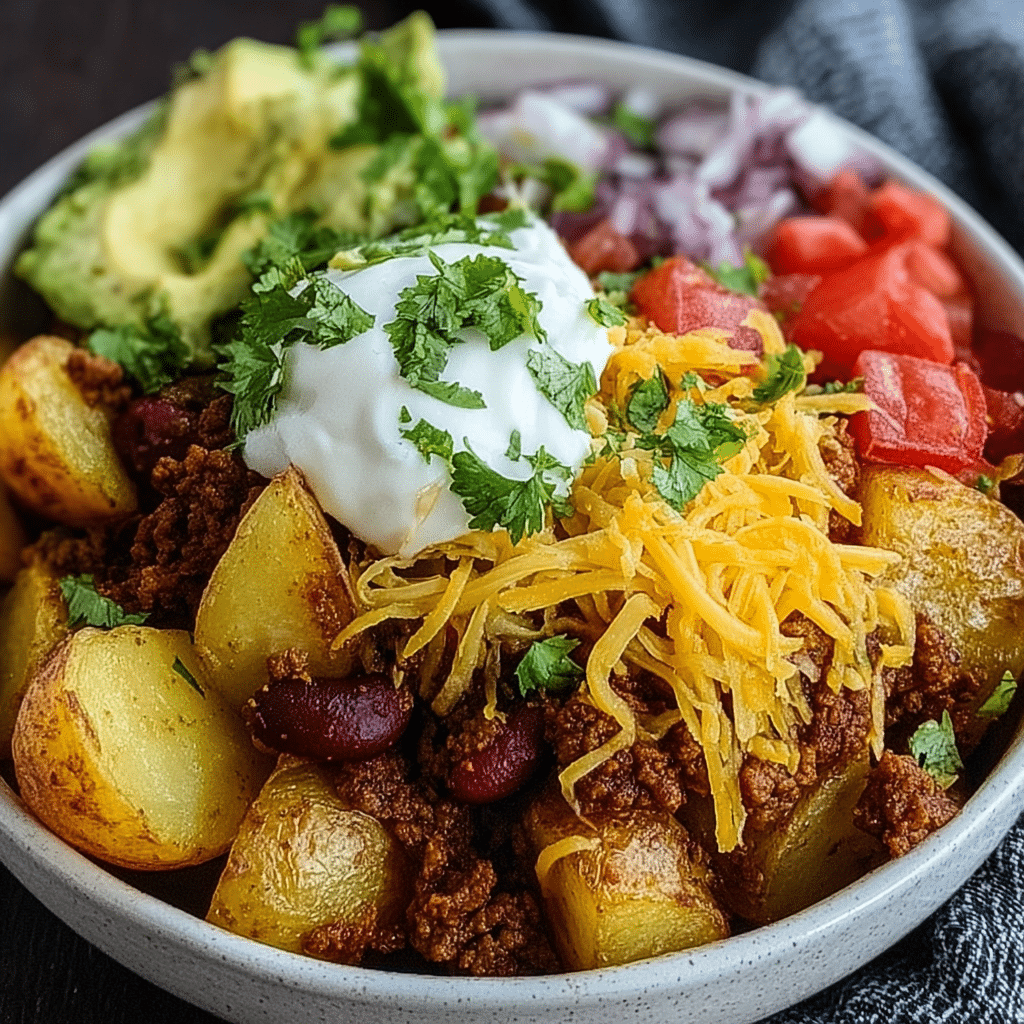
The modern weeknight dinner is a delicate balancing act between nutritional density, ease of preparation, and the universal desire for comfort food. In the evolution of “bowl-style” meals, the Loaded Potato Taco Bowl has emerged as a professional-grade alternative to the traditional grain-based burrito bowl. By substituting rice or quinoa with oven-roasted, seasoned Russet potatoes, you introduce a superior texture—a “shatter-crisp” exterior with a fluffy, starch-rich interior—that acts as a more robust structural foundation for heavy toppings. This dish is a study in macro-nutrient balance, pairing high-quality lean proteins and complex carbohydrates with the healthy fats of avocado and the probiotic benefits of sour cream. This comprehensive guide will explore the technical nuances of the par-roasting process, the science of spice “blooming” in lean meats, and the professional assembly methods required to maintain textural integrity from the first bite to the last.
The Flavor Profile: A Fusion of Textural Contrasts
The primary appeal of the Loaded Potato Taco Bowl lies in its architectural layers. Unlike a traditional taco, where the soft tortilla can sometimes become overwhelmed by moisture, the roasted potato base remains resilient. From a culinary perspective, this dish utilizes the “Western-Tex-Mex” flavor profile, which relies on the trinity of cumin, chili powder, and smoked paprika.
The potatoes provide a neutral, earthy canvas that is elevated by garlic and onion powders. When these meet the savory, spice-infused ground beef or turkey, a Maillard reaction-driven depth is created. The addition of black beans and corn introduces “pops” of sweetness and fiber-rich density, while the cold toppings—cherry tomatoes, lime, and cilantro—provide the necessary acidity to “cut” through the richness of the melted cheddar and sour cream. The result is a dish that hits every sensory note: salty, spicy, creamy, and bright.
Essential Ingredients for a High-Protein Foundation
To achieve a restaurant-quality result, every component must be selected for its functional role in the bowl’s construction. Quality and moisture control are the keys to ensuring the potatoes stay crispy and the meat stays succulent.
The Starch: Engineering the Perfect Crunch
- 4 medium Russet potatoes: Russets are the gold standard for roasting because of their high starch content. When diced into 3/4-inch pieces, they provide a high surface-area-to-volume ratio, which is essential for achieving maximum crispness in a standard home oven.
- 2 tablespoons olive oil: This acts as the heat-transfer medium. It allows the dry seasonings to adhere to the potato cubes while ensuring they “fry” rather than steam on the baking sheet.
- 1 teaspoon each of Garlic Powder, Onion Powder, and Smoked Paprika: These spices provide an “instant” depth. Smoked paprika specifically adds a wood-fired aroma that mimics a traditional outdoor grill.
The Protein and Fiber Core
- 1 pound Ground Beef or Turkey (93/7 Lean): Using a lean protein ensures the bowl is high in protein without being excessively greasy. A 93/7 ratio provides enough fat to carry the spices without leaving a film of oil at the bottom of the bowl.
- 1 teaspoon Chili Powder & 1 teaspoon Cumin: These are the foundational “taco” spices. Cumin provides an earthy, nutty scent, while chili powder offers a mild, complex heat.
- 1 small Red Onion (Chopped): Red onions are preferred for their slight sweetness and vibrant color, which remains even after sautéing.
- 15 oz Black Beans & 1 cup Corn Kernels: These are the “volume” ingredients. They add bulk and nutritional density, making the meal significantly more satiating.
The Fresh Finishing Elements
- 1 cup Shredded Cheddar Cheese: Sharp cheddar provides a salty punch and acts as a binder between the hot meat and the cold vegetables.
- 1 cup Cherry Tomatoes & 1 medium Avocado: These provide the “fresh” contrast. The acidity of the tomatoes and the creaminess of the avocado balance the dry-roasted spices of the potatoes.
- Fresh Cilantro, Lime Wedges, and Sour Cream: These are the “brighteners.” Lime juice, in particular, acts as a flavor highlighter, making the spices taste more vivid.
Step-by-Step Preparation and Technical Mastery
Success with a potato-based bowl depends on the “offset” timing of the oven and the stovetop. You want the meat to be piping hot at the exact moment the potatoes reach their peak crispness.
Phase One: The Science of the Roasted Potato
Begin by preheating your oven to 425°F (220°C). This high temperature is non-negotiable; lower temperatures will bake the potato, but they won’t “sear” it. Peel and dice your Russets into uniform 3/4-inch cubes. Uniformity is the key to professional results—if the pieces are different sizes, the small ones will burn while the large ones remain raw in the center.
Toss the potatoes in a large bowl with the olive oil, garlic powder, onion powder, smoked paprika, salt, and pepper. Ensure every cube is glistening. Spread them on a large baking sheet in a single layer. If the potatoes are touching or overlapping, they will release steam and become mushy. Roast for 30–35 minutes, flipping them halfway through with a spatula. You are looking for a deep, golden-brown crust and a visible “puffiness” to the skin.
Phase Two: Searing the Protein and Blooming Spices
While the potatoes are roasting, heat a large skillet over medium-high heat. Add your ground beef or turkey. Use a wooden spoon or a “meat masher” to break the protein into small, uniform crumbles. Cook for 7–8 minutes until the meat is no longer pink and has developed some browned, crispy edges.
Once the meat is browned, add the chili powder, cumin, and the chopped red onion. This is a technical step called “blooming.” By tossing the spices in the hot fat of the meat, you release their essential oils, creating a much more potent flavor than if you added them to a liquid. Sauté until the onions have softened and the spices smell fragrant.
Phase Three: Incorporating the Fillers
Stir in the drained black beans and the corn kernels. Reduce the heat to low. You aren’t looking to “cook” the beans and corn—they are already processed. You simply want to heat them through so they absorb the spice-infused oils from the meat. This 2-3 minute simmering period ensures the flavors are fully integrated.
Phase Four: The Architectural Assembly
A professional bowl is assembled in a specific order to manage temperature and texture. Start with a generous base of the hot, crispy roasted potatoes. Immediately top the potatoes with the hot meat and bean mixture.
While the meat is still steaming, sprinkle the shredded cheddar cheese over the top. The residual heat from the meat will melt the cheese perfectly without requiring a trip back to the oven. Finally, arrange your cold toppings—tomatoes, avocado, and cilantro—around the perimeter. This creates a “hot center, cool edge” experience that is highly desirable in professional bowl construction.
Professional Tips for Presentation and Texture
The difference between a “home-cooked” bowl and a “chef-prepared” bowl often comes down to the final 5% of execution.
Managing Potato Moisture
If you have extra time, after dicing the potatoes, soak them in cold water for 10 minutes and then pat them completely dry with a kitchen towel before oiling. This removes excess surface starch, which is the number one secret to achieving a “glass-like” crunch on the exterior of a roasted potato.
The Lime Juice Catalyst
Never skip the lime wedge. From a chemical perspective, the citric acid in the lime juice breaks down the heaviness of the beef fat and the cheese. A squeeze of lime right before the first bite “awakens” the palate, making the cumin and paprika notes feel much more distinct and fresh.
Expert Variations and Customizations
The “Taco Bowl” framework is incredibly adaptable, allowing you to tailor the nutritional profile to your specific dietary goals.
The Low-Carb Alternative: Sweet Potato or Cauliflower
If you prefer a lower glycemic index, substitute the Russet potatoes with sweet potatoes. Note that sweet potatoes have a higher sugar content and may caramelize (and burn) faster, so monitor them at the 25-minute mark. For an even lighter version, use roasted cauliflower florets seasoned with the same spice blend; they will provide a similar “roasted” depth with significantly fewer calories.
The “Vegan-Forward” Variation
To make this dish vegan, substitute the ground meat with a “walnut and mushroom” crumble or high-quality plant-based crumbles. Use a dairy-free cheese alternative and replace the sour cream with a dollop of unsweetened coconut yogurt or an extra portion of lime-infused mashed avocado (guacamole).
Adding “Heat” and Complexity
For those who prefer a spicier experience, add a finely diced jalapeño to the skillet along with the red onions. You can also finish the bowl with a drizzle of “Chipotle Crema”—simply whisk a teaspoon of adobo sauce from a can of chipotle peppers into your sour cream.
Frequently Asked Questions
Why aren’t my potatoes getting crispy?
This is usually caused by “crowding the pan.” If the potatoes are too close together, the moisture they release stays trapped between the cubes, essentially steaming them. Use two baking sheets if necessary to ensure every potato cube has plenty of space for air to circulate.
Can I use store-bought taco seasoning?
Yes, you can substitute the chili powder, cumin, garlic powder, and onion powder with 2 tablespoons of a high-quality store-bought taco seasoning. However, be mindful of the salt content in pre-packaged mixes; you may need to reduce the additional salt you add to the meat and potatoes.
How do I store and reheat leftovers?
Store the potato base and the meat mixture separately from the cold toppings (tomatoes, avocado, sour cream). To reheat, place the potatoes in an air fryer at 375°F for 4 minutes or in an oven for 10 minutes to restore their crunch. Reheat the meat in the microwave or a skillet. Assemble with fresh cold toppings just before serving.
Can I use different types of beans?
Absolutely. While black beans are traditional for taco bowls, pinto beans offer a creamier texture that pairs exceptionally well with roasted potatoes. Kidney beans can also work if you prefer a firmer “bite.”
Is it necessary to peel the potatoes?
Peeling is recommended for Russets because their skin can be quite thick and earthy. However, if you are using Yukon Gold or Red potatoes, the skins are thin enough to leave on, which adds extra fiber and a rustic “country-style” aesthetic to the bowl.
What is the best way to keep avocado from browning?
If you are prepping these bowls for lunch the next day, do not dice the avocado in advance. If you must, toss the diced avocado in a generous amount of lime juice; the acidity will slow the oxidation process. Alternatively, keep the pit in the container with the diced pieces.
Can I use a different protein?
This recipe works excellently with shredded rotisserie chicken, sautéed shrimp, or even sliced flank steak. If using shrimp, sear them quickly for only 2-3 minutes to prevent them from becoming rubbery.
Why use 93/7 lean meat?
In a “bowl” format, you are often eating the meat mixed with other dry ingredients. A higher fat content (like 80/20) will result in a pool of orange grease at the bottom of the bowl, which can make the crispy potatoes soggy. Lean meat provides a cleaner, more professional mouthfeel.
Can I make the potatoes in an air fryer?
Yes! Air fry the seasoned potato cubes at 400°F for 15–20 minutes, shaking the basket every 5 minutes. This is often faster than the oven and yields incredibly consistent results.
How do I make the dish more “kid-friendly”?
If cooking for children who are sensitive to spice, omit the chili powder and red pepper flakes. Increase the amount of corn and cheddar cheese, and serve the “green things” (cilantro and lime) on the side so they can customize their own bowls.
Conclusion
The Loaded Potato Taco Bowl is a testament to how simple, wholesome ingredients can be transformed through proper technique. By mastering the high-heat roast of the Russet potato and the aromatic “blooming” of traditional Mexican spices, you create a meal that is far more than the sum of its parts. It is a high-protein, fiber-rich dinner that satisfies the craving for a “takeout” experience while maintaining the nutritional integrity of a home-cooked meal. The secret lies in the contrast: the heat of the seasoned meat against the chill of the avocado, and the crunch of the potato against the silkiness of the sour cream. Whether you are fueling up for a busy week or hosting a casual dinner with friends, these bowls provide a customizable, professional, and undeniably delicious solution. Enjoy the crisp, savory journey of the ultimate weeknight taco bowl.
PrintThe Ultimate Guide to Loaded Potato Taco Bowls: A High-Protein, Crispy Culinary Masterpiece
This Loaded Potato Taco Bowl is a crispy, high-protein, and flavor-packed dinner featuring seasoned roasted potatoes, spiced meat, beans, and fresh taco toppings.
- Prep Time: 15 minutes
- Cook Time: 35 minutes
- Total Time: 50 minutes
- Yield: 4 servings
- Category: Main Dish
- Method: Roasted + Skillet
- Cuisine: Mexican-Inspired
Ingredients
- For the Potatoes
- 4 medium russet potatoes, peeled and diced
- 2 tbsp olive oil
- 1 tsp garlic powder
- 1 tsp onion powder
- 1 tsp smoked paprika
- Salt and black pepper to taste
- For the Meat & Filling
- 1 lb ground beef or turkey
- 1 tsp chili powder
- 1 tsp cumin
- 1 small red onion, chopped
- 15 oz black beans, drained and rinsed
- 1 cup corn kernels
- Toppings
- 1 cup shredded cheddar cheese
- 1 cup cherry tomatoes, halved
- 1 medium avocado, diced
- 1/4 cup fresh cilantro, chopped
- Lime wedges
- Sour cream
Instructions
- Preheat oven to 425°F (220°C). Toss potatoes with oil and seasonings.
- Spread on a baking sheet and roast 30–35 minutes, flipping halfway.
- Brown ground beef or turkey in a skillet for 7–8 minutes.
- Season with chili powder, cumin, and add red onion. Cook until softened.
- Stir in black beans and corn and heat through.
- Divide potatoes into bowls and top with meat mixture and cheese.
- Add tomatoes, avocado, cilantro, lime, and sour cream.
Notes
- Swap beef for chicken or plant-based meat.
- Add jalapeños for extra heat.
- Sweet potatoes can replace russets.
- Great for meal prep bowls.